


Launched by Stewart Brand in 02003, Long Now Talks has invited more than 400 leading thinkers to share their civilization-scale ideas.
Saul Griffith's commitment to showing how much individuals--and entire superpowers--can benefit from "energy literacy" — THE ALTERNATIVE
Continuing our week of blogs reckoning with the chastening IPCC report on climate change - but also trying to focus on concrete actions and motivating knowledge, rather than gnashing our teeth and rending our garments - we were alerted to the work of Australian-American inventor Saul Griffith. A
Stewart Brand
Stewart Brand is an American project developer and writer, best known as the co-founder and editor of the Whole Earth Catalog. Other organizations he has founded include the WELL, the Global Business Network, and the Long Now Foundation. He is the author of several books, most recently Whole Earth Discipline: An Ecopragmatist Manifesto and Maintenance: Of Everything.

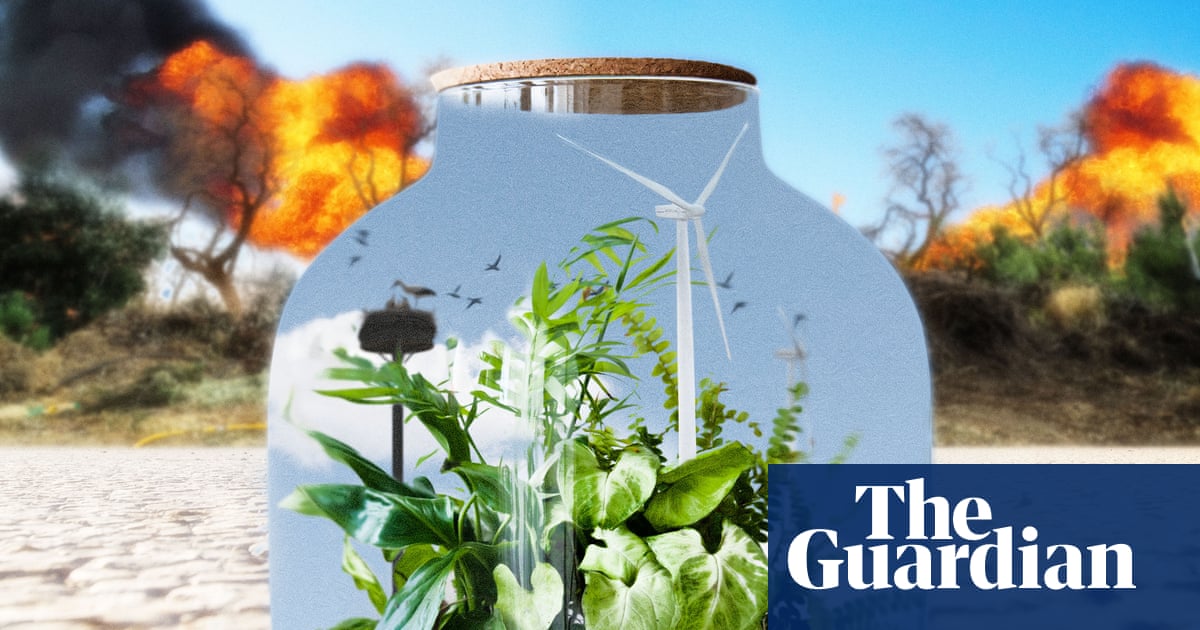
We asked our climate reporters to highlight one idea for positive change. We got a chronicle of global transformation
There are countless initiatives around the world that can inspire people and spur them into action. Amid the devastation of the climate crisis, our journalists strive to highlight these stories of hope
Climate, Energy, & the Future–How Infrastructure Works–Deb Chachra–The Future is Literally Bright
Why "Solutions" Fail | Dave Snowden
Road Map to a New World (SSIR)
In New Power, Jeremy Heimans and Henry Timms argue that power and influence are being driven by a new participatory and peer-driven paradigm.
Social Influence and Action — Jen Christiansen
I’m wary of climate solutions that are hyper focused on the action of individuals as opposed to systems and corporations. Do you experience carbon footprint guilt every time you board a plane to visit family too? Well, that whole schema was a product of the PR firm Ogilvy & Mather for British Petroleum. It was an effort to shift focus away from oil companies and onto individual responsibility to lower greenhouse gas emissions. For more, read “The carbon footprint sham” by Mark Kaufman for Mashable in 2021, and “Big oil coined ‘carbon footprints’ to blame us for their greed. Keep them on the hook” by Rebecca Solnit for The Guardian.

npmx: converging communities
The story of the many people and communities that converged to build npmx together

Ecocivilization: making a world that works for all
""One of the greatest thinkers of our age" (The Guardian) presents a new way of living-one modeled on nature's design instead of capitalism's-for fans of Guns, Germs, and Steel and Doughnut Economics It has often been said that it is easier to imagine the end of the world than it is to imagine the end of capitalism-and yet that is what the historical moment urgently calls for. Climate change has reached an emergency state, inequality continues to grow, and, for many, the future has never seemed more bleak. Incremental policy improvements are no longer enough-we need a deep transformation of our current civilization to continue to survive. In Ecocivilization, leading thinker Jeremy Lent reimagines the basis of our civilization, and argues for a new global system of living, one based on life-affirming principles modeled after nature's own design. What enfolds is a robust framework incorporating Lent's own expertise, and the lived experiences of those on the ground already putting ecological civilization's core tenants into practice-justice, mutuality, diversity, and symbiosis. From the global economy to universal housing and income, from infrastructure to agriculture, every major aspect of our society could be redesigned to work together as a coherent whole, setting the conditions for all people to flourish. Ecocivilization shows how this future on a regenerated Earth is not only desirable, but entirely feasible"--

Reflections on ATmosphere Conference 2026...
Bravo to @bmann.ca and @knowtheory.net for an amazing four days of open social web conversations in Vancouver! How many tech conferences present brilliant ta…
The Climate Movement Isn’t in Retreat, It’s Under Attack…and It’s Time to Fight Back | Newsletter
In 2020, a source shared a presentation with me from an internal branding workshop they’d been asked to attend for bp. It was fascinating for a number of reasons, not least because it indicated that the oil major felt genuinely threatened by a surprising new enemy: young people. There have always been ebbs and flows […]
Are We Really Engineers?
This is part one of the Crossover Project. Part two is here and part three is here. A conference talk based on this work is now available here. I sat in front of Mat, idly chatting about tech and cuisine. Before now, I had known him mostly for his cooking pictures on Twitter, the kind that made me envious of suburbanites and their 75,000 BTU woks. But now he was the test subject for my new project, to see if it was going to be fruitful or a waste of time.
How Infrastructure Works: Transforming our shared systems for a changing world
'Pulsing with wisdom and humanity... a masterpiece' ED YONG'A hopeful, lyrical - even beautiful - hymn to the systems of mutual aid we embed in our material world' CORY DOCTOROW'An extraordinary book' MARK MIODOWNIK'You won't see the world the same after reading this book!' AUSTIN KLEONEvery day, we are granted the power to travel at high speeds, fly, see in the dark, summon water from distant mountains and electricity from the sun. The systems that run our world are invisible to us until they fail.Infrastructure enables lives of astounding ease and freedom that would have been unimaginable just a century ago. These technological systems - the most complex and vast ever created by humans - have allowed us to work collectively for the public good. But these systems are now beginning to fail us.Engineering professor Deb Chachra takes readers on a fascinating tour of these essential utilities, revealing how they work, what it takes to keep them running, and just how much they shape our lives - but also the price they extract, who pays it and in what ways, as well as the threats to our infrastructure in a changing world.From Snowdonia's Electric Mountain to a solar plant in southern India, Chachra shows how we can rebuild our shared infrastructure to be not just functional but also equitable, resilient, and sustainable. We need to learn how to see these systems and to transform them, together, because the cost of not being able to rely on them is unthinkably high.
Shareouts from ATScience 2026 in Vancouver - ATScience Notes
Since when do science conferences have such wild energy?
Presentations — Benedict Evans
Every year, I produce a big presentation exploring macro and strategic trends in the tech industry. New in May 2025, ‘AI eats the world’.

Atmosphere conference report - Mathew's newsletter
Key takeaways from Vancouver