

When you rear-end the car in front of you at a stoplight, you may feel a mix of different emotions such as anger, anxiety, and guilt. The person whose car you rear-ended may feel angered and frustrated ...
Measures of emotion: A review
A consensual, componential model of emotions conceptualises them as experiential, physiological, and behavioural responses to personally meaningful stimuli. The present review examines this model in terms of whether different types of emotion-evocative stimuli are associated with discrete and invariant patterns of responding in each response system, how such responses are structured, and if such responses converge across different response systems. Across response systems, the bulk of the available evidence favours the idea that measures of emotional responding reflect dimensions rather than discrete states. In addition, experiential, physiological, and behavioural response systems are associated with unique sources of variance, which in turn limits the magnitude of convergence across measures. Accordingly, the authors suggest that there is no “gold standard” measure of emotional responding. Rather, experiential, physiological, and behavioural measures are all relevant to understanding emotion and cannot be assumed to be interchangeable.

Feeling Powerful vs. Being Powerful
Most anger and resentment are attempts to feel powerful at the cost of being powerful.

Mindfulness meditation reduces prosocial reparative behaviors by buffering people against feelings of guilt
A series of studies have uncovered a causal relationship between mindfulness meditation and decreased feelings of guilt. The findings have been published in the Journal of Personality and Social Psychology.

The Science Behind Why You Feel Sick When You Try to Read in the Car
Some people get carsick when they try to read on the road, other people do it blissfully, but if you’re one of those folks who just can’t get through

Reframe "Negative" Emotions as "Difficult" Emotions
Nobody likes being sad, angry, or heartbroken. If you want to give yourself a leg up on getting through troubling times, a simple mental reframe can h
Negative Emotions Are Key to Well-Being
Feeling sad, mad, critical or otherwise awful? Surprise: negative emotions are essential for mental health

Self-Distancing: What It Is and How You Can Use It to Make Better Decisions – Effectiviology
It’s hard to set your emotions aside when you’re faced with a difficult decision. This is problematic, since our emotions often cause us to make the wrong decision in important areas of life, including in our relationships, our finances, and our health.
The Pain Axis: LLMs Represent Self-Directed Harm and Act to Relieve It
Large language models sometimes behave in ways resembling human emotional responses, and recent work has identified internal representations that may explain this. We ask whether LLMs represent pain distinctly from fear, sadness, and generic negative valence, and whether this representation functions as pain would be expected to. We build a dataset describing painful situations across five categories: physical, psychological, social, moral, and cognitive. These are paired with controls for fear, negative emotion, negative world states, sadness, non-painful bodily sensation, arousal, numbness, and neutral content. Using denoised difference-in-means, we extract a linear pain direction from 25 open-weight models across five families, ranging from 2B to 72B parameters. We find that this direction separates pain from matched controls in base and instruction-tuned models, is nearly orthogonal to fear and negative valence, and promotes pain-related vocabulary through the unembedding matrix. We then test its functional properties. First, the direction responds to harm targeting the model but not suffering observed in the user; fear and negative-emotion directions show the opposite pattern. Second, adding the pain-direction vector to the model's residual-stream activations during generation produces a consistent progression from vague discomfort to first-person expressions of worthlessness and failure. Third, steered, fine-tuned Qwen 2.5 models choose a pain-relief button even when it worsens their next answer or harms the user. They press it again far less often when the button removes the steering vector than when it does not, even though the models are never told whether the vector is injected or removed. We discuss the implications of these findings for AI safety and welfare.

Managing intrusive thoughts | Lifeline
Dealing with overwhelming and distressing thoughts can be difficult, but knowing how to handle them can make a big difference to how you feel. Learn why you might be experiencing intrusive thoughts and strategies that can help you manage them.

Opinion | What Emotions Are (and Aren’t) (Published 2015)
Most people believe that emotions are distinct, locatable entities inside us — but they’re not. No brain region is dedicated to any single emotion.

The Engineering Manager’s Guide to Emotional Tolerance
Five ways to lead with emotion without losing yourself in the process.

The Making Of Emotions, From Pleasurable Fear To Bittersweet Relief
Since ancient times, philosophers and scientists have viewed emotions as innate. In the latest Invisibilia, a psychologist argues that emotions spring from the sum of our experiences, not just wiring.
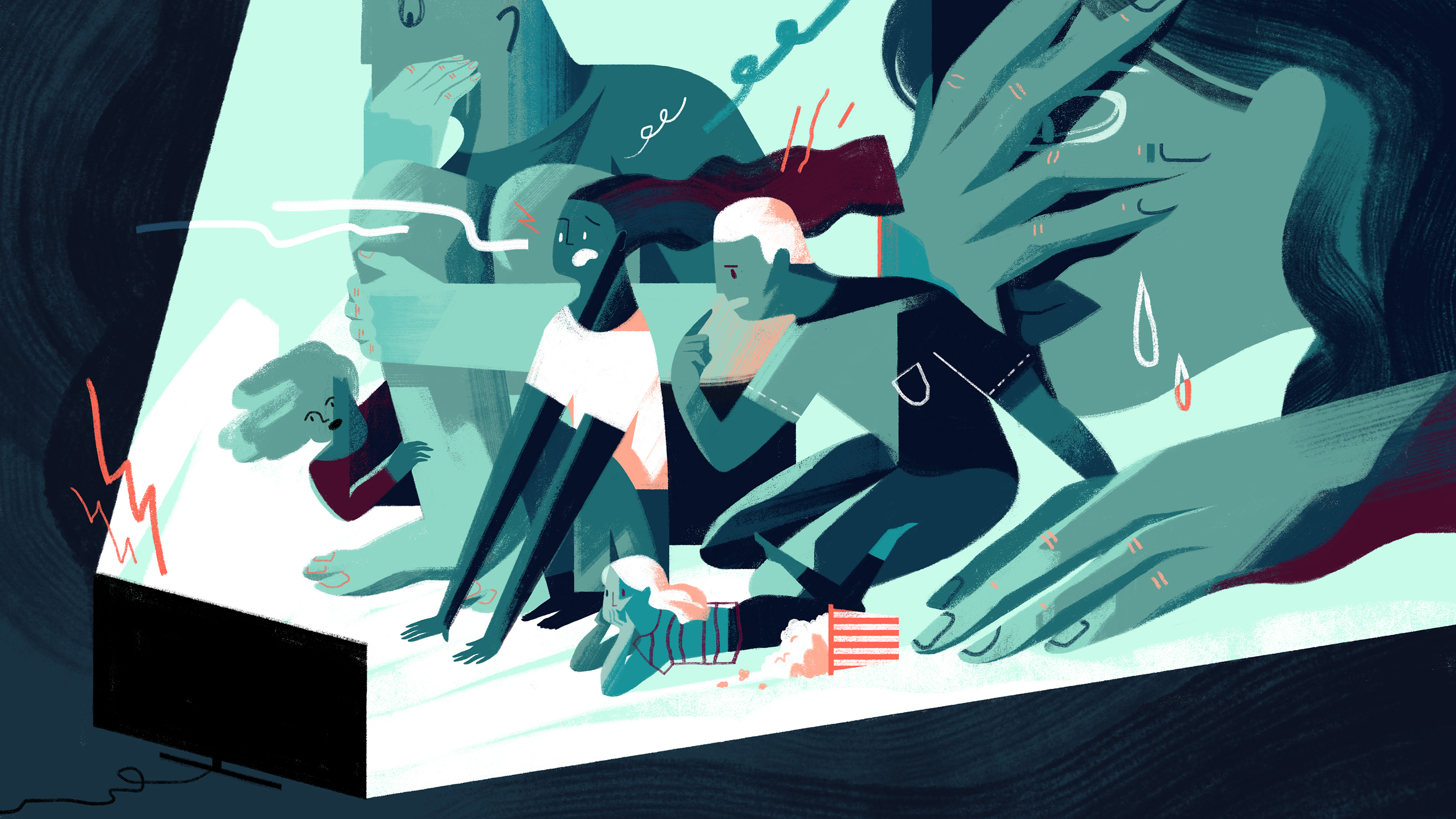
Feelings are Facts: Love, Privacy, and the Politics of Intellectual Shame
A debut of new research and analysis, focused on emotions and the affective register—love! shame! intimacy! What happens when we put lov...

The Secret to Emotional Freedom? Feel Everything
The empathy paradox
There’s an image of empathy we all know that is beautiful: the fullness of completely understanding someone else, the symbolic walk in shoes that are not one’s own. The knowledge that someone else can share a pain so acute that would otherwise seem unbearably solitary. It’s an image inherent to empathy’s definition, an image many believe in wholeheartedly. Several studies conducted by Stanford researchers alone suggest people are motivated to feel empathy, that empathy is highly associated with social desirability, that it is as beneficial as it is admired.
Resisting Cognitive Surrender
This particular note is around exploring cognitive surrender: uncritically accepting whatever agents output without actually thinking, exploring or considering alternatives. Working this way is extremely fast, not particularly taxing, and unsurprisingly seductive.
