The 55 mph speed limit was a vain attempt by the Federal government to reduce gasoline consumption; initially passed in the 1974 Emergency Highway Energy Conservation Act the law was relaxed in 1987 and finally repealed in 1995 allowing states to choose their speed limits. Highways and cars are safer today than in the 1970s […]
Speed Safety System | Los Angeles Department of Transportation
This pilot program will install 125 speed safety systems across the City of Los Angeles to help reduce excessive speeding, save lives, and improve street safety by encouraging safer driving behavior. Utilizing data and community stakeholder input from racial equity, civil liberties, and economic justice organizations – systems will be installed across the city where speeding and crashes happen most often and where children, seniors, and other vulnerable people are concentrated.
Killing car privacy by federal mandate - CITP Blog
The US National Highway Traffic Safety Administration (NHTSA) is proposing a requirement that every car should broadcast a cleartext message specifying its exact position, speed, and heading ten times per second. In comments filed in April, during the 90-day comment period, we (specifically, Leo Reyzin, Anna Lysyanskaya, Vitaly Shmatikov, Adam Smith, together with the CDT […]
The hidden inequality of who dies in car crashes
The roads are safer in America if you’re well-off.

Stop-as-yield
Stop-as-yield laws allow bicyclists to treat a stop sign as a yield sign. Similarly, red-light-as-stop laws let bicyclists treat a red light as a stop sign, although often with significant limitations. The first such law passed in Idaho in 1982, the source of the term "Idaho stop"; it was not emulated elsewhere until Delaware adopted a limited stop-as-yield law, the Delaware Yield, in 2017. in April 2019, Arkansas became the second US state to legalize both stop-as-yield and red-light-as-stop. In France and Belgium, some intersections use red-light-as-yield signs.

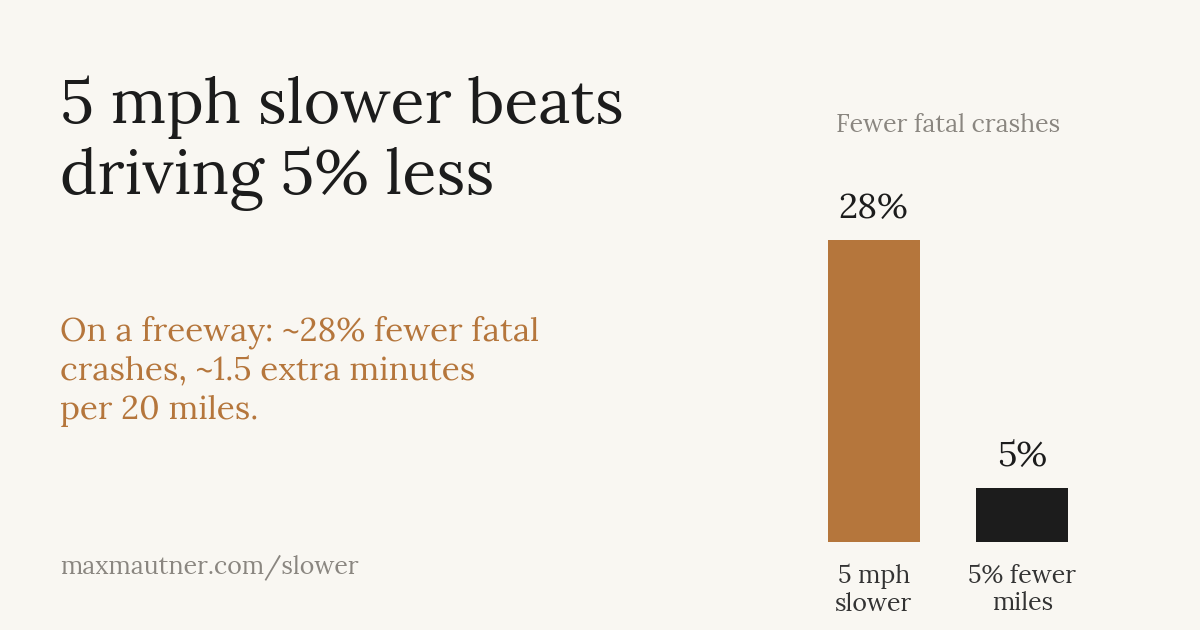
Driving 5 mph slower beats driving 5% less
Driving 5 mph slower prevents far more deadly crashes than driving 5% less. On a 20-mile freeway trip, it adds ~1.5 minutes.
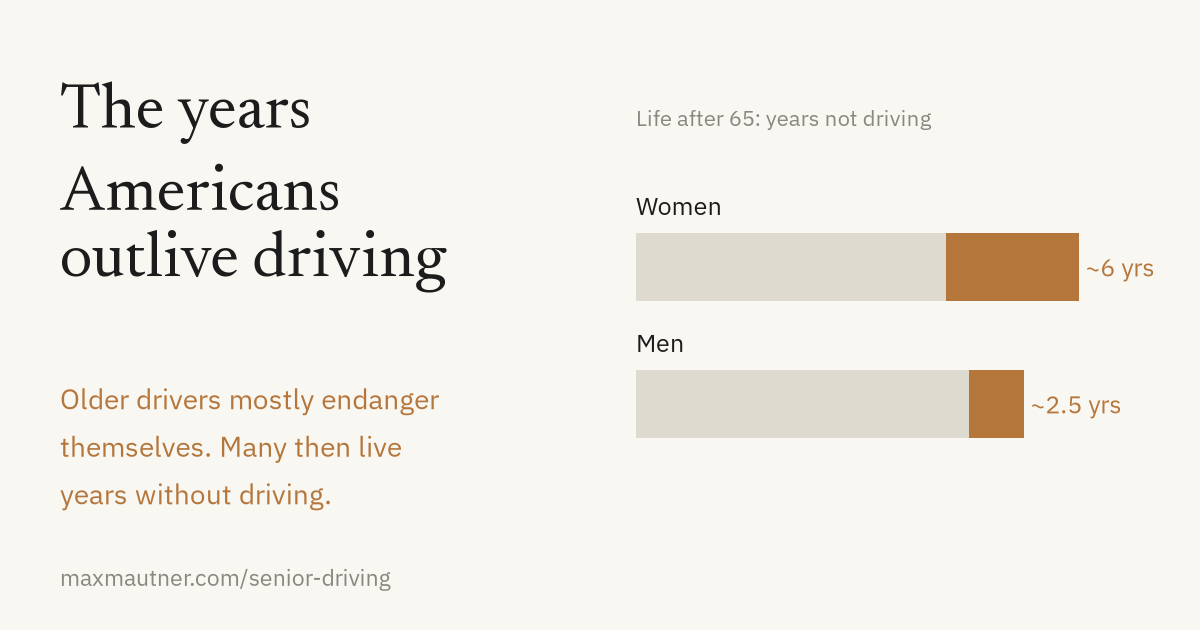
The years Americans outlive driving
Per mile, drivers 75 and older are in fatal crashes as often as drivers under 25, but the people who die are mostly the older drivers themselves. Women can expect ~6 years of life after 65 without driving, men ~2.5.
Americans’ love affair with big cars is killing them
New analysis shows that the heaviest vehicles kill more people than they save in crashes

Silencing the Streets
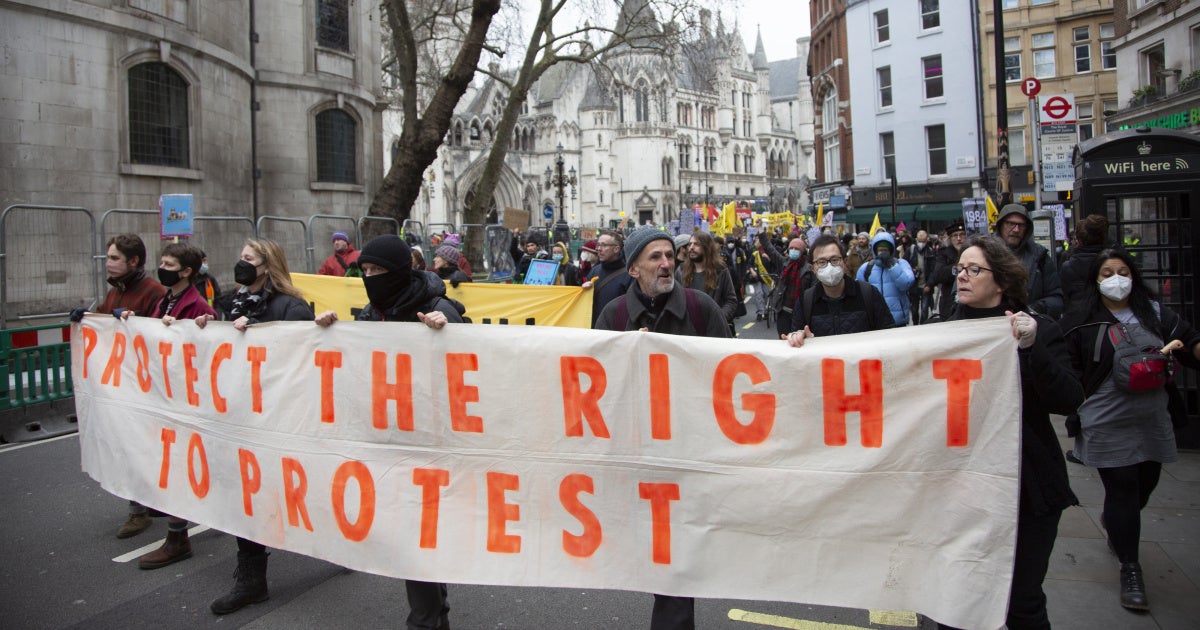
The 47-page report, “‘Silencing the Streets’: The Right to Protest Under Attack in the UK,” documents that the UK’s Labour government has failed to reverse sweeping anti-protest laws introduced by the previous Conservative government. Instead, Labour has attempted to expand them with the Crime and Policing Bill 2025 and through the unprecedented misuse of terrorism legislation to target and criminalize peaceful protest. The Crime and Policing bill, pending before parliament, is to be debated in the House of Lords in January 2026.
When Adding Bike Lanes Actually Reduces Traffic Delays
In New York, smart street design helped the city have its safety and its speed, too.

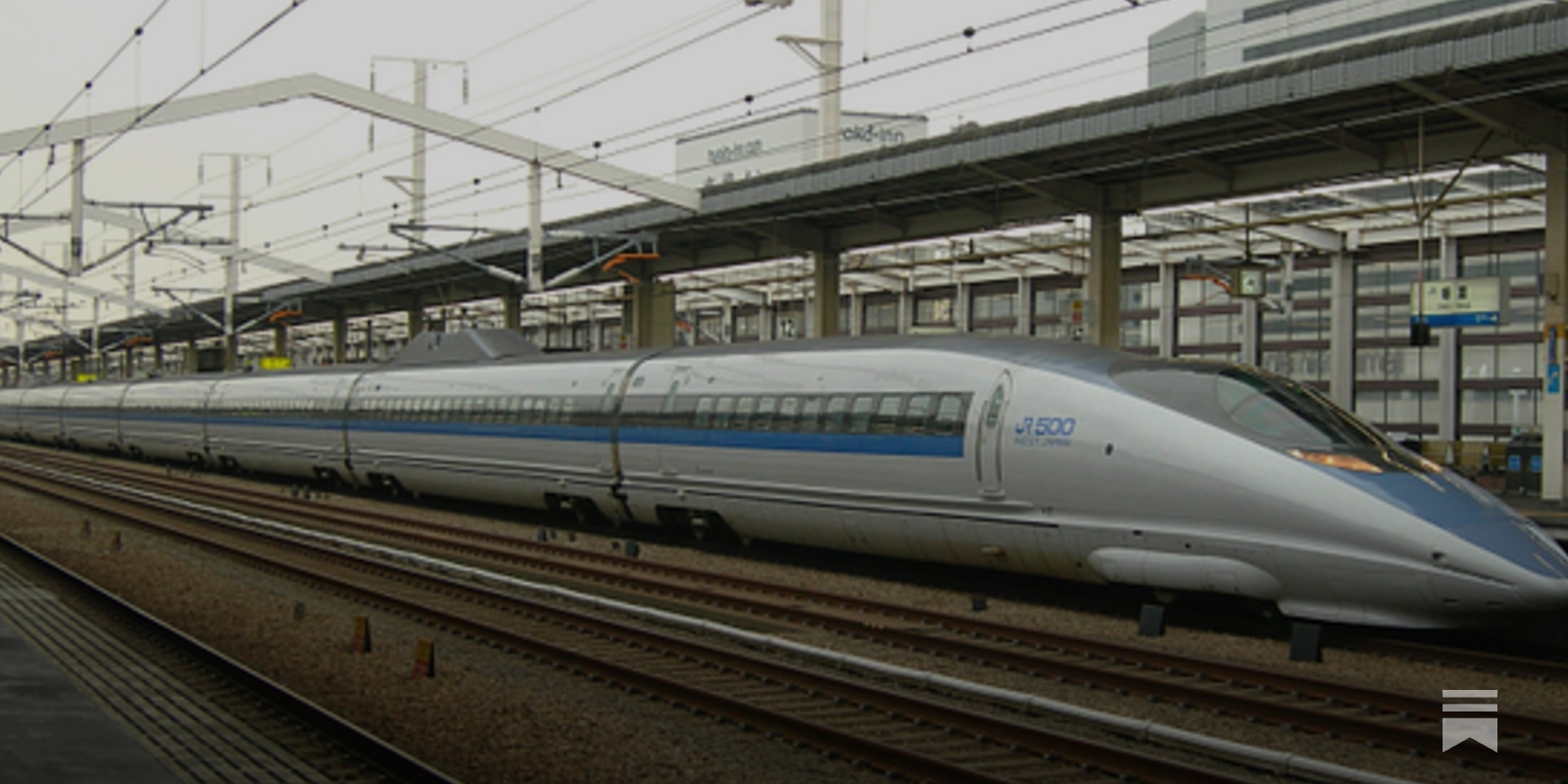
The Myth of Non-Stop High-Speed Rail
High speed doesn’t have to mean non-stop.
The Modern Moloch
On the streets of early 20th-century America, nothing moved faster than 10 miles per hour. Responsible parents would tell their children, “Go outside and play in the streets,” all day. And then the automobile happened. And then automobiles began killing thousands of children, every year. Much of the public viewed the car as a death machine.
Cycling Toward a Cooler Toronto | The Power of Bike Lanes
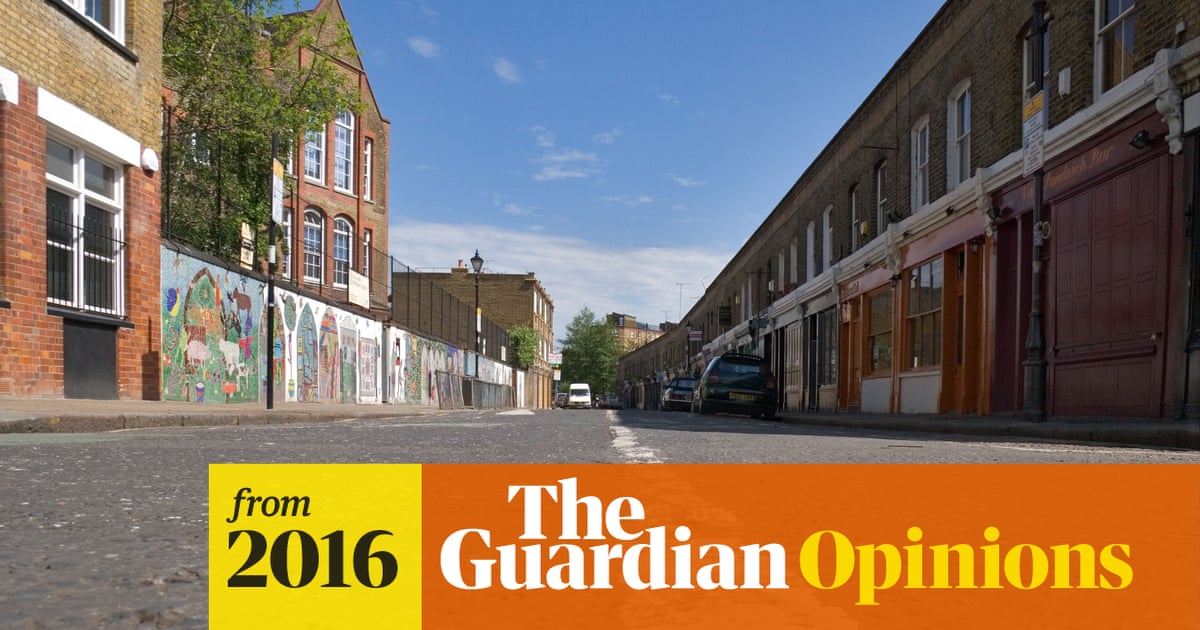
The removal of road markings is to be celebrated. We are safer without them | Simon Jenkins
It’s clear there are fewer accidents when drivers are trusted not to kill themselves, and each other. Assuming we need constant protection is the mark of a controlling state.
Motorists in one of a Montreal’s busiest boroughs support bike lanes
There are real tensions between cyclists, motorists and pedestrians sharing the road, but Montrealers believe traffic-calming measures — bike lanes, speed humps and curb extensions — can improve safety for all road users.

Chicago's Bike Lanes Don't Hurt Businesses, City Report Finds
As protected bike lanes face opposition in some neighborhoods, city-backed case studies found lanes in a half-dozen corridors have not contributed to a negative impact on economic activity.

What If We Kept Our Cars Parked for Trips Less Than One Mile? | US EPA
Thought starter about walking or biking for trips less than one mile.