A new study from the Monell Center, the U.S. Department of Agriculture (USDA), and collaborating institutions reports a uniquely identifiable odor signature from mouse models of Alzheimer's disease. The ...
Overnight olfactory enrichment using an odorant diffuser improves memory and modifies the uncinate fasciculus in older adults
Objective: Cognitive loss in older adults is a growing issue in our society, and there is a need to develop inexpensive, simple, effective in-home treatments. This study was conducted to explore the use of olfactory enrichment at night to improve cognitive ability in healthy older adults.Methods: Male and female older adults (N=43), age 60-85, were enrolled in the study and randomly assigned to an Olfactory Enriched or Control group. Individuals in the enriched group were exposed to 7 different odorants a week, one per night, for 2 hours, using an odorant diffuser. Individuals in the control group had the same experience with de minimis amounts of odorant. Neuropsychological assessments and fMRI scans were administered at the beginning of the study and after 6 months.Results: A statistically significant improvement was observed in the enriched group compared to the control group on the Rey Auditory Verbal Learning Test and improved functioning was observed in the left uncinate fasciculus, as assessed by mean diffusivity.Minimal olfactory enrichment administered at night produces improvements in both cognitive and neural functioning. Thus, olfactory enrichment may provide an effective and low-effort pathway to improved brain health.

Do Older People Have a Different Smell? (Published 2019)
Even scientists who study scent are divided.

Learning What Substance Is Suspected of Causing Alzheimer’s May Throw You Into an Existential Crisis
A surprisingly common substance was found to have a causal relationship with the kind of brain damage associated with Alzheimer's disease.

The gut microbiome may influence brain aging, mouse study suggests
A communication pathway between the brain and the gut may be integral to how well the brain holds on to memories

Superagers' 'Secret Ingredient' May Be the Growth of New Brain Cells - Slashdot
alternative_right shares a report from ScienceAlert: According to a study of 38 adult human brains donated to science, superagers -- people who retain exceptional memory as they age -- have roughly twice as many immature neurons as their peers who age more typically. Moreover, people with Alzheimer'...

How Exercise Might "Clean" the Alzheimer's Brain
Hints at potential treatments for age-related dementia and memory loss

Can Alzheimer’s really be reversed, as a new documentary claims?
A CNN documentary follows two people with Alzheimer’s who took part in a study to determine if lifestyle changes can reverse symptoms.

Porphyromonas gingivalis in Alzheimer’s disease brains: Evidence for disease causation and treatment with small-molecule inhibitors
Gingipains from Porphyromonas gingivalis drive Alzheimer’s pathology and can be blocked with small-molecule inhibitors.

A cure for Alzheimer’s? Yes, a cure for Alzheimer’s!
This is the most important column I’ve ever written. The message is quite complex--dozens of new health parameters to test for and to optimize, all of them interacting in ways that will require new training for MDs.

We Are Entering the Age of Alzheimer's
We will all be touched by the disease. How are we going to get through this?

Breakthrough ultrasound treatment to reverse dementia moves to human trials
An extraordinarily promising new technique using ultrasound to clear the toxic protein clumps thought to cause dementia and Alzheimer's disease is moving to the first phase of human trials next year. The innovative treatment has proven successful across several animal tests and presents an exciting, drug-free way to potentially battle dementia.


One Day, a Machine Will Smell Whether You’re Sick (Published 2017)
Researchers are perfecting technology that sniffs out signs of disease in breath, blood and urine.

PTI-125 Reduces Biomarkers of Alzheimer’s Disease in Patients
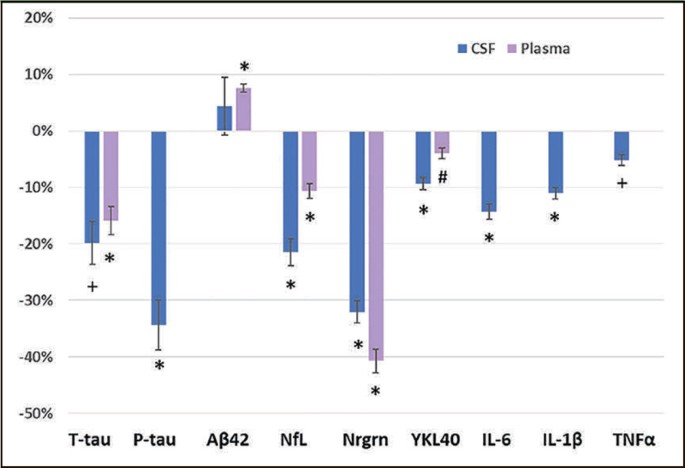
The most common dementia worldwide, Alzheimer’s disease is often diagnosed via biomarkers in cerebrospinal fluid, including reduced levels of Aβ1-42, and increases in total tau and phosphorylated tau-181. Here we describe results of a Phase 2a study of a promising new drug candidate that significantly reversed all measured biomarkers of Alzheimer’s disease, neurodegeneration and neuroinflammation. PTI-125 is an oral small molecule drug candidate that binds and reverses an altered conformation of the scaffolding protein filamin A found in Alzheimer’s disease brain. Altered filamin A links to the α7-nicotinic acetylcholine receptor to allow Aβ42’s toxic signaling through this receptor to hyperphosphorylate tau. Altered filamin A also links to toll-like receptor 4 to enable Aβ-induced persistent activation of this receptor and inflammatory cytokine release. Restoring the native shape of filamin A prevents or reverses filamin A’s linkages to the α7-nicotinic acetylcholine receptor and tolllike receptor 4, thereby blocking Aβ42’s activation of these receptors. The result is reduced tau hyperphosphorylation and neuroinflammation, with multiple functional improvements demonstrated in transgenic mice and postmortem Alzheimer’s disease brain.