


The world grows increasingly more chaotic year after year, and our brains are constantly bombarded with images. A new study from Center for the Neural Basis of Cognition (CNBC), a joint project between ...
To Make Sense of the Present, Brains May Predict the Future | Quanta Magazine
A controversial theory suggests that perception, motor control, memory and other brain functions all depend on comparisons between ongoing actual experiences and the brain’s modeled expectations.

The Brain ‘Rotates’ Memories to Save Them From New Sensations | Quanta Magazine
Some populations of neurons simultaneously process sensations and memories. New work shows how the brain rotates those representations to prevent interference.
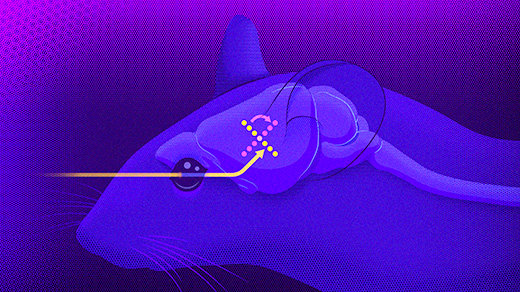
Harnessing Chaos: How the Brain Turns Randomness into Robust Memory | Columbia Engineering
AI systems reveal how random fluctuations in brain activity may help stabilize memories
The brain in the machine: How AI could help explain how we think | IBM
Scientists are using large AI models to predict patterns of brain activity at scale, a development that researchers say is pushing neuroscience toward a new kind of digital imaging.

Neuralink and the Brain's Magical Future — Wait But Why
I knew the future would be shocking but this is a whole other level.

The brain's 7D sandcastles could be the key to consciousness | New Scientist
We’ve glimpsed mind-bending geometric structures that fleetingly encode our thoughts, memories and feelings – and could solve the greatest mystery of all

nubrain - A foundation model for neural decoding
Building the world's largest dataset of human brain activity.

The Neuroscience At The Heart Of Learning And Leading
Joshua Freedman (@eqjosh) shares the science behind what's going on inside your head. Emotional intelligence, he says, is the difference that makes the difference. Photo: Flickr/labguest Marco Iacoboni is one of the pioneers in a new area of neuroscience. A few years ago in Parma, Italy, scientists were researching how the brain [...]

How the brain controls our habits: Neuroscientists identify a brain region that can switch between new and old habits
Neuroscientists have found that a small region of the brain's prefrontal cortex, where most thought and planning occurs, is responsible for moment-by-moment control of which habits are switched on at a given time.

On the Neuroscience of Travel Memories
Memory has a habit of expunging linear sequences in favor of moments of strong emotion.

RSA Animate - Iain McGilchrist: The Divided Brain - A Cognitive Whiteboard Animation
Watch a thought race across the surface of the brain | TechCrunch
Although neuroscientists have a general idea of what parts of the brain do what, catching them in the act is a difficult proposition. But UC Berkeley researchers have managed to do it, visualizing based on direct measurement the path of a single thought (or at least thread) through the brain.
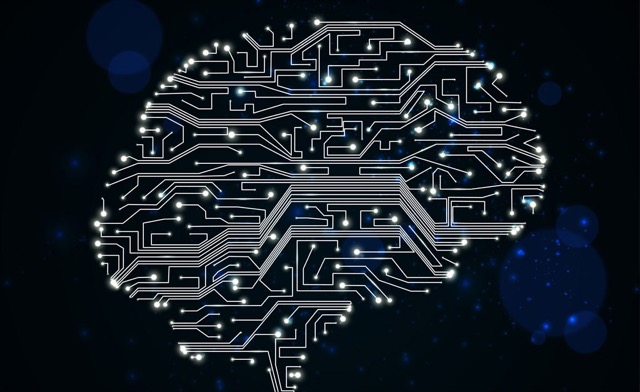
Open-source software reveals complete 3D architecture of brain cells
The neurons in our brain that underlie thought connect to each other using tiny branch-like structures on their surfaces known as dendritic spines. Now scientists at Columbia's Zuckerman Institute and ...

NeuroAI’s Next Steps: Balancing Computation and Embodiment
Deep neural networks trained at scale now predict neural activity across sensory cortices, raising a question that divides neuroscience: does the convergence between artificial and biological representations constitute understanding, or does understanding require models of biological processes grounded in the embodied, evolved character of natural intelligence? In this Dual Perspectives article, Bing Brunton and Patrick Mineault articulate two research programs—Process and Convergence—to engage this question about the future of NeuroAI research. The conversation is organized around four questions that probe what scaled model–brain alignment reveals, what the brain is coupled to and evolved to do, what success beyond the lab looks like, and where the field should invest over the coming decade. Their exchanges reveal the distance between the two programs to be primarily about the level of analysis and priorities for what to build next. The conversation converges on shared ground: measure broadly, then distill to causal principles.
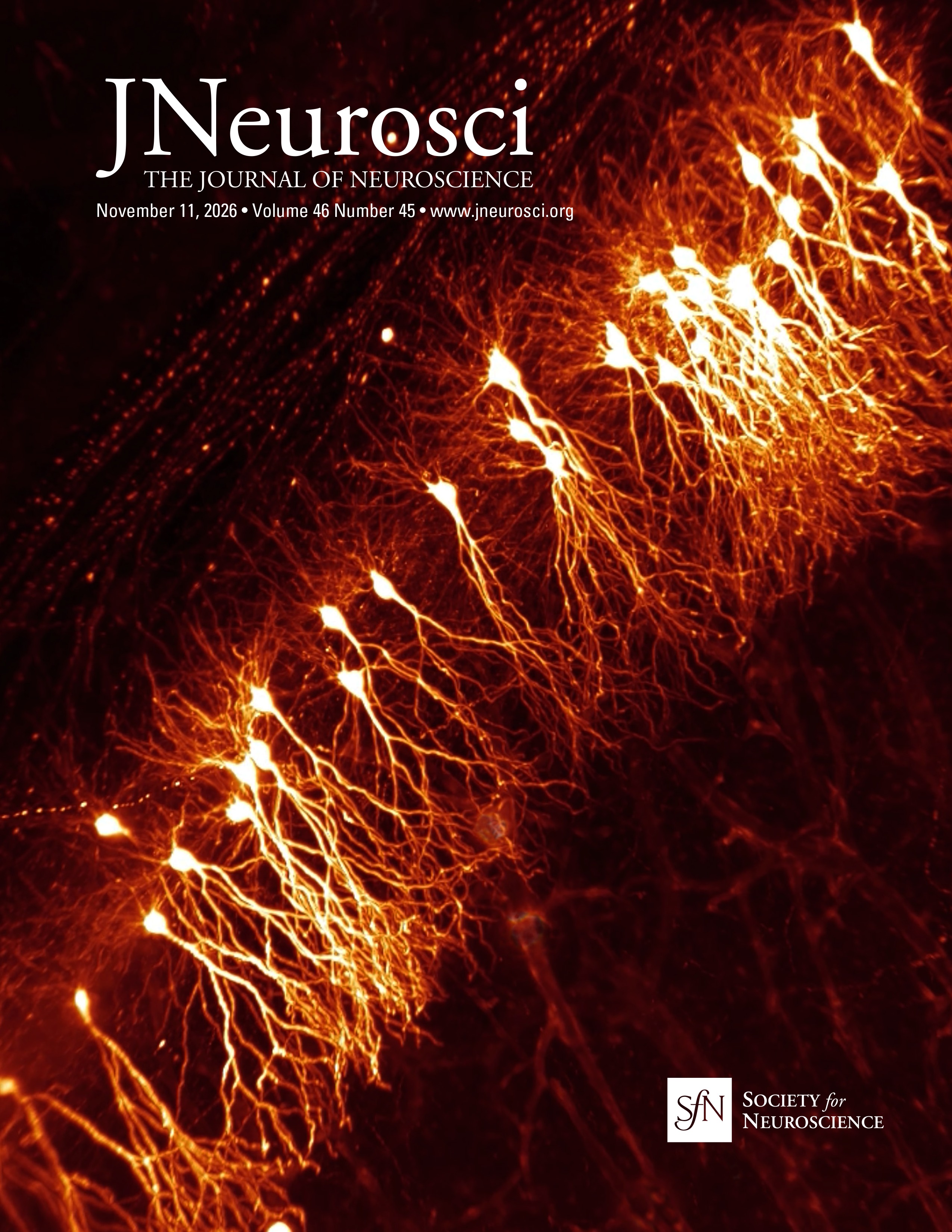
How the brain selectively remembers new places
MIT neuroscientists have discovered how the brain preferentially forms memories of new locations. A small region of the brainstem, known as the locus coeruleus, releases a flood of dopamine in response to novel sensory stimuli, and this dopamine triggers a certain region of the hippocampus to store a memory of the new location.
