


The Internet lets us share perfect copies of our work with a worldwide audience at virtually no cost. We take advantage of this revolutionary opportunity whe...
New Studies Confirm Today’s Academic Publishing System Is A Terrible Deal For Society · Techdirt
Walled Culture has just written about the possibility that recent AI breakthroughs might accelerate a move to open access, at least in the field of mathematics. It would be particularly welcome against a backdrop of relatively slow progress in the open access world. That is not because the need for different business models that provide...
The Paradox of Open
Numerous organisations and initiatives have been launched with a belief in openness and free knowledge. Their proponents placed their bets on the combined power of networked information services and new governance models for the production and sharing of content and data. We – as members of this broad movement – were among those who believed it possible to leverage this combination of power and opportunity to build a more democratic society, unleashing the power of the internet to create universal access to knowledge and culture. For us, such openness meant not only freedom, but also presented a path to justice and equality.
The open authorial principle: supporting networks of authors in creating externalisable designs
As part of the Digital Library's transition to Open Access, new features for researchers are available in the Premium Edition. Click here to learn more.

Open Source Explained — Open Indie
Musings on the concept of ‘open source’, in the broadest possible definition of the term. Also an invitation to become a participant in ...

The Open Internet is Dead. What Comes Next?
Justin Hendrix spoke to Mallory Knodel and Burcu Kilic about their recent essay, titled "Big Tech Redefined the Open Internet to Serve Its Own Interests."

The New Deal for the Open Source Community
Building the Economic Layer to our Digital Infrastructure
As we may think
As part of the Digital Library's transition to Open Access, new features for researchers are available in the Premium Edition. Click here to learn more.
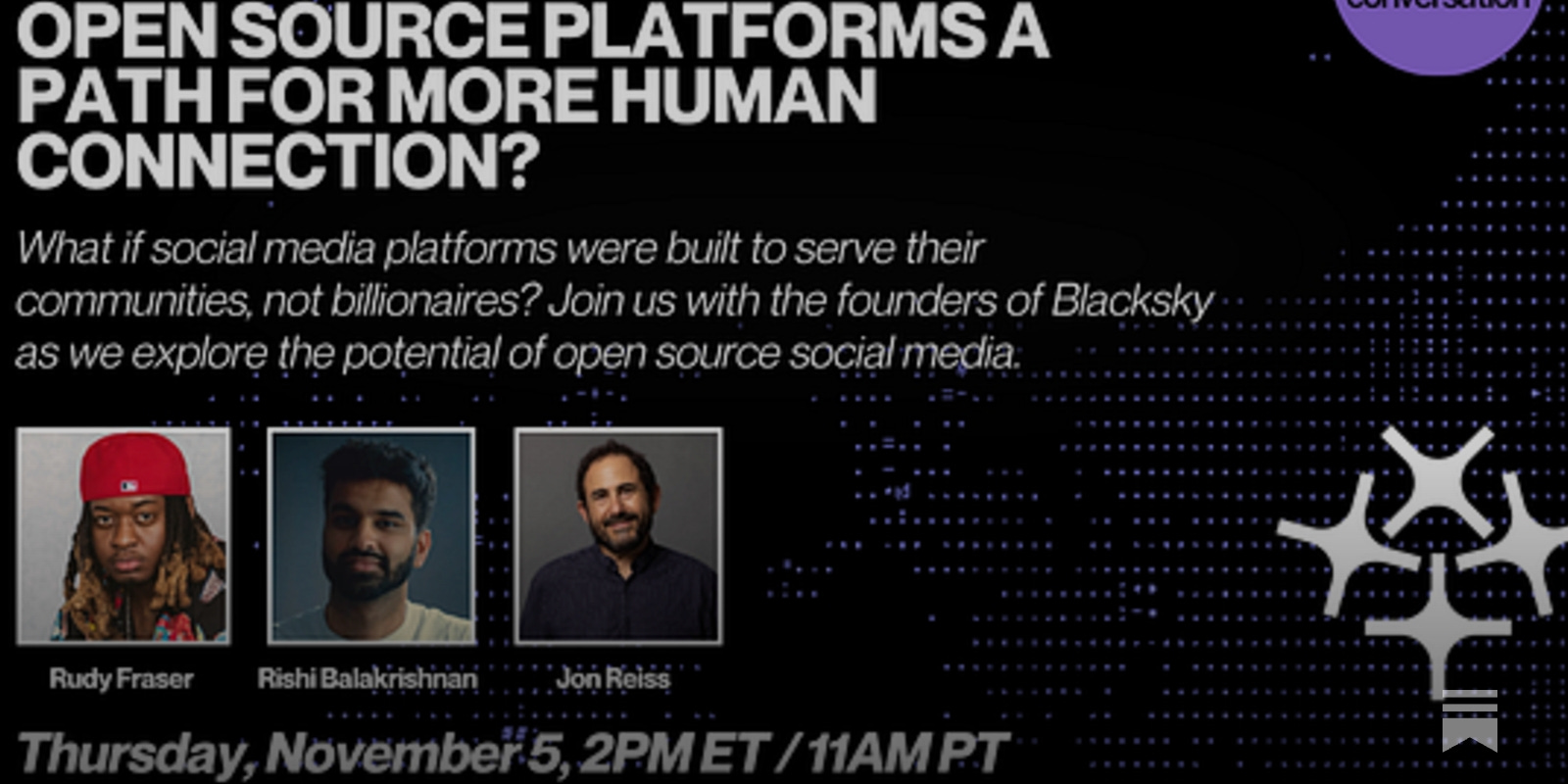
Reclaiming Social Spaces: Are Open Source Platforms a Path for More Human Connection?
What if social media platforms were built to serve their communities, not billionaires? Join us with the founders of Blacksky as we explore the potential of open source social media.
Why open source: 25 reasons to embrace it | Ben Balter
Open source isn't a fad. Here are twenty-five economic, moral, and personal reasons your organization should embrace it.
The Rise of OPEN Innovation: The 3P’s for Building a Durable Open Software Company
Accel recently hosted more than 100 of the top open source executives and thought leaders for a full-day event covering the next wave of…

Open Source Beyond Licensing - The Evolution Ahead
Boris Mann's digital garden and personal site.

Publishing Beyond the Market: Open Access, Care, and the Commons
<I>Publishing Beyond the Market</I> argues that the move to open access should focus less on the free accessibility of research outputs and more on who controls the publications and infrastructures for scholarly communication. By deploying theoretical literature on science and technology studies, care ethics, and the commons, the book critically interrogates open access and reimagines a more ethical future for researcher-led publishing. A case study of Plan S—the multifunder European policy for open access publishing—explores its tendency to rehearse all the failures of commercialisation. Through critical engagement with the open access landscape, the book reveals the shortcomings of market-centric and policy-based approaches to open access book and journal publishing, particularly their tendency to reinforce conservatism, commercialism, and private control of publishing.<BR /><BR /> Going forward, <I>Publishing Beyond the Market</I> explores the importance of collectivity and democratic governance within the transition to open access publishing. It suggests that developing a commons-based, scholar-led publishing landscape through a series of presses that are each managed by working academics could offer a productive counterpoint to marketised systems of open access and subscription publishing. In weaving themselves together in order to "scale small" these publishing initiatives would act as a counter-hegemonic project based on mutual reliance and care. By illustrating how these projects build toward a commons-based publishing future, and how they may complement other approaches to publishing within university presses and libraries, the book culminates in an argument for the infrastructures, policies, and forms of governance needed to nurture such a collective vision.

The Application and Its Consequences for Non-Standard Knowledge Work
As part of the Digital Library's transition to Open Access, new features for researchers are available in the Premium Edition. Click here to learn more.

