


Can progressive enhancement help to build JavaScript web apps that handle errors gracefully?
Maybe we could tone down the JavaScript
I’m having a really weird browser issue, where scripts on some pages just won’t run until about 20 seconds have passed. Whatever you’re about to suggest, yes, I’ve thought of it, and no, it’s not the problem. I mention this not in the hope that someone will help me debug it, but because it’s made me acutely aware of a few… quirks… of frontend Web development. (No, really, do not try to diagnose this problem from one sentence, I have heard an
The many, many, many JavaScript runtimes of the last decade
This last decade has seen an inundation of new JavaScript runtimes (and engines in equal measure), enabling us to run JavaScript in all manner of contexts...

Moddable Blog | Why Moddable supports JS0/JSSugar
Proposed changes to how the JavaScript language evolves have generated a lot of discussion recently. The proposal, titled "Language Evolution: Problems, and What Can We Do About It?" was delivered by Shu-yu Guo of Google and supported by Apple, Moddable, Mozilla, and Sony. "Language Evolution" explains that JavaScript engine developers are increasingly struggling with the competing goals of supporting the latest language features and protecting users running JavaScript especially in the browser. While the creators of every JavaScript engine have long made large investments to support developers, ultimately the privacy, security, and safety of users must take priority given the many critical ways JavaScript is used today. The proposal lays out a path forward that balances these competing priorities.
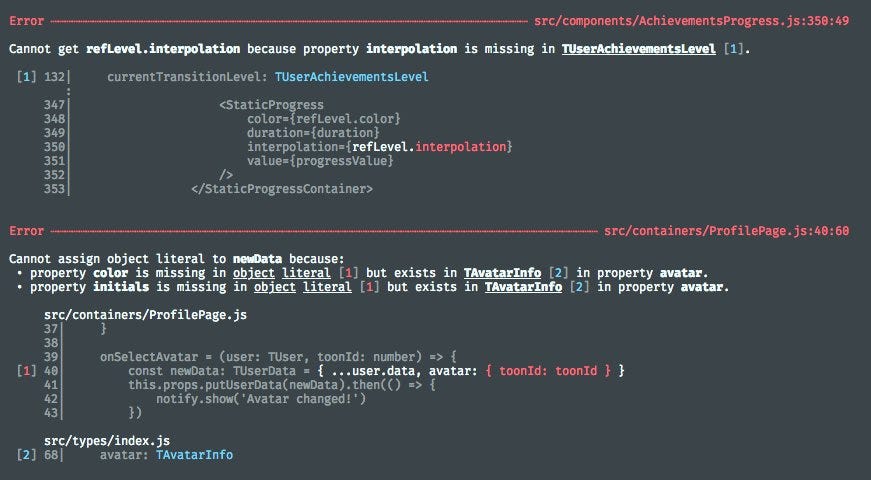
Better Flow Error Messages for the JavaScript Ecosystem
Over the last year, the Flow team has been slowly auditing and improving all the possible error messages generated by the type checker. In…

Running Interactive Scripts | Web Browser Engineering
The first web applications were like the previous chapter’s guest book, with the server generating new web pages for every user action. But in the early 2000s, JavaScript-enhanced web applications, which can update pages dynamically and respond immediately to user actions, took their place. Let’s add support for this key web technology to our browser.
Frontend Minimalism in Action: Do More With Less JavaScript | Peter Kröner | webinale Berlin 2026
State of JS 2020
The annual survey about the latest trends in the JavaScript ecosystem.
2021 JavaScript Rising Stars
A complete overview of the JavaScript landscape in 2021: trends about front-end and Node.js frameworks, React and Vue.js ecosystems, build tools, state management...
Progressive Enhancement with the WordPress REST API – Pre-Thought Listen
In a REST API discussion today, we discussed the future of the REST API. Something I touched upon briefly in that meeting is the concept of progressive enhancement with the REST API. Since this topic hasn’t been brought up much previously, I want to elaborate on how progressive enhancement works.
How Baseline Can Help You Ship Less JavaScript — Smashing Magazine
The gap between “you need a library for this” and “the browser does this” keeps closing. A practical guide to auditing your dependencies and finding what the web platform can now handle for you.

Progressive Enhancement: Zed’s Dead, Baby
I've got bad news: Progressive enhancement is dead, baby. It's dead. At least for the majority of web developers.
State of JavaScript 2022
The 2022 edition of the annual survey about the latest trends in the JavaScript ecosystem.
【Modern Web 2015】JavaScript at 20 Years - Brendan Eich
Progressive Web Apps: Escaping Tabs Without Losing Our Soul - Infrequently Noted
Progressive Web Apps are aren't packaged and deployed through stores, they're just websites that took all the right vitamins.
