

The Common Lisp concept of time, and how it relates to scientific time and political time.

James Gleick on How Our Cultural Fascination with Time Travel Illuminates Memory, the Nature of Time, and the Central Mystery of Human Consciousness
“Every moment alters what came before. We reach across layers of time for the memories of our memories.”
Annick de Witt on Worldview Theory in a Time Between Worlds
Join us for the Life Itself Research Community Call#33. Annick de Witt discusses how her research on worldviews helps us respond to our current period of global societal transition.
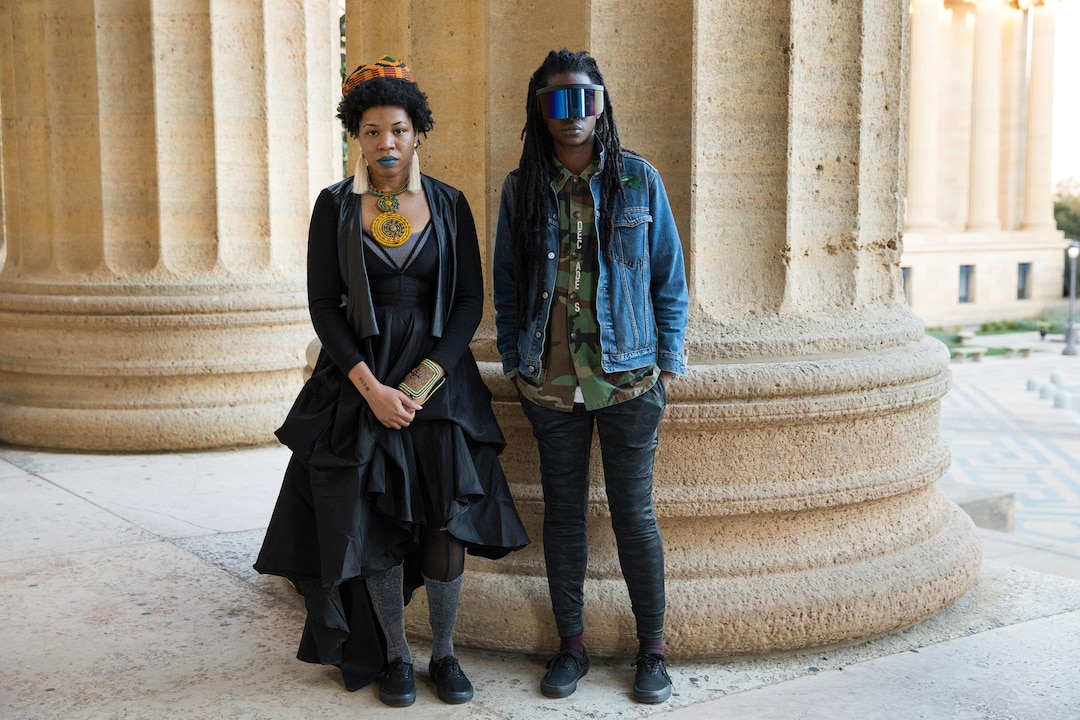
Dismantling the Master Clock
The time-turning philosophy and music of the Afrofuturist collective led by Rasheedah Phillips and Moor Mother.
Izabella Kaminska on Twitter / X
The problem of our time is not merely information overload. It is that the time required to construct a coherent understanding of reality is becoming longer than the time during which that understanding remains valid.— Izabella Kaminska (@izakaminska) October 16, 2026
Does Your Brain Think Accurately About Time?
Chicago Booth’s Kristin Donnelly talks about her research on time-duration asymmetry.

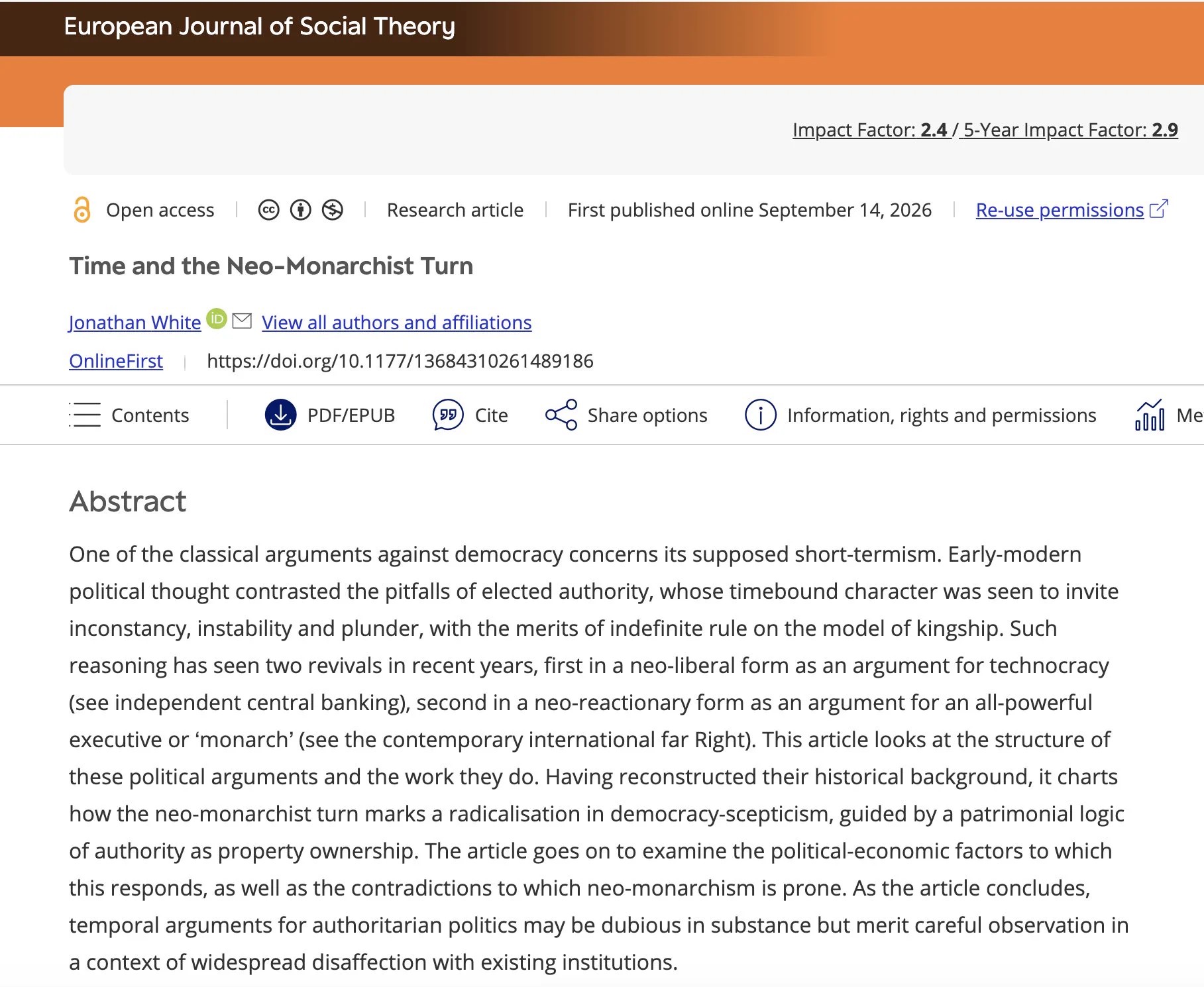
Jonathan White on Twitter / X
New article of mine - 'Time and the Neo-Monarchist Turn', European Journal of Social Theoryhttps://t.co/DjewlLoGp3 pic.twitter.com/w4pS4vFmeE— Jonathan White (@JonathanPJWhite) September 15, 2026
Scientists found brain’s internal clock that influences how we perceive time
A chocoholic rat named Marco helped scientists find special brain cell network.

Anna Stansbury on Twitter / X
Nope. This paper is about US academics 1900-1960! The present looks different.Asking people to stop drawing inference from these stats as if they're about the present& asking authors to put time period in their title and abstract!🙏 https://t.co/bphnK6Hy7H— Anna Stansbury (@annastansbury) December 31, 2024
Living with two clocks
Staying with unbearable thoughts, and searching for a politics that’s equal to these times.

Dismantling the Master's Clock: On Race, Space, and Tim…
Afrofuturist artist Rasheedah Phillips of Black Quantum…

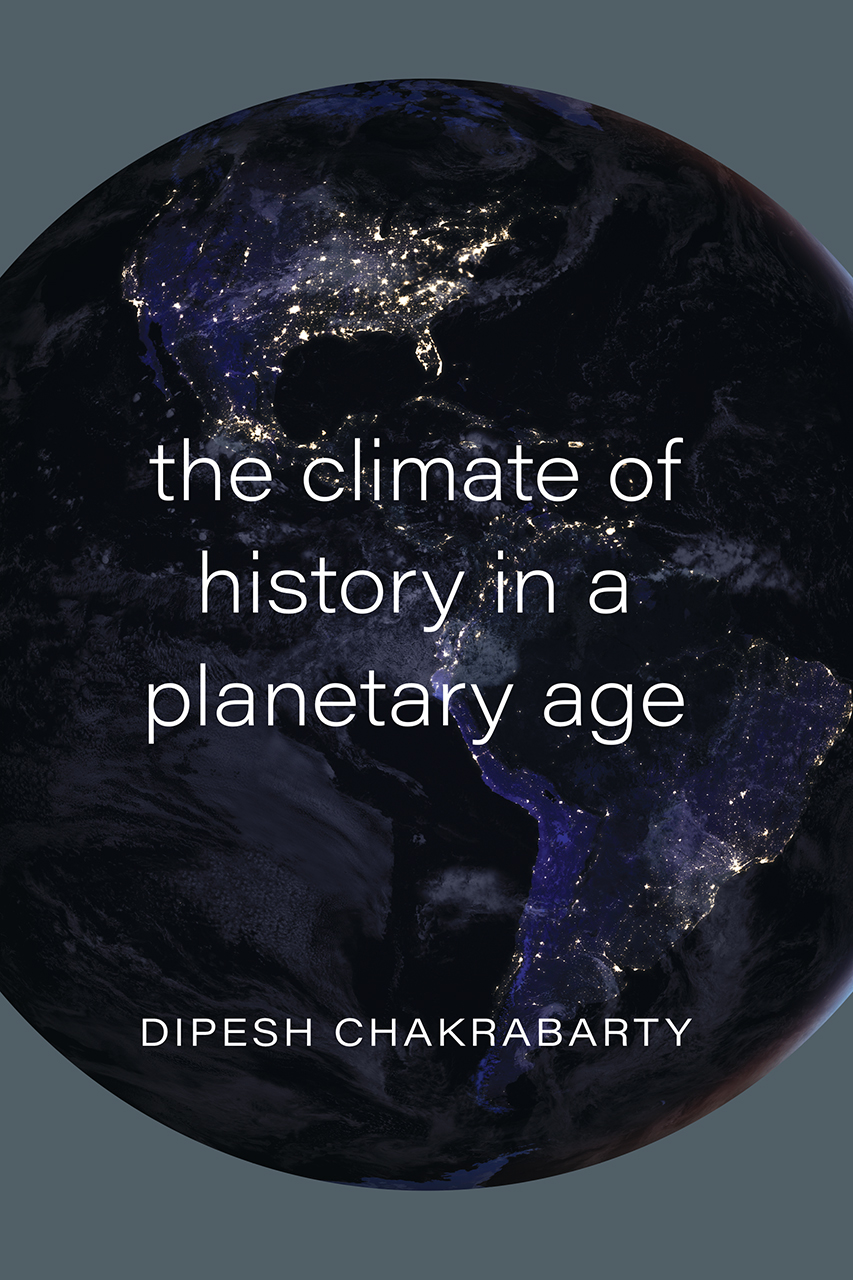
The Climate of History in a Planetary Age
For the past decade, historian Dipesh Chakrabarty has been one of the most influential scholars addressing the meaning of climate change. Climate change, he argues, upends long-standing ideas of history, modernity, and globalization. The burden of The Climate of History in a Planetary Age is to grapple with what this means and to confront humanities scholars with ideas they have been reluctant to reconsider—from the changed nature of human agency to a new acceptance of universals. Chakrabarty argues that we must see ourselves from two perspectives at once: the planetary and the global. This distinction is central to Chakrabarty’s work—the globe is a human-centric construction, while a planetary perspective intentionally decenters the human. Featuring wide-ranging excursions into historical and philosophical literatures, The Climate of History in a Planetary Age boldly considers how to frame the human condition in troubled times. As we open ourselves to the implications of the Anthropocene, few writers are as likely as Chakrabarty to shape our understanding of the best way forward.
Interim note 4: time-based media
Writing at the end of the world, from Hveragerði, Iceland
The Cyclical Theory of Open Source
In an attempt to explain the periodic fluctuations in American history, the historian Arthur Schlesinger – the Schlesinger the Harvard library is named after, not his son Arthur Schlesinger Jr that worked in Kennedy’s administration – posited that history runs in cycles. Specifically, his cyclical theory argued that American history swung back and forth between

The Daily Planet #123: Deep Time Impermanence - The Daily Planet