

It may come as no surprise to you that some of the most challenging work available in computer science is to be found in the USA military.
Defense Intelligence: Comprehensive Plan Needed to Improve Stakeholder Engagement in the Development of New Military Intelligence System
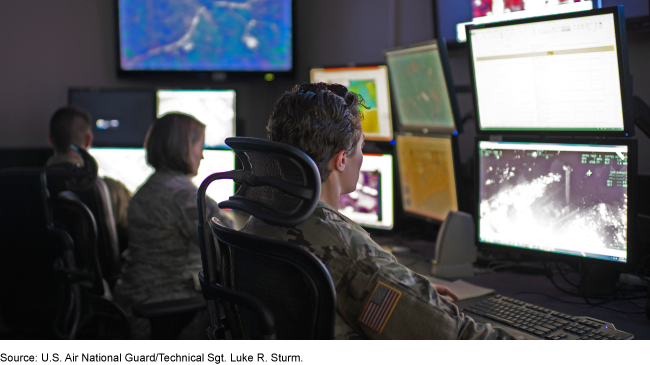
Intelligence collected on foreign militaries is critical for the U.S. military. The Defense Intelligence Agency's database for this intelligence doesn...
LotusNotes
I tend to focus on the origin of the computer within the military. Particularly in the early days of digital computing, the military was a key customer, and fundamental concepts of modern computing arose in universities and laboratories serving military contracts. Of course, the war would not last forever, and computing had applications in so many other fields—fields that, nonetheless, started out as beneficiaries of military largesse.
AI Warfare Is Already Here
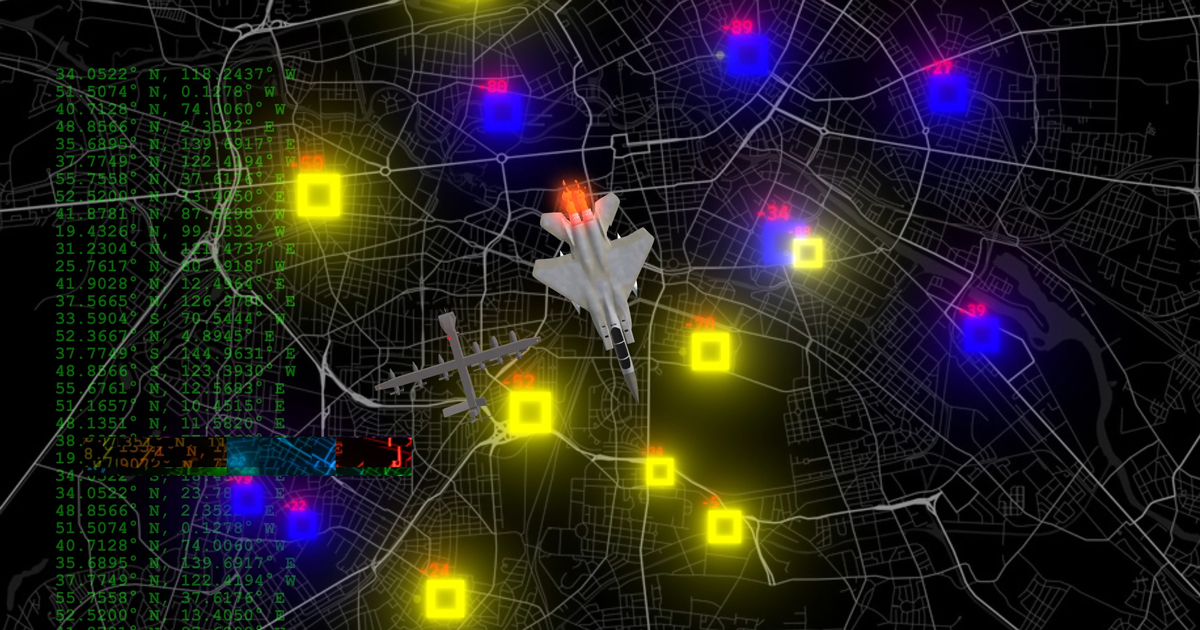
US military operators started out skeptical about AI, but now they are the ones developing and using Project Maven to identify targets on the battlefield.
The shifting battlefield: technology, tactics, and the risk of blurring lines in warfare - Humanitarian Law & Policy Blog
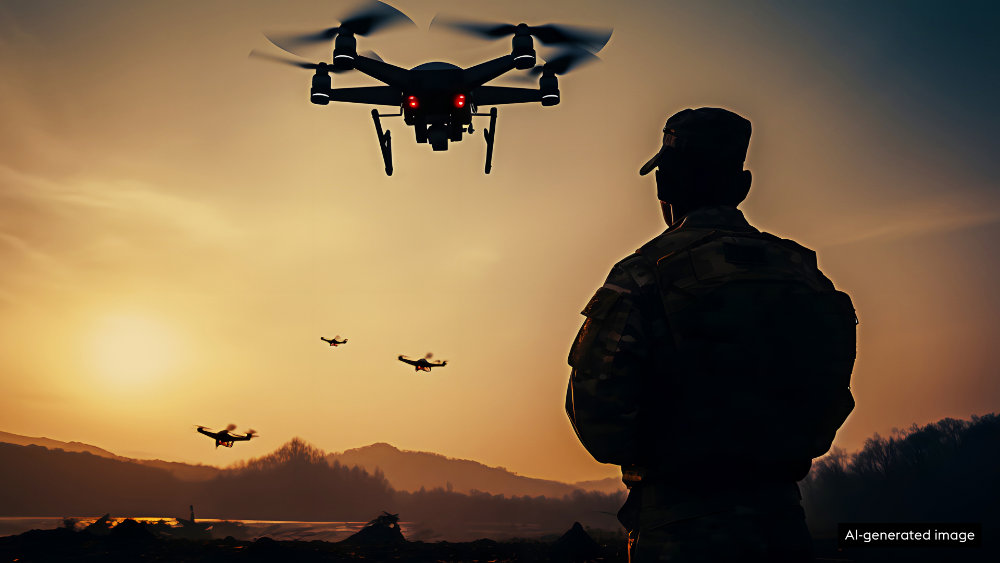
The accelerating integration of emerging technologies into armed conflict is transforming not only the tools of war, but its tactics, geography, participants and impact. Technological developments – from commercial drones to artificial intelligence, electronic warfare to the military use of civilian infrastructure – risk undermining boundaries between military and civilian domains. These changes challenge long-held...
The closed world: Systems discourse, military strategy and post WWII American historical consciousness
This essay proposes a cultural and historical explanation for the American Military's fascination with computing. Three key elements of post-WWII US political culture — apocalyptic struggle with the USSR, subsuming all other conflicts: a long history of antimilitarist sentiment in American politics; and the rise of science-based military power — contributed to a sense of the world as a closed system accessible to American technological control. A developing scientific systems discourse, centrally including computer science and AI, was adopted for strategic thinking and military technology. The Strategic Computing and Strategic Defense Initiatives are discussed as contemporary examples of this conjunction.
Guide to Investigating Tech and AI in Modern Warfare
Technology is rapidly rewriting the nature of war and conflict, investigative reporters need new resources and reporting strategies so they can keep up.
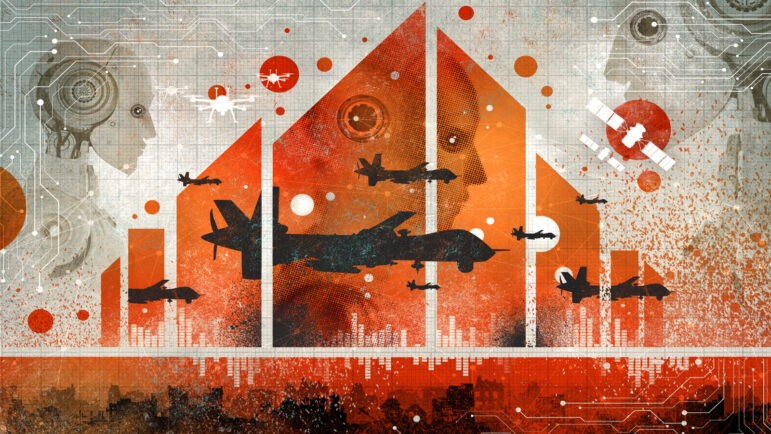
How the U.S. Military Learned to Embrace AI Warfare
A review of Katrina Manson, “Project Maven: A Marine Colonel, His Team, and the Dawn of AI Warfare” (Norton, 2026).

War in the age of intelligent machines
271 pages : 24 cm; In the aftermath of the methodical destruction of Iraq during the Persian Gulf War, the power and efficiency of new computerized weapons and suveillance technology has become chillingly apparent. This new weaponry has a significance that goes far beyond military applications; it represents a profound historical shift in the relation of human beings both to machines and to information. Details the mutating history of information analysis and machinic organization from the mobile siege artillery of the Renaissance, the clockwork armies of the Thirty Years War, the Napoleonic campaigns, and the Nazi blitzkrieg up to present-day cybernetic battle-management systems and satellite reconnaissance network, and provides a philosophical and historical reflection on the changing forms through which human bodies and materials are combined, organized, deployed and made effective. [back cover]; Includes bibliographical references (pages 233-266) and index; Introduction -- Collision course -- Bloodless transfusion -- Policing the spectrum

Exclusive: US military had close call after using AI for false intelligence report, sources say | CNN Politics
The episode shows the risks of using this new, relatively poorly understood technology in the middle of the Iran war

The AI-Powered, Totally Autonomous Future of War Is Here
Ships without crews. Self-directed drone swarms. How a US Navy task force is using off-the-shelf robotics and artificial intelligence to prepare for the next age of conflict.

China's Artificial General Intelligence | Center for Security and Emerging Technology
Recent op-eds comparing the United States’ and China’s artificial intelligence (AI) programs fault the former for its focus on artificial general intelligence (AGI) while praising China for its success in applying AI throughout the whole of society. These op-eds overlook an important point: although China is outpacing the United States in diffusing AI across its society, China has by no means de-emphasized its state-sponsored pursuit of AGI.

Artificial Intelligence Safety and Security License Requirements
Artificial Intelligence Safety and Security License Requirements Artificial Intelligence (AI) is now broadly capable, which can produce both benefits and dangers. AI will hasten the design and proliferation of bioweapons, cyberweapons, nuclear weapons, progressively more general intelligence,...

Security incident disclosure — July 2026
We’re on a journey to advance and democratize artificial intelligence through open source and open science.

Intelligence Rising
Artificial Intelligence (AI) is expected to be one of the most transformative technologies in human history.

Protecting civilians in a data-driven and digitalized battlespace: toward a baseline humanitarian technology infrastructure
This article examines the realities of modern day warfare, including a rising trend in hybrid threats and irregular warfare which employ emerging technologies supported by digital and data-driven processes. The way in which these technologies become applied generates a widened battlefield and leads to a greater number of civilians being caught up in conflict. Humanitarian groups mandated to protect civilians have adapted their approaches to the use of new emerging technologies. However, the lack of international consensus on the use of data, the public and private nature of the actors involved in conflict, the transnational aspects of the widened battlefield, and the heightened security risks in the conflict space pose enormous challenges for the protection of civilians agenda. Based on the dual-usage aspect of emerging technologies, the challenges associated with regulation and the need for those affected by conflict to demonstrate resilience toward, and knowledge of, digital media literacy, this paper proposes the development of guidance for a "minimum basic technology infrastructure" which is supported by technology, regulation, and public awareness and education

Exploring the Militarization of US Police Forces
The United States Defense Department’s 1033 program began in 1997, it allows for the transfer of excess military equipment to civilian law enforcement agencies. Most of the equipment obtained is justifiable, things such as cold weather clothing, diesel generators and flashlights. However, a significant portion of it is explicitly combat-oriented in nature, equipment such as M-16 rifles, tanks, and mine-resistant vehicles.