This means the reverse is true: “self management is self organization.”
An Introduction to Self-Organization - Interaction Institute for Social Change
“The ideas of self-organization are very important to understand the autonomy, the authenticity and basic humanity of people.” -Fritjof Capra One principle of “thinking like a network” that I like to highlight is the notion of moving from permission and perfection (looking for the one right answer) to self-organization and emergence. Self-organization is a defining... Read More

Beyond the Holacracy Hype
Most observers who have written about holacracy and other forms of self-management take extreme positions, either celebrating these “bossless,” “flat” work environments for fostering flexibility and engagement or denouncing them as naive experiments that ignore how things really get done. To gain a more accurate, balanced perspective, the authors—drawing on examples from Zappos, Morning Star, and other companies—examine why these structures have evolved and how they operate, both in the trenches and at the level of enterprise strategy and policy. Self-organization models typically share three characteristics: Teams are the structure. Within them, individual “roles” are collectively defined and assigned to accomplish the work. Teams design and govern themselves, while nested within a larger structure. Leadership is contextual. It’s distributed among roles, not individuals, and responsibilities shift according to fit and as the work changes. Adopting self-management wholesale—using it to determine what should be done, who should do it, and how people will be rewarded across an entire enterprise—is hard, uncertain work, and the authors argue that in many environments it won’t pay off. But their research and experience also suggest that elements of self-organization can be valuable tools for companies of all kinds, and they look at circumstances where it makes more sense to blend the new approaches with traditional models.

Self-organizing systems: what, how, and why?
I present a personal account of self-organizing systems, framing relevant questions to better understand self-organization, information, complexity, and emergence. With this aim, I start with a notion and examples of self-organizing systems (what?), continue with their properties and related concepts (how?), and close with applications (why?) in physics, chemistry, biology, collective behavior, ecology, communication networks, robotics, artificial intelligence, linguistics, social science, urbanism, philosophy, and engineering.
Self-host an Organization | Bitwarden
This article will walk you through starting an organization on your self-hosted server.

A movement of self-authorship and self-organization
What becomes possible when we focus first on transforming ourselves and our relationships, and then leverage new technologies?


CoMakery/self-organization-constitution
An open source constitution for responsive organizations. Inspired by Sociocracy, Holacracy, Self-Management, Reinventing Organizations, etc.
Self-Organization in Biological Systems
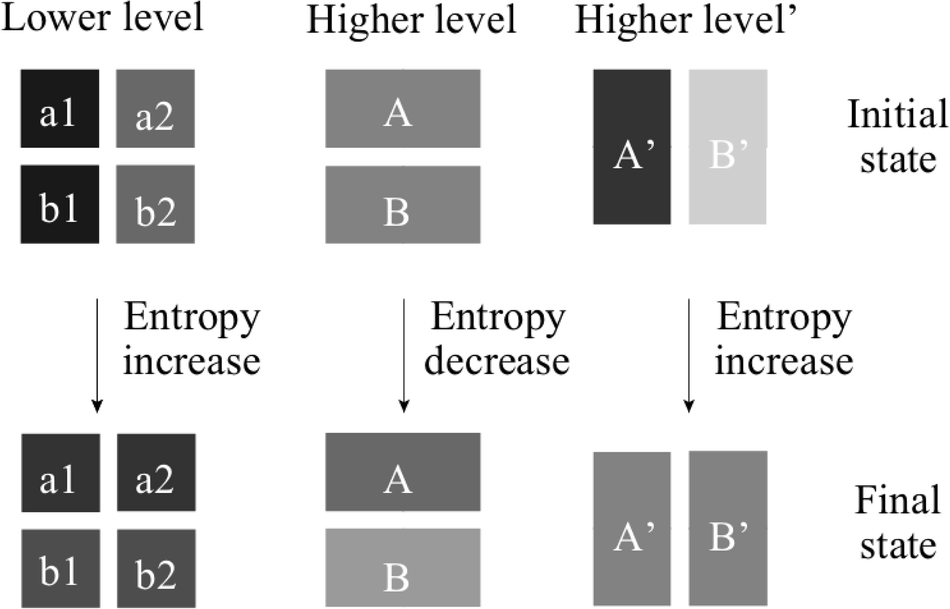
The synchronized flashing of fireflies at night. The spiraling patterns of an aggregating slime mold. The anastomosing network of army-ant trails. The coordinated movements of a school of fish. Researchers are finding in such patterns—phenomena that have fascinated naturalists for centuries—a fertile new approach to understanding biological systems: the study of self-organization. This book, a primer on self-organization in biological systems for students and other enthusiasts, introduces readers to the basic concepts and tools for studying self-organization and then examines numerous examples of self-organization in the natural world. Self-organization refers to diverse pattern formation processes in the physical and biological world, from sand grains assembling into rippled dunes to cells combining to create highly structured tissues to individual insects working to create sophisticated societies. What these diverse systems hold in common is the proximate means by which they acquire order and structure. In self-organizing systems, pattern at the global level emerges solely from interactions among lower-level components. Remarkably, even very complex structures result from the iteration of surprisingly simple behaviors performed by individuals relying on only local information. This striking conclusion suggests important lines of inquiry: To what degree is environmental rather than individual complexity responsible for group complexity? To what extent have widely differing organisms adopted similar, convergent strategies of pattern formation? How, specifically, has natural selection determined the rules governing interactions within biological systems? Broad in scope, thorough yet accessible, this book is a self-contained introduction to self-organization and complexity in biology—a field of study at the forefront of life sciences research.

Self-Host & Tech Independence: The Joy of Building Your Own
Why I self-host my websites, newsletter, and homelab—and the satisfaction that comes from building and using your own digital tools.

REINVENTING ORGANIZATIONS
Based on three years of research, the book Reinventing Organizations describes the emergence of a new management paradigm, a radically more soulful, purposeful and powerful ways to structure and run businesses and non-profits, schools and hospitals.

Reinventing Organizations
Manage your priorities and energy.
Back when I was managing at Uber, I latched onto a thinking tool that I drilled into the teams I worked with: reach the right outcomes by prioritizing the company first, your team second, and yourself third. This “company, team, self” framework proved a helpful decision-making tool, and at the time I felt it almost always led to the correct decision. It also helped me articulate why I disagreed with some of my peers’ decisions, which violated this hierarchy by placing individual or team preferences over the company’s priorities.

Self-Organizing Ideas
The goal of Subconscious is to generate self-organizing ideas. Organizing ideas through sheer force of will is difficult, and I am lazy. Luckily there may be another way. Given the right mechanisms, the right conditions, and enough energy and time, a system can self-organize.

The Holacracy Community of Practice is now the Self-Management Accelerator | Holacracy
A new identity for a new direction A new identity for a new direction

The Future of Organizations is Responsive
How to Unlock Your Organization’s Potential to Change the World

When AI builds itself
Our progress toward recursive self-improvement, and its implications.