

metabrainz/troi-recommendation-playground
A recommendation engine playground that should hopefully make playing with music recommendations easy.

Pixie: A System for Recommending 3+ Billion Items to200+ Million Users in Real-Time
User experience in modern content discovery applications critically depends on high-quality personalized recommendations. However, building systems that provide such recommendations presents a major challenge due to a …

Listen to music like it’s 2005 : Luke Cyca Dot Calm
Getting off spotify and rediscovering my own music collection

Pixie: A System for Recommending 3+ Billion Items to 200+ Million Users in Real-Time
User experience in modern content discovery applications critically depends on high-quality personalized recommendations. However, building systems that provide such recommendations presents a major challenge due to a massive pool of items, a large
Why We’re Taking a Human‑First Stand on AI‑Generated Music — Qobuz Community
Artificial intelligence is transforming the music industry at an unprecedented pace. Faced with the explosion of AI-generated content and the legitimate questions it raises, Qobuz has chosen transparency. This charter establishes our framework: how we use AI, where we draw our lines, and what commi

Malleable Music Ensembles
A framework using generalized algebraic theories and categorical lenses to enable interoperable, local-first networked music ensembles.
Deep Dive: Inside X (fka Twitter)’s Recommendation Algorithm
Decoding the Machine That Powers Your “For You” Timeline ,When Elon Musk open-sourced Twitter’s recommendation algorithm in March 2023, it…

2002: Last.fm and Audioscrobbler Herald the Social Web
Following in Amazon's footsteps, two student projects independently use 'collaborative filtering' to bring recommendations and social networking to online music; soon they will join forces.

The Algorithmic Flattening of Sound: Computational Evidence and Justice Implications of AI Music Homogenization
This paper audits whether large-scale generative music systems exhibit measurable musical homogenization relative to human-produced music, and develops a justice-centered account of why this matters. We audit two commercially deployed systems (Suno and Lyria 3) across four genres (Afrobeats, K-pop, Dance Pop, and Heavy Metal). For each system and genre, we generate 100 tracks and compare them against human corpora of equal size, using 72 music information retrieval (MIR) features and multiple diagnostics of dispersion, redundancy, and separability. We define homogenization as reduced acoustic variation in standard computational audio features including rhythm and timing, timbre/spectral shape, and dynamics, both within genres and across genre boundaries. We also generate tracks using only a genre name as the prompt, with no additional instructions, to reveal each system's default musical tendencies. The results show two structurally distinct homogenizing tendencies. Lyria reduces within-genre acoustic diversity, while Suno collapses the acoustic distinctions between genres without compressing within-genre spread. Neither system follows user prompts faithfully, indicating that the observed patterns reflect learned priors rather than prompt constraints. The two systems do not converge on a common acoustic profile and are more acoustically distant from each other than two random human subsamples would typically be. Nevertheless, a standard classifier distinguishes AI from human tracks near-perfectly on MIR features alone. We argue that these patterns matter not as an aesthetic curiosity but as a justice-relevant condition, shaping which musical styles become legible, valued, and economically rewarded as generated outputs increasingly circulate at scale.

ListenBrainz
Track, explore, visualise and share the music you listen to. Follow your favourites and discover great new music.

This is definitely my feeling working with them on recommendation algorithm.

Mark Riedl
Fascinating experiment: current AI systems lack creativity to reliably pursue research arxiv.org/abs/2607.27191 - poor judgment about the bar for publishable research - uncreative responses in research design - ineffective backtracking from dead ends - poor resource awareness - instruction drift
Recommender Systems

Sign in - For You
BridgEU: new project to study how recommendation systems can reduce polarization | SynoSys
Letting Users Choose Recommender Algorithms: An Experimental Study
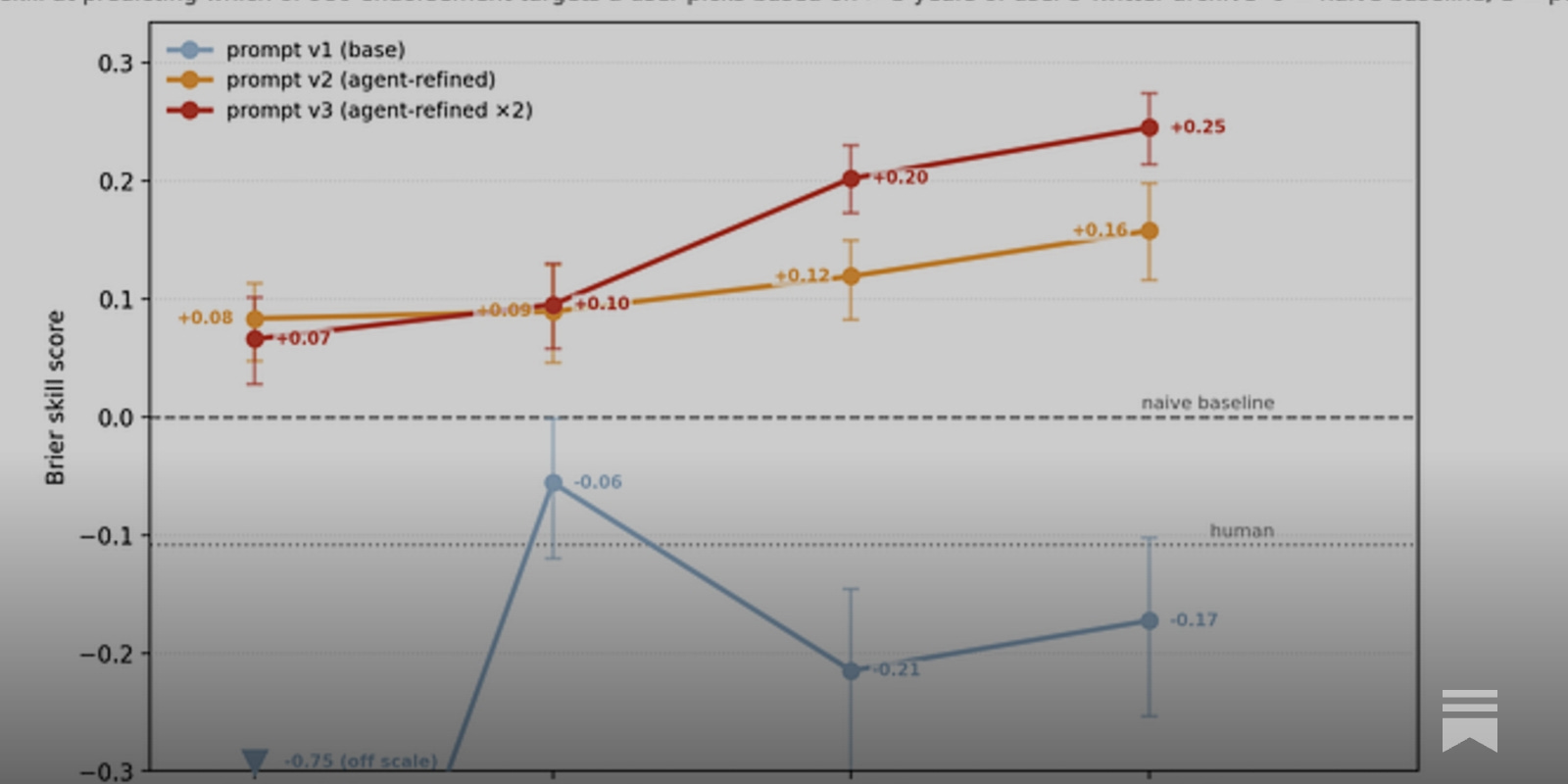
Agentic Taste Modeling | lab notes #8

A Bluesky feed for one · Adam Wiggins

How the Substack feed is learning to understand your reading journey

