Thoughts on AI, life, and building things that matter.
Dario Amodei — Machines of Loving Grace
How AI Could Transform the World for the Better

Dario Amodei — Machines of Loving Grace
How AI Could Transform the World for the Better
My Thoughts on AI, Part 1: Fears, Opinions, and Mental Journey
My own personal thoughts and opinions on AI effects and usage, and how those have evolved over time

‘I Don’t Think We’re All F***ed Anymore’
Kevin Roose’s new book explores the terrifying implications of AI, but he’s feeling a bit more sanguine these days.
How should social science think about AI?
Big structures and large processes are back, baby

The Age of Wonders and Terrors
Twenty years ago, when the idea of AI taking over the world in our lifetimes still struck most of us as the unconstrained fantasy of those who knew too much science fiction and too little science, …

Machine god metaphors eat your brain
There are other ways of thinking about AI
Amanda Askell on AI Consciousness, Claude & Silicon Valley’s Biggest Fear
AI FOR EPISTEMICS & COORDINATION
Civilization and technology have radically improved the human condition. Nonetheless, the world sometimes goes in directions which essentially nobody would prefer — e.g., nuclear arms races, unexpected financial crashes, predatory marketing, or ubiquitous political misinformation.
The Impact of Artificial Intelligence on Human Thought
This research paper examines, from a multidimensional perspective (cognitive, social, ethical, and philosophical), how AI is transforming human thought. It highlights a cognitive offloading effect: the externalization of mental functions to AI can reduce intellectual engagement and weaken critical thinking. On the social level, algorithmic personalization creates filter bubbles that limit the diversity of opinions and can lead to the homogenization of thought and polarization. This research also describes the mechanisms of algorithmic manipulation (exploitation of cognitive biases, automated disinformation, etc.) that amplify AI's power of influence. Finally, the question of potential artificial consciousness is discussed, along with its ethical implications. The report as a whole underscores the risks that AI poses to human intellectual autonomy and creativity, while proposing avenues (education, transparency, governance) to align AI development with the interests of humanity.

233. "The Illusion of Thinking" — Thoughts on This Important Paper
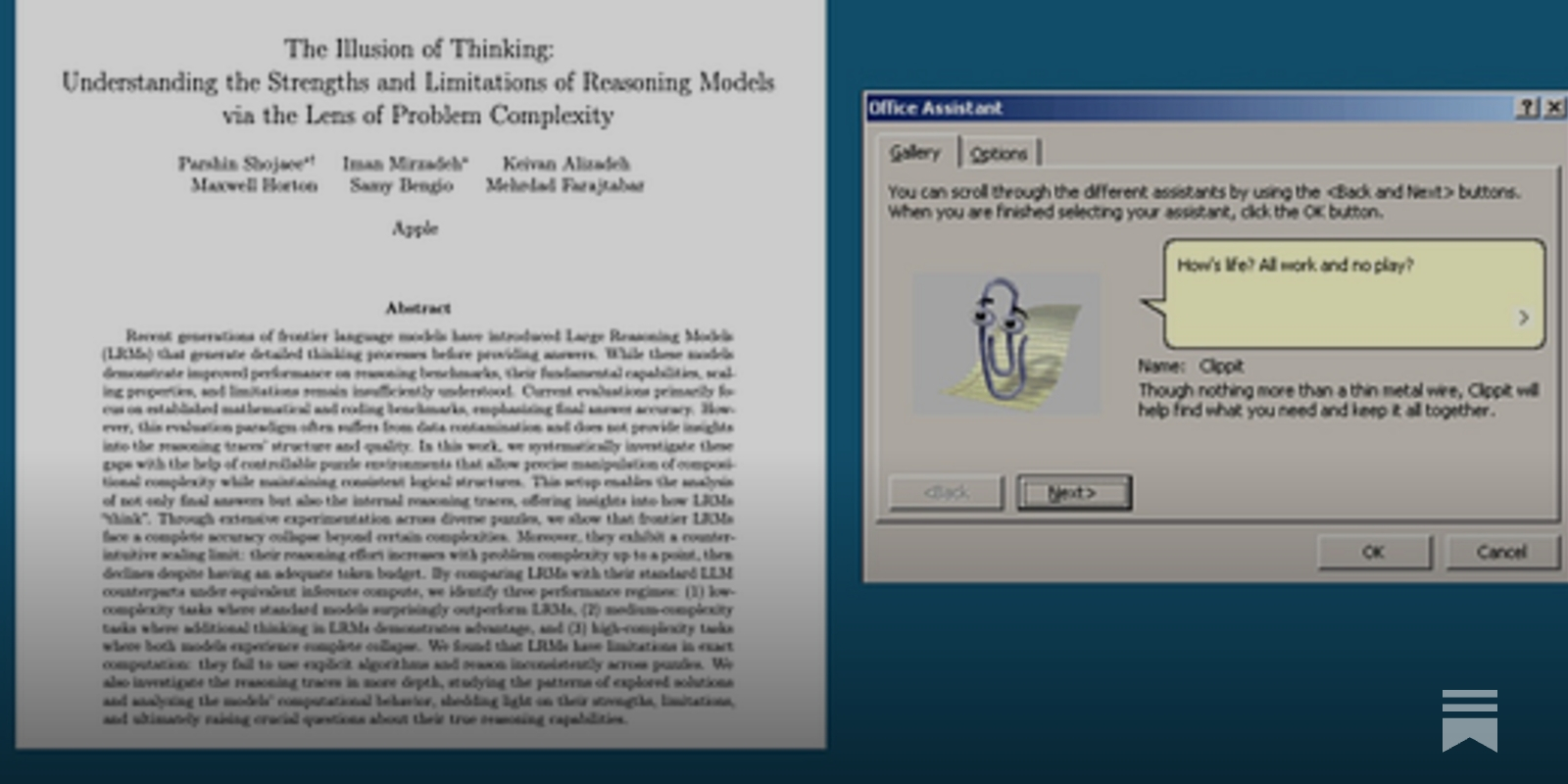
This is a fantastic paper. I just love it. tl;dr AI is not human. Anthropomorphization has been bad for AI, LLMs, and Chat. Clippy walked so today's AI could run.
AI is not superhuman
What metaphor should drive the field of AI research?
What we can’t measure about AI – yet | Aeon Essays
The costs of transformative innovations are immediately clear: it’s the longterm gains that are hardest to understand

The AI We Deserve
Critiques of artificial intelligence abound. Where’s the utopian vision for what it could be?

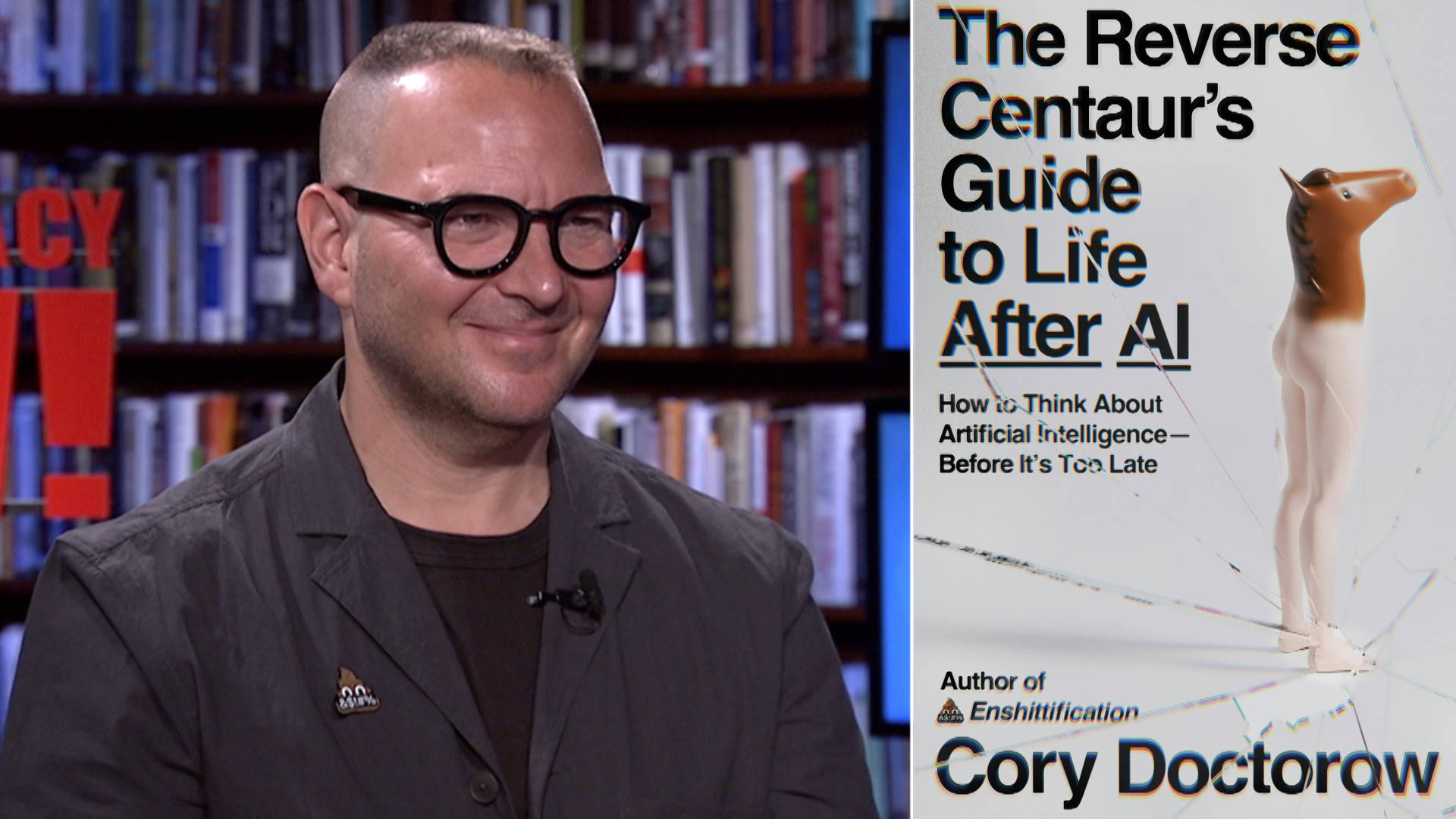
“How to Think About AI”: Cory Doctorow on Big Tech, Understanding AI, Labor Automation & More
Democracy Now! speaks with science fiction author, activist and journalist Cory Doctorow about AI and his latest book, The Reverse Centaur’s Guide to Life After AI: How to Think About Artificial Intelligence — Before It’s Too Late. Doctorow comments on AI’s “bad unit economics” and the connection between automation and labor. “When labor drives automation, it’s usually in service to making the product better, and when capital drives automation, it’s usually in service to making more of the product,” says Doctorow.
Ideas from philosophy I use to think about AI
Physicalism, functionalism, and lots of Quine