The brain requires tons of energy—and new experiments show how low glucose levels and self-control issues are connected.
Train Your Brain to Eat Less Sugar
A recent study led by Evan Forman, PhD, a psychology professor in Drexel University's College of Arts and Sciences, shows that a computer game can be used to train its players to eat less sugar, as way of reducing their weight and improving their health.

Invisible Designers: Brain Evolution Through the Lens of Parasite Manipulation
AbstractThe ability of parasites to manipulate host behavior to their advantage has been studied extensively, but the impact of parasite manipulation on the evolution of neural and endocrine mechanisms has remained virtually unexplored. If selection for countermeasures has shaped the evolution of nervous systems, many aspects of neural functioning are likely to remain poorly understood until parasites—the brain’s invisible designers—are included in the picture. This article offers the first systematic discussion of brain evolution in light of parasite manipulation. After reviewing the strategies and mechanisms employed by parasites, the paper presents a taxonomy of host countermeasures with four main categories, namely: restrict access to the brain; increase the costs of manipulation; increase the complexity of signals; and increase robustness. For each category, possible examples of countermeasures are explored, and the likely evolutionary responses by parasites are considered. The article then discusses the metabolic, computational, and ecological constraints that limit the evolution of countermeasures. The final sections offer suggestions for future research and consider some implications for basic neuroscience and psychopharmacology. The paper aims to present a novel perspective on brain evolution, chart a provisional way forward, and stimulate research across the relevant disciplines.

There's no point at which turning your brain off will work
What stress does to the brain - Neuroscience News
A new study sheds light on how the brain changes as a result of chronic stress. Selective noradrenaline release rewires connectivity patterns between different brain regions. Activity in the amygdala and networks that process sensory stimuli increased.

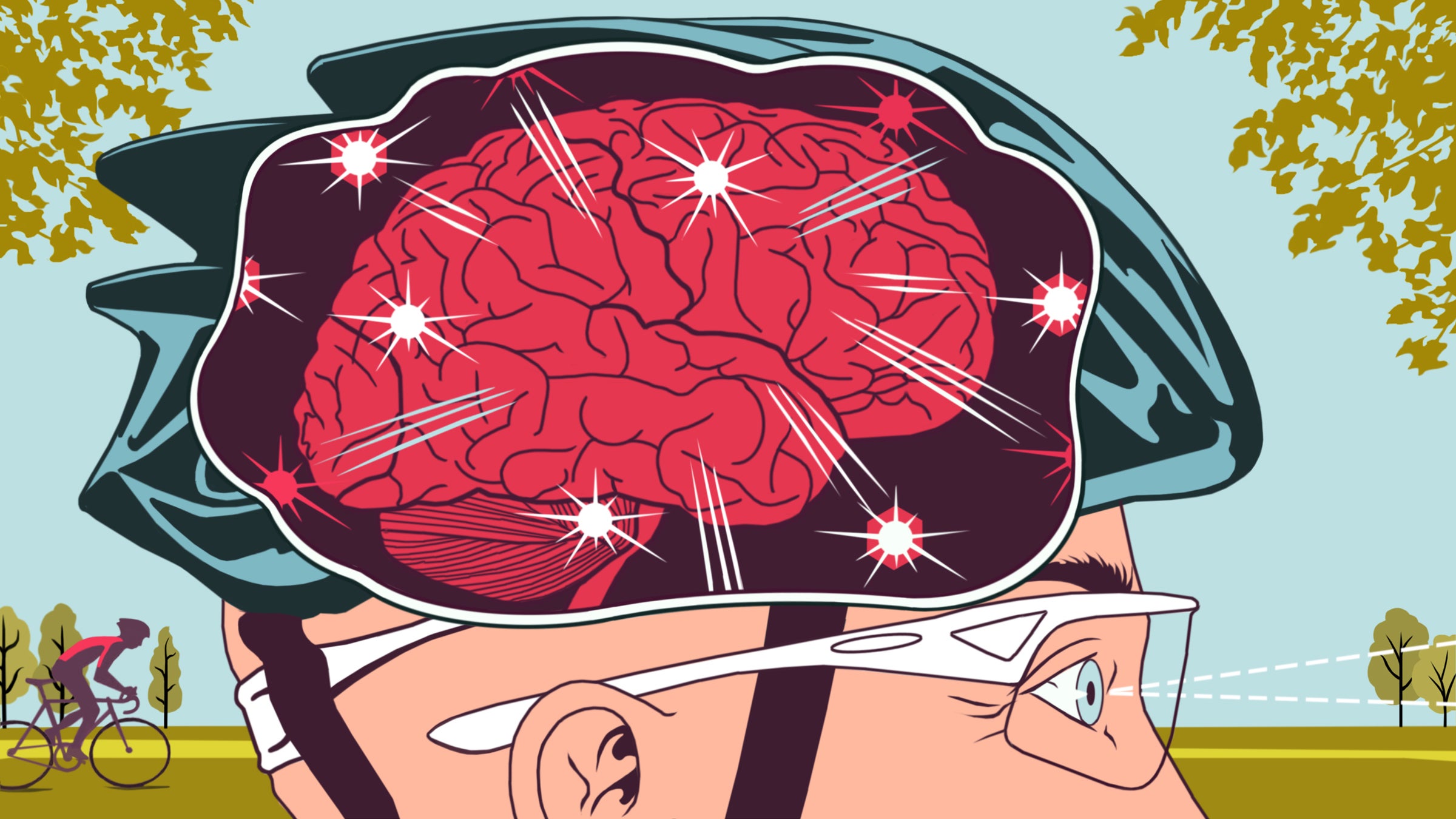
This Is Your Brain on Exercise
Exercise is as good for your brain as it is for your body, and researchers are just beginning to discover why
The Link Between Bioelectricity and Consciousness - Nautilus
“It’s really hard to define what’s special about neurons,” says Tufts molecular biologist Michael Levin. “Almost all cells do the things neurons do, just more slowly.”Illustration by jijomathaidesigners / Shutterstock Life seems to be tied to bioelectricity at every level. The late electrophysiologist and surgeon Robert Becker spent decades researching the role of the body’s…
Scientists reveal foods to eat now to stave off cognitive decline later
Data on over 3,000 people shows only 8 percent with low-quality diets maintained high cognitive abilities into their 70s, a new study reveals.

The neuron as a direct data-driven controller | PNAS
In the quest to model neuronal function amid gaps in physiological data, a promising strategy is to develop a normative theory that interprets neur...

To Remember, the Brain Must Actively Forget | Quanta Magazine
Researchers find evidence that neural systems actively remove memories, suggesting that forgetting may be the default mode of the brain.
Think Twice: How the Gut's "Second Brain" Influences Mood and Well-Being
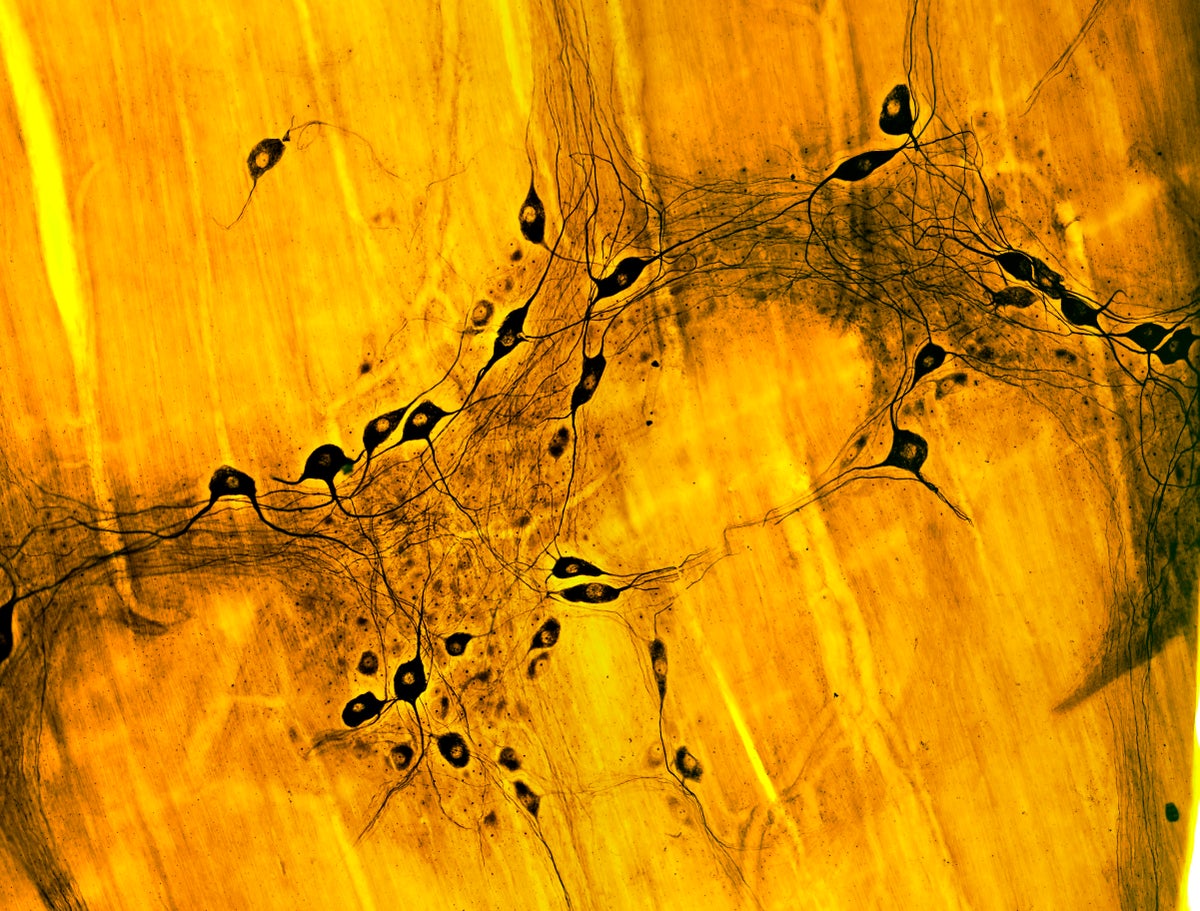
The emerging and surprising view of how the enteric nervous system in our bellies goes far beyond just processing the food we eat
OpenAstrocytes – Forecast Research
Astrocytes make up about a third of the cells in your brain, and form a second, distinct brain network from the more-studied neuronal network. As neuroscience has discovered in only the last few years, the astrocyte network carries out extremely important computations, integrating information from across different brain networks, and using this information to drive feedback to neurons that controls physiological state and maintains long-term homeostasis.
It’s the Effort That Counts: The Effect of Self-Control on Goal Progress Perceptions
Does the amount of self-control consumers must exert to choose a goal-consistent action influence their perceptions of goal progress? For example, if you choose to go to the gym when one of your favorite TV shows is on (vs. when nothing interesting is on TV), do you perceive that you have made a differential amount of progress toward your goal, despite completing the exact same workout? In eight studies (N = 7,515), the authors demonstrate that consumers perceive that they have made more progress on their goals when more (vs. less) self-control is required to choose to complete an identical goal-consistent task. This is because when consumers exert more (vs. less) self-control to choose a goal-consistent task over the goal-inconsistent alternatives, they infer higher commitment to the goal. The higher inferred commitment, in turn, leads consumers to perceive that future goal pursuit will be easier. The authors demonstrate this effect across a variety of tasks and means of exerting self-control, as well as with both hypothetical scenarios and real-behavior studies.

The inner screen model of consciousness: applying the free energy principle directly to the study of conscious experience
This paper presents a model of consciousness that follows directly from the free- energy principle (FEP). We first rehearse the classical and quantum formulations of the FEP. In particular, we consider the “inner screen hypothesis” that follows from the quantum information theoretic version of the FEP. We then review applications of the FEP to the known sparse (nested and hierarchical) neuro-anatomy of the brain. We focus on the holographic structure of the brain, and how this structure supports (overt and covert) action.
Self-Control and the Theory of Consumption
To study the behavior of agents who are susceptible to temptation in infinite horizon consumption problems under uncertainty, we define and characterize dynamic self-control (DSC) preferences. DSC pr...

Effects of Stroop task duration on subsequent cognitive and physical performance
The strength model of self-control purports to explain why brief cognitive response inhibition tasks impair subsequent isometric handgrip endurance. A…
Why Your Brain Needs More Downtime
Research on naps, meditation, nature walks and the habits of exceptional artists and athletes reveals how mental breaks increase productivity, replenish attention, solidify memories and encourage creativity