

Enterprise-class geospatial collaboration platform enabling secure and open data sharing, multi-stakeholder collaboration, and community engagement across government, non-profits, academia, and private sectors.
A Polycentric Governance Lens on Data Infrastructures
Computer Supported Cooperative Work (CSCW) - Funding policies for data infrastructure promote open data sharing to drive positive social impact. However, concerns regarding the long-term management...

Platform Cooperativism Consortium | A hub that helps you start, grow, or convert to platform co-ops.
A hub that helps you start, grow, or convert to platform co-ops.
Scaling Azure infrastructure through open collaboration | Microsoft Azure Blog
Learn how we're transforming frontier innovation into infrastructure that makes intelligence accessible and affordable.

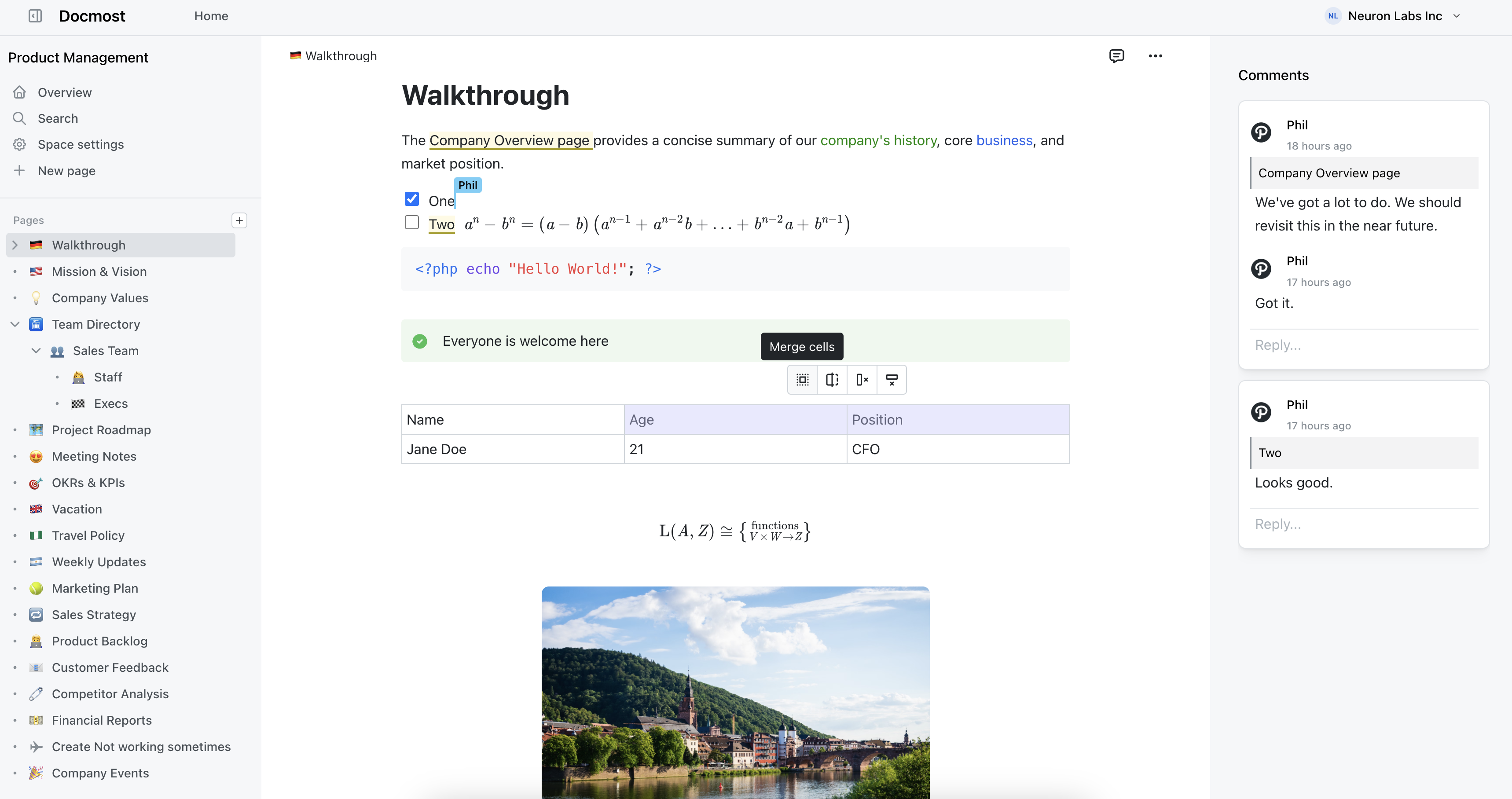
Enterprise-ready Wiki for Teams | Docmost
Secure on-premises wiki for enterprises. Meet ITAR, FedRAMP, and GDPR compliance with ease.
Nextcloud - Open source content collaboration platform
The most popular open source content collaboration platform for tens of millions of users at thousands of organizations across the globe

Broadening Access to Data Science Education in High School and Higher Education through Open Source Tools, Infrastructure, and Training
Equitable data science education requires a multifaceted approach, involving high school and higher education, community involvement, and accessible tools. A renewed investment in public digital infrastructure is needed to support these efforts. Nonprofits play a crucial role in supporting these efforts, and increased representation in leadership can enhance their impact. By addressing these disparities, we can ensure a more inclusive future in data science.
Microsoft Launches Decentralized Identity Tool on Bitcoin Blockchain - Slashdot
Microsoft is launching the first decentralized infrastructure implementation by a major tech company that is built directly on the bitcoin blockchain. From a report: The open source project, called Ion, deals with the underlying mechanics of how networks talk to each other. For example, if you log o...

Designing a multi-sided data platform: findings from the International Data Spaces case
The paper presents the findings from a 3-year single-case study conducted in connection with the International Data Spaces (IDS) initiative. The IDS represents a multi-sided platform (MSP) for secure and trusted data exchange, which is governed by an institutionalized alliance of different stakeholder organizations. The paper delivers insights gained during the early stages of the platform’s lifecycle (i.e. the platform design process). More specifically, it provides answers to three research questions, namely how alliance-driven MSPs come into existence and evolve, how different stakeholder groups use certain governance mechanisms during the platform design process, and how this process is influenced by regulatory instruments. By contrasting the case of an alliance-driven MSP with the more common approach of the keystone-driven MSP, the results of the case study suggest that different evolutionary paths can be pursued during the early stages of an MSP’s lifecycle. Furthermore, the IDS initiative considers trust and data sovereignty more relevant regulatory instruments compared to pricing, for example. Finally, the study advances the body of scientific knowledge with regard to data being a boundary resource on MSPs.

Build Community Online with Decentralized Tools | Blacksky
Decentralized tools to build community online. The intercommunal net where communities govern, pool funds and stay safe on their own terms.
Build Community Online with Decentralized Tools | Blacksky
Decentralized tools to build community online. The intercommunal net where communities govern, pool funds and stay safe on their own terms.
A Polycentric Governance Lens on Data Infrastructures
Funding policies for data infrastructure promote open data sharing to drive positive social impact. However, concerns regarding the long-term management of data within and across distributed infrastructures can hinder data sharing. We draw upon the concept of polycentric governance to demonstrate how collaborative practices of data curation, in preparing and maintaining data for (future) sharing, provide a solid foundation for understanding data governance within data infrastructures. Based on a qualitative case study of a distributed ecological network, we investigate the conditions under which data are managed as a shared resource by local actors to ensure the long-term (re)usability of data. We contribute to CSCW by conceptualising data curation as a complex form of governance practice with multiple centres of decision-making, each of which operates with some degree of autonomy in data infrastructures. A polycentric governance lens on data infrastructures advances the CSCW conception of data curation as a collective governance practice that can cultivate a data democracy culture within and across organisations, empower individuals to be accountable for their data, and foster a mindset shift toward decentralised data governance.
PieFed - Explore Anything, Discuss Everything.
Federated, open‑source, ad‑free, and fully under your control. Build or join a community that reflects your values with no corporate overlords. …


Collaboratory at Columbia: An Aspen Grove of Data Science Education · Issue 3.4, Fall 2021
Many universities recognize the rapidly growing impact of data science in all fields of study and the professions and seek to embed this expertise widely across their educational offerings. There is often broad interest in developing new data science curricula, with some universities even allocating funds toward this purpose. Yet, it is often unclear what resources are needed for effective data science education, and how resources ought to be prioritized. Although university leadership might be aware of a growing number of successful data science acceleration programs and pedagogical models, many of which are either general purpose or specific to a particular discipline, there remains a lack of clarity about how these models might address their own specific needs. This article presents the Collaboratory Program at Columbia University (termed “the Collaboratory”), which is both a set of “data science in context” educational approaches, as well as a meta-model for an accelerator program that allows different institutions to respond flexibly to their own disciplinary heterogeneity in terms of data science educational needs. The novelty of the Collaboratory lies in its crowd-sourcing approach to creating new data science pedagogy and its ability to kindle transdisciplinary collaboration in doing so. By offering seed funding, it fosters proactive efforts to embed data science “in context” into more traditional domains through a cohort of compelling, transdisciplinary, crowd-sourced data science education proposals each year. Collaboratory educational offerings are required to be developed through a partnership between two faculty members, a data scientist and a domain expert from another field, or a larger team with complementary expertise. Over the past 5 years, the Collaboratory has supported the development of a wide spectrum of data science pedagogical models spread across more than 40 academic departments, centers, institutes, and professional schools at Columbia University. As a result, the Collaboratory has to date served the learning needs of more than 4,000 students. Furthermore, it has cultivated a thriving ecosystem that includes a funding mechanism and a community-support structure that all contribute to its agility and success. Here, we offer our experience and best practices in developing and managing the Collaboratory, which, we hope, will contribute to a blueprint for data science education leaders everywhere.

Governing Together: Toward Infrastructure for Community-Run Social Media | Proceedings of the 2026 CHI Conference on Human Factors in Computing Systems
Collaborative and social computing theory, concepts and paradigms
