

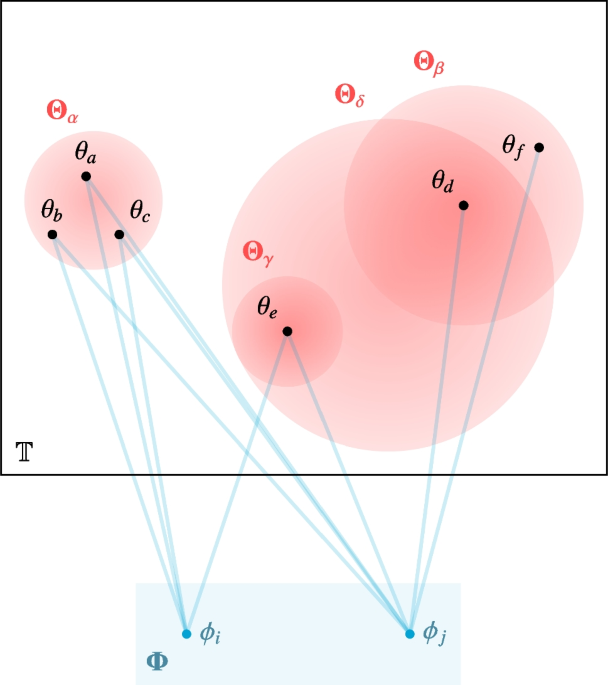
The counterfactual and regularity theories are universal accounts of causation. I argue that these should be generalized to produce local accounts of causation. A hallmark of universal accounts of causation is the assumption that apparent variation in causation between locations must be explained by differences in background causal conditions, by features of the causal-nexus or causing-complex. The local account of causation presented here rejects this assumption, allowing for genuine variation in causation to be explained by differences in location. I argue that local accounts of causation are plausible, and have pragmatic, empirical and theoretical advantages over universal accounts. I then report on the use of presheaves as models of local causation. The use of presheaves as models of local variation has precedents in algebraic geometry, category theory and physics; they are here used as models of local causal variation. The paper presents this idea as stemming from an approach using presheaves as models of local truth. Finally, I argue that a proper balance between universal and local causation can be assuaged by moving from presheaves to fully-fledged sheaf models.
The Causal Axioms of Algebraic Quantum Field Theory: A Diagnostic
This paper examines the axioms of algebraic quantum field theory (AQFT) that aim to characterize the theory as one that implements relativistic causation. I suggest that the spectrum condition (SC), microcausality (MC), and primitive causality axioms (PC), taken individually, fall short of fulfilling this goal against what some philosophers have claimed. Instead, I will show that the “local primitive causality” (LPC) condition captures each axiom’s advantages. However, this is only the case because SC, MC, and PC, taken together, imply LPC, as I will show from a construction by Haag and Schroer (1962).
Generalised algebraic theories and contextual categories
Introduction To Category Theory
Introduction To Category Theory by Steve Awodey, 2010, Oxford University Press, USA, Oxford University Press edition,

Edit lenses
A lens is a bidirectional transformation between a pair of connected data structures, capable of translating an edit on one structure into an appropriate edit on the other. Many varieties of lenses have been studied, but none, to date, has offered a satisfactory treatment of how edits are represented. Many foundational accounts only consider edits of the form "overwrite the whole structure," leading to poor behavior in many situations by failing to track the associations between corresponding parts of the structures when elements are inserted and deleted in ordered lists, for example. Other theories of lenses do maintain these associations, either by annotating the structures themselves with change information or using auxiliary data structures, but every extant theory assumes that the entire original source structure is part of the information passed to the lens.We offer a general theory of edit lenses, which work with descriptions of changes to structures, rather than with the structures themselves. We identify a simple notion of "editable structure"--a set of states plus a monoid of edits with a partial monoid action on the states--and construct a semantic space of lenses between such structures, with natural laws governing their behavior. We show how a range of constructions from earlier papers on "state-based" lenses can be carried out in this space, including composition, products, sums, list operations, etc. Further, we show how to construct edit lenses for arbitrary containers in the sense of Abbott, Altenkirch, and Ghani. Finally, we show that edit lenses refine a well-known formulation of state-based lenses, in the sense that every state-based lens gives rise to an edit lens over structures with a simple overwrite-only edit language, and conversely every edit lens on such structures gives rise to a state-based lens.

Causality
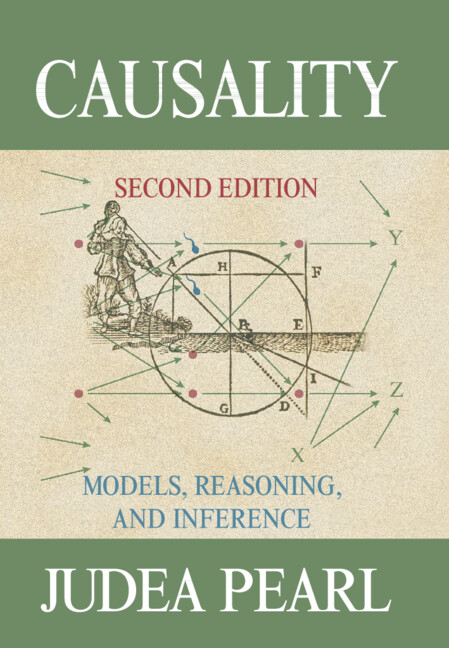
Written by one of the preeminent researchers in the field, this book provides a comprehensive exposition of modern analysis of causation. It shows how causality has grown from a nebulous concept into a mathematical theory with significant applications in the fields of statistics, artificial intelligence, economics, philosophy, cognitive science, and the health and social sciences. Judea Pearl presents and unifies the probabilistic, manipulative, counterfactual, and structural approaches to causation and devises simple mathematical tools for studying the relationships between causal connections and statistical associations. Cited in more than 2,100 scientific publications, it continues to liberate scientists from the traditional molds of statistical thinking. In this revised edition, Judea Pearl elucidates thorny issues, answers readers' questions, and offers a panoramic view of recent advances in this field of research. Causality will be of interest to students and professionals in a wide variety of fields. Dr Judea Pearl has received the 2011 Rumelhart Prize for his leading research in Artificial Intelligence (AI) and systems from The Cognitive Science Society.
Emily Riehl
Website for `Category theory in context' published in 2016 by Dover Publications.
Does Developing a Belief in One Conspiracy Theory Lead a Person to be More Likely to Believe in Others?
ABSTRACT The monological belief system model suggests that—for at least a subset of people—developing a belief in one conspiracy theory will cause them to be more likely to believe in others. This model has been influential in the literature, but its core causal hypothesis has never been credibly tested. We therefore tested it in two longitudinal studies. Study 1 used a sample from New Zealand and Australia ( N = 498), with 7 monthly waves. Study 2 (preregistered) used a sample from New Zealand, Australia and the United Kingdom ( N = 978), with 13 monthly waves. We applied random intercept cross‐lagged panel models, permitting a credible causal identification strategy, albeit we cannot rule out time‐varying confounds. We find that increased belief in a conspiracy theory at one wave did (on average) predict increased belief in other conspiracies at the next wave, although the estimated coefficients were small.

Does Developing a Belief in One Conspiracy Theory Lead a Person to be More Likely to Believe in Others?
ABSTRACT The monological belief system model suggests that—for at least a subset of people—developing a belief in one conspiracy theory will cause them to be more likely to believe in others. This model has been influential in the literature, but its core causal hypothesis has never been credibly tested. We therefore tested it in two longitudinal studies. Study 1 used a sample from New Zealand and Australia ( N = 498), with 7 monthly waves. Study 2 (preregistered) used a sample from New Zealand, Australia and the United Kingdom ( N = 978), with 13 monthly waves. We applied random intercept cross‐lagged panel models, permitting a credible causal identification strategy, albeit we cannot rule out time‐varying confounds. We find that increased belief in a conspiracy theory at one wave did (on average) predict increased belief in other conspiracies at the next wave, although the estimated coefficients were small.

The C-Word: Scientific Euphemisms Do Not Improve Causal Inference From Observational Data
Causal inference is a core task of science. However, authors and editors often refrain from explicitly acknowledging the causal goal of research projects; they refer to causal effect estimates as associational estimates. This commentary argues that using the term “causal” is necessary to improve the quality of observational research. Specifically, being explicit about the causal objective of a study reduces ambiguity in the scientific question, errors in the data analysis, and excesses in the interpretation of the results.

The Consistent Histories Approach to Quantum Mechanics
The consistent histories, also known as decoherent histories, approachto quantum interpretation is broadly compatible with standard quantummechanics as found in textbooks. However, the concept ofmeasurement by which probabilities are introduced in standardquantum theory no longer plays a fundamental role. Instead,all quantum time dependence is probabilistic (stochastic),with probabilities given by the Born rule or its extensions. Byrequiring that the description of a quantum system be carried outusing a well-defined probabilistic sample space (called a“framework”) this approach resolves many well-knownquantum paradoxes of quantum foundations. In particular, quantummechanics is local and consistent with special relativity. Classicalmechanics emerges as a useful approximation to the more fundamentalquantum mechanics under suitable conditions. The price to be paid forthis is a set of rules for reasoning resembling, but very much simplerthan, those of quantum logic. An important philosophical implicationis the absence of a single universally-true state of affairs at eachinstant of time. However, there is a correspondence limit in which thenew quantum logic becomes standard logic in the macroscopic world ofeveryday experience, and the laws of classical mechanics emerge as agood approximation to an underlying, and in principle more exact,quantum description.
Quantifying causal emergence shows that macro can beat micro | PNAS
Causal interactions within complex systems can be analyzed at multiple spatial and temporal scales. For example, the brain can be analyzed at the l...

Putting Paradoxes to Work: Contextuality in Measurement-Based Quantum Computation
We describe a joint cohomological framework for measurement-based quantum computation (MBQC) and the corresponding contextuality proofs. The central object in this framework is an element $$[\beta _\Psi ]$$[βΨ]in the second cohomology group of the chain complex describing a given MBQC. $$[\beta _\Psi ]$$[βΨ]contains the function computed therein up to gauge equivalence, and at the same time is a contextuality witness. The present cohomological description only applies to temporally flat MBQCs, and we outline an approach for extending it to the temporally ordered case.

About Causal Islands
Causal Islands is about connecting people across industries, disciplines, and communities to share, design, and learn about the future of computing together.

What Makes a Good Theory, and How Do We Make a Theory Good?
I present an ontology of criteria for evaluating theory to answer the titular question from the perspective of a scientist practitioner. Set inside a formal account of our adjudication over theories, a metatheoretical calculus, this ontology comprises the following: (a) metaphysical commitment, the need to highlight what parts of theory are not under investigation, but are assumed, asserted, or essential; (b) discursive survival, the ability to be understood by interested non-bad actors, to withstand scrutiny within the intended (sub)field(s), and to negotiate the dialectical landscape thereof; (c) empirical interface, the potential to explicate the relationship between theory and observation, i.e., how observations relate to, and affect, theory and vice versa; (d) minimising harm, the reckoning with how theory is forged in a fire of historical, if not ongoing, abuses—from past crimes against humanity, to current exploitation, turbocharged or hyped by machine learning, to historical and present internal academic marginalisation. This work hopes to serve as a possible beginning for scientists who want to examine the properties and characteristics of theories, to propose additional virtues and vices, and to engage in further dialogue. Finally, I appeal to practitioners to iterate frequently over such criteria, by building and sharing the metatheoretical calculi used to adjudicate over theories.
A Categorical Theory of Patches
When working with distant collaborators on the same documents, one often uses a version control system, which is a program tracking the history of files and helping importing modifications brought by others as patches. The implementation of such a system requires to handle lots of situations depending on the operations performed by users on files, and it is thus difficult to ensure that all the corner cases have been correctly addressed. Here, instead of verifying the implementation of such a system, we adopt a complementary approach: we introduce a theoretical model, which is defined abstractly by the universal property that it should satisfy, and work out a concrete description of it. We begin by defining a category of files and patches, where the operation of merging the effect of two coinitial patches is defined by pushout. Since two patches can be incompatible, such a pushout does not necessarily exist in the category, which raises the question of which is the correct category to represent and manipulate files in conflicting state. We provide an answer by investigating the free completion of the category of files under finite colimits, and give an explicit description of this category: its objects are finite sets labeled by lines equipped with a transitive relation and morphisms are partial functions respecting labeling and relations.