Many people think the Quantified Self mostly involves physical metrics: heart rate, sleep, diet, etc. but what about what goes on in our brains? Can we quantify that? There have been several inspiring Quantified Self talks about tracking learning and memory. This post will collect all of them into one place, along with good resources...
Spaced Repetition for Efficient Learning
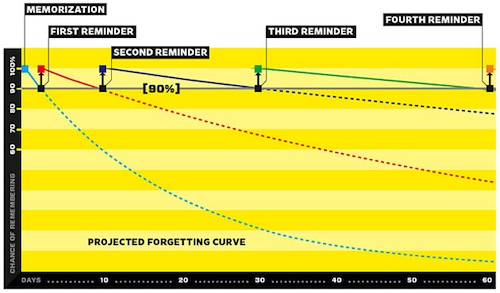
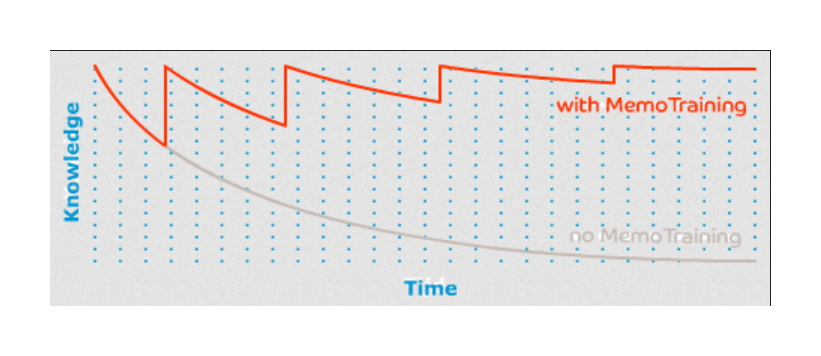
Efficient memorization using the spacing effect: literature review of widespread applicability, tips on use & what it’s good for.
Spaced Repetition for Efficient Learning
Efficient memorization using the spacing effect: literature review of widespread applicability, tips on use & what it’s good for.
Spaced Repetition for Efficient Learning
Efficient memorization using the spacing effect: literature review of widespread applicability, tips on use & what it’s good for.
Spaced Repetition for Efficient Learning
Efficient memorization using the spacing effect: literature review of widespread applicability, tips on use & what it’s good for.
Quantified self
Quantified self is both the cultural phenomenon of self-tracking with technology and a community of users and makers of self-tracking tools who share an interest in "self-knowledge through numbers". Quantified self practices overlap with the practice of lifelogging and other trends that incorporate technology and data acquisition into daily life, often with the goal of improving physical, mental, and emotional performance. The widespread adoption in recent years of wearable fitness and sleep trackers such as the Fitbit or the Apple Watch, combined with the increased presence of Internet of things in healthcare and in exercise equipment, have made self-tracking accessible to a large segment of the population.

Your Quantified Body, Your Quantified Self | WNYC
What happens when we start thinking of ourselves as walking, breathing, calorie-consuming piles of data? We asked hundreds of people to weigh in (figuratively speaking).

How to Remember More of What You Learn with Spaced Repetition
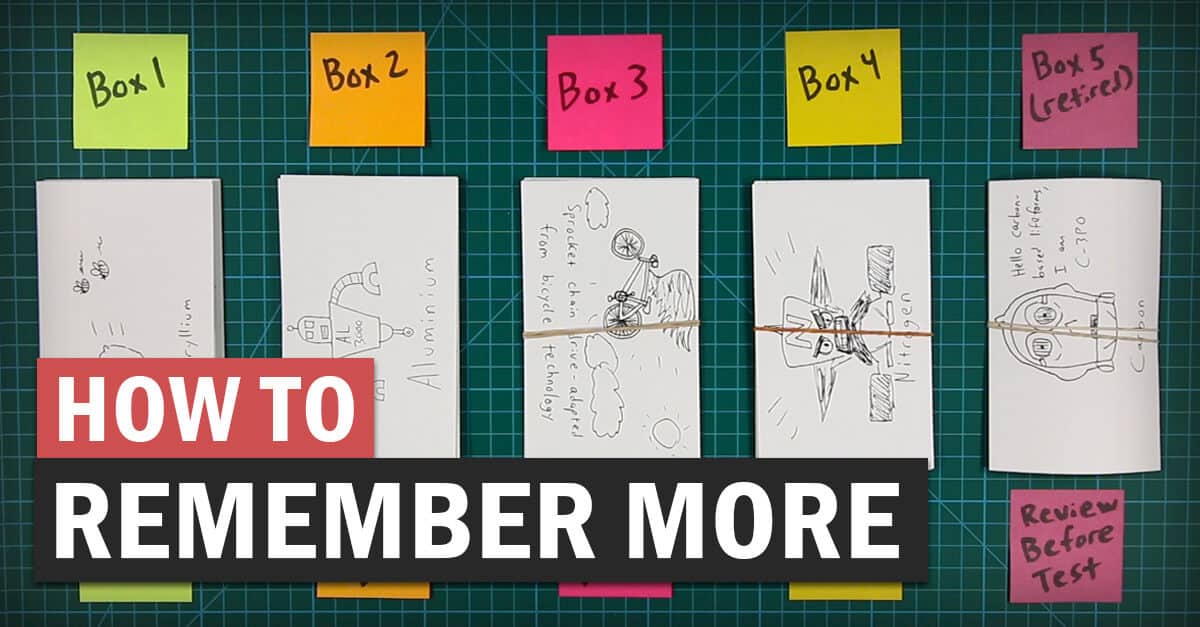
Using spaced repetition in conjunction with other study techniques can help you memorize information much, much more quickly. Here's how to do it.
Excess Capacity Learning
How do humans learn from experience? Traditionally, cognitive scientists have assumed that discovering generalizable patterns requires that humans compress rich and noisy experiences. However, recent computer science results suggest otherwise — systems can learn by ‘overfitting’ and expanding all the details of their experiences. We offer a new perspective on learning based on a cognitive system’s representational capacity, which can be constrained (forcing the system to compress details of past experiences), sufficient (to memorize past experiences), or excess (allowing the system to expand on the details of past experiences). This framework has implications for understanding learning across cognitive, clinical, and developmental contexts.
Spaced repetition
Spaced repetition is an evidence-based learning technique that is usually performed with flashcards. Newly introduced and more difficult flashcards are shown more frequently, while older and less difficult flashcards are shown less frequently in order to exploit the psychological spacing effect. The use of spaced repetition has been proven to increase the rate of learning.

Physical Exercise Four Hours after Learning Improves Long-Term Memory, Study Shows | Sci.News
A new study in the journal Current Biology shows that physical exercise after learning improves memory and memory traces, but only if the exercise is done in a specific time window and not immediately after learning.

To Make Sense of the Present, Brains May Predict the Future | Quanta Magazine
A controversial theory suggests that perception, motor control, memory and other brain functions all depend on comparisons between ongoing actual experiences and the brain’s modeled expectations.

Math Academy
Q. Michael Pershan’s main critique of spaced repetition in the context of Math Academy?A. It reinforces his memory of a shallow understanding.
Opinion | There’s a Good Reason You Can’t Concentrate
Just as we changed our thinking around physical fitness, we need to change our attitude toward cognitive fitness.

Spaced mathematics practice improves test scores and reduces overconfidence
Abstract The practice assignments in a mathematics textbook or course can be arranged so that most of the problems relating to any particular concept are massed together in a single assignment, or these related problems can be distributed across many assignments–a format known as spaced practice. Here we report the results of two classroom experiments that assessed the effects of mathematics spacing on both test scores and students' predictions of their test scores. In each experiment, students in Year 7 (11–12 years of age) either massed their practice into a single session or divided their practice across three sessions spaced 1 week apart, followed 1 month later by a test. In both experiments, spaced practice produced higher test scores than did massed practice, and test score predictions were relatively accurate after spaced practice yet grossly overconfident after massed practice.

To Remember, the Brain Must Actively Forget | Quanta Magazine
Researchers find evidence that neural systems actively remove memories, suggesting that forgetting may be the default mode of the brain.

Excess Capacity Learning
We introduce a new framework for understanding how cognitive systems (e.g., humans) learn from experience, based on the concept of representational capacity—the relative amount of representational resources devoted to encoding past experiences. Most paradigms in cognitive science have operated under the assumption that these resources are constrained, forcing cognitive systems to compress rich and noisy experiences to effectively generalize to new situations. We leverage recent advances in computer science to outline the implications of learning with excess capacity, or applying even more representational resources than needed to perfectly memorize all the details of one’s past experiences. In particular, we review evidence suggesting that excess capacity systems can exhibit many of the characteristics of human learning, such as the simultaneous ability to memorize individual experiences and generalize knowledge to new situations. We define and differentiate between constrained (not enough), sufficient (just enough), and excess (more than enough to perfectly capture all the details of one’s past experiences) capacity. We derive empirical properties of learning in each of these capacity regimes, and compare these predictions to effects documented for human learning. We highlight the broad implications of this framework for advancing theoretical and empirical work across cognitive, clinical, and developmental psychology.