


The 17th century philosopher Blaise Pascal is perhaps best known for Pascal’s Wager which, in the first formal use of decision theory, argued that believing in God is the most pragmatic decision. But it seems the French thinker also had a knack for psychology. As Brain Pickings points out, Pascal set out the most effective way to get someone to change their mind, centuries before experimental psychologists began to formally study persuasion:
Common Causes of Very Bad Decisions
Italian psychologist Massimo Piattelli-Palmarini was once asked why people keep making the same mistakes.
The mistake we all make... and the simple experiment that reveals it
Your answer reveals how you see the world – and the common error that hampers our decision making. In an extract from his new book, psychologist Richard Nisbett reveals the ‘mindware’ to help us think smarter

The Irrational Decision
How the computer revolution shaped our conception of rationality—and why human problems require solutions rooted in human intuition, morality, and judgment

Bayesian Thinking in Everyday Life
More than 200 years ago, Thomas Bayes came up with a brilliant idea that has helped shape the world today, called Bayes Theorem. This…

Philosophy Experiments — Interactive Thought Experiments
Explore 27 interactive philosophy experiments that challenge your moral intuitions, test your logical reasoning, and probe the boundaries of belief.
Mindful Judgment and Decision Making
A full range of psychological processes has been put into play to explain judgment and choice phenomena. Complementing work on attention, information integration, and learning, decision research over the past 10 years has also examined the effects of goals, mental representation, and memory processes. In addition to deliberative processes, automatic processes have gotten closer attention, and the emotions revolution has put affective processes on a footing equal to cognitive ones. Psychological process models provide natural predictions about individual differences and lifespan changes and integrate across judgment and decision making (JDM) phenomena. “Mindful” JDM research leverages our knowledge about psychological processes into causal explanations for important judgment and choice regularities, emphasizing the adaptive use of an abundance of processing alternatives. Such explanations supplement and support existing mathematical descriptions of phenomena such as loss aversion or hyperbolic discounting. Unlike such descriptions, they also provide entry points for interventions designed to help people overcome judgments or choices considered undesirable.

a post-truth thought experiment · discrete blogarithm
Imagine that you had a magic machine. You tell the machine what your goals are. The machine tells you, in any situation, the optimal statement to say in order to achieve your goals, and who to say it to. The statement may or may not be true.
AI Sycophancy and Decisions
We examine whether sycophantic AI advice distorts decisions. Our experiment involves 1,500 participants in 30 decision environments spanning core domains in eco

Why major life decisions should be approached with ‘epistemic humility’ | Psyche Videos
At a crossroads in life? No matter how much you deliberate, one unknowable remains: the person you will be on the other side

Resource-rational belief revision can mitigate as well as amplify polarization
People's beliefs sometimes diverge after observing the same information, which has been interpreted as evidence of irrationality. This behaviour has been proposed to result from people's limited cognitive resources and motivated reasoning, but how belief revision differs across these explanations has not been formalized or compared to a rational norm. Further, while people may be biased relative to a normative ideal, they may still make optimal choices given their limited cognitive resources, or rationally balance the utility of holding accurate beliefs with the belief's intrinsic utility. Across two studies, we develop and test a unified computational account of belief polarization under these proposed mechanisms, showing that people's performance on a belief updating task best fits a limited-resource Bayesian model; external motivations may contribute to divergence (or convergence) by determining what pre-existing information people consider relevant to a situation, rather than by changing how people evaluate new information in isolation.
The Mind-Expanding Ideas of Andy Clark
The tools we use to help us think—from language to smartphones—may be part of thought itself.

A revolution in our sense of self | Nick Chater
Psychologists have tried to plumb the depths of human motivation to make sense of our behaviour. But our inner mental world is a fiction, sustained by constant improvisation
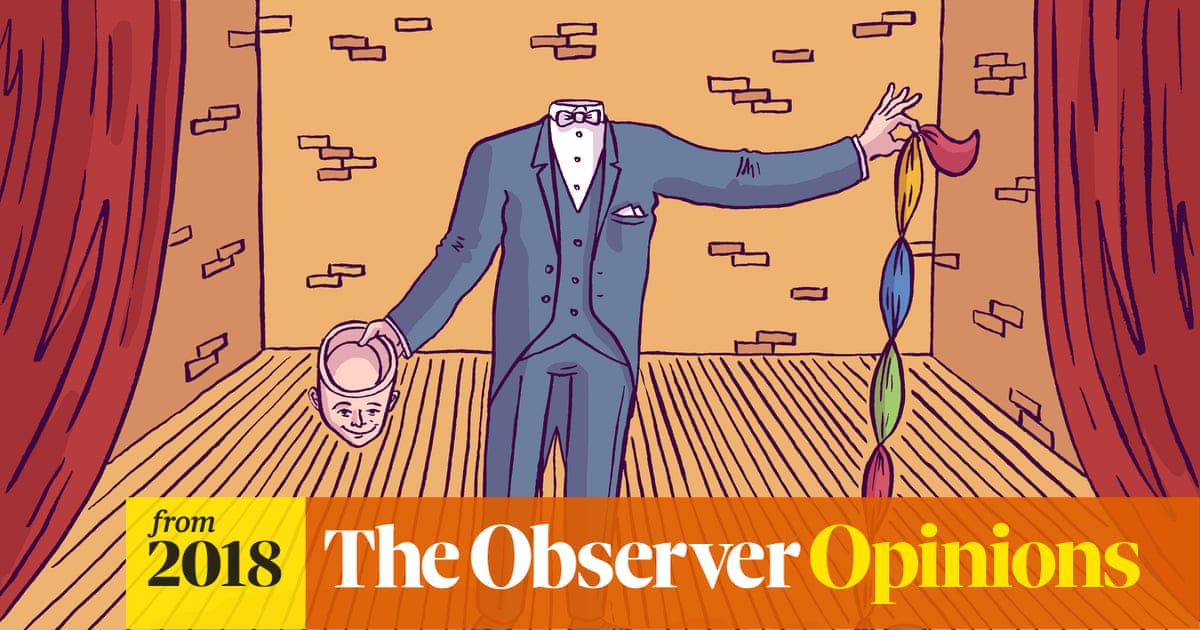
notes on the industrialisation of decision making
worrying away at an old subject

50 Ideas That Changed My Life - David Perell
David shares 50 ideas that changed his life. Read here.

Cognitive Bias Lab | Learn to Make Better Decisions
Explore cognitive biases with interactive tests, simulations, and real-world examples. Free platform to sharpen decision-making and critical thinking — no sign-up needed.
How Field Experiments in Economics Can Complement Psychological Research on Judgment Biases
This review summarizes results of field experiments examining individual behaviors across several market settings—from open-air markets to rideshare markets to tax-compliance markets—where people sort themselves into market roles wherein they make consequential decisions. Using three distinct examples from my own research on the endowment effect, left-digit bias, and omission bias, I showcase how field experiments can help researchers understand mediators, heterogeneity, and causal moderation involved in judgment biases in the field. In this manner, the review highlights that economic field experiments can serve an invaluable intellectual role alongside traditional laboratory research.
