Silicon-based computing is reaching its limits. But a new technology that emulates the way our brains process information could sidestep those in a clever and profoundly important way.
The chips are down for Moore’s law
The semiconductor industry will soon abandon its pursuit of Moore's law. Now things could get a lot more interesting.
Moore's law
Moore's law is a historical trend of integrated circuit development: the density of transistors can be doubled every two years. It was posited by Gordon Moore in 1965. Several experts, including Moore himself, have predicted that the trend will end by 2025.
Ubiquity: The Fallacy of Premature Optimization
Moore's Law makes it seem as if resource limitations are always a minor consideration. If there will be twice as much memory for the same price in 18 months, why bother to squeeze a factor of 2 from an application's memory requirements? If the CPU will be twice as fast by then, why bother to shave some running time from a program? In other words, why bother to optimize programs? Isn't it better to just get them running and let Moore's Law take us off the hook when resources are constrained? Randall Hyde argues that optimization is important even when memory and processor double regularly.

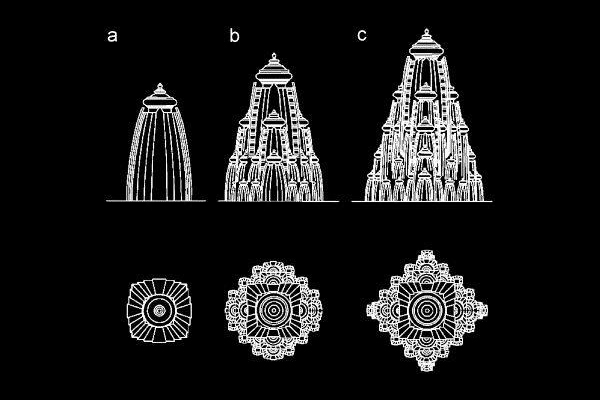
Is AI Hiding Its Full Power? With Geoffrey Hinton
Why Computers Won’t Make Themselves Smarter
We fear and yearn for “the singularity.” But it will probably never come.
The brain in the machine: How AI could help explain how we think | IBM
Scientists are using large AI models to predict patterns of brain activity at scale, a development that researchers say is pushing neuroscience toward a new kind of digital imaging.

AGIHound on Twitter / X
"Demis Hassabis says our brains are likely to be approximate Turing machines."Dear Lord. This Alan Turing worship never ends. It's a cult. 🤦♂️I research the visual system of the brain. I've come to understand that the most important principle of intelligence is the precise… https://t.co/isLnLqjFkw— AGIHound (@TrueAIHound) May 5, 2026
What’s Next in Computing?
The computing industry progresses in two mostly independent cycles: financial and product cycles. There has been a lot of handwringing…

Wirth's law
Wirth's law is Niklaus Wirth's variant of the Jevons paradox: Software is getting slower more rapidly than hardware is getting faster.
Intel launches its next-generation neuromorphic processor—so, what’s that again?
Intel's Loihi processors have electronics that behave a lot like neurons.

Big Tech’s A.I. Spending Is Accelerating (Again)
Despite the risk of a bubble, Google, Meta, Microsoft and Amazon plan to spend billions more on artificial intelligence than they already do.

Why Now is the Time to Build A Second Brain: 7 Trends Driving the Note-Taking Revolution - Forte Labs
Illustration by Mark Weaver We are living in the midst of an Informational Apocalypse. The volume of information we’re exposed to every day continues to

The Mythology Of Conscious AI
Why consciousness is more likely a property of life than of computation and why creating conscious, or even conscious-seeming AI, is a bad idea.