
Derek Sivers official site. Thoughts on philosophy, culture, self-improvement. Author of Useful Not True, How to Live, Hell Yeah or No, Anything You Want.
Write plain text files | Derek Sivers
Derek Sivers official site. Thoughts on philosophy, culture, self-improvement. Author of Useful Not True, How to Live, Hell Yeah or No, Anything You Want.
Derek Sivers
Derek Sivers official site. Thoughts on philosophy, culture, self-improvement. Author of Useful Not True, How to Live, Hell Yeah or No, Anything You Want.
A revolution in our sense of self | Nick Chater
Psychologists have tried to plumb the depths of human motivation to make sense of our behaviour. But our inner mental world is a fiction, sustained by constant improvisation

Maintainer spotlight: Siân Griffin
We’re sharing interviews from several open source contributors about their projects, challenges, and what a GitHub sponsorship means to them. This week, read about Sean Griffin.

John Tasioulas on Twitter / X
Intelligence is highly pluralistic. People can have high levels of it in one domain (maths, abstract reasoning) while being deficient in other domains (ethics, social interaction). When one kind of intelligence gets heavily socially valorised among all others, it encourages the…— John Tasioulas (@JTasioulas) October 6, 2026
Sebastian Deterding: What your designs say about you
What does your chair say about what you value? Designer Sebastian Deterding shows how our visions of morality and "the good life" are reflected in the design of objects around us.
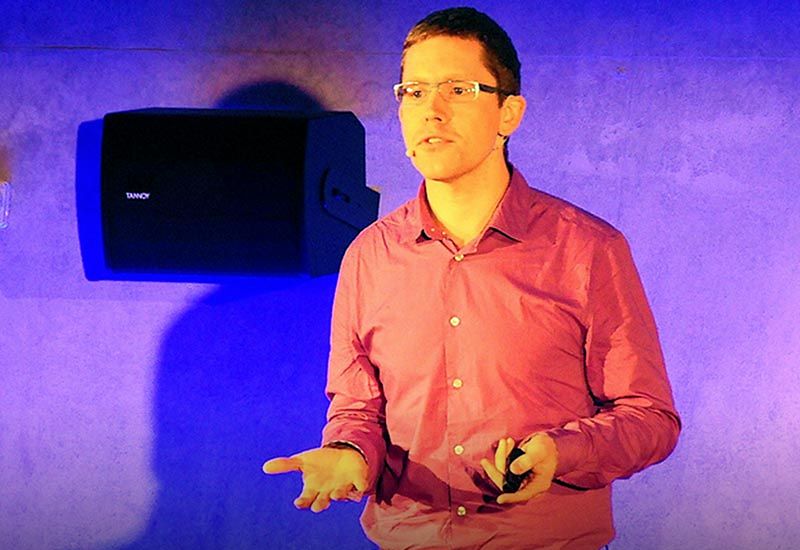
Sources of the Self — Harvard University Press
“Taylor has taken on the most delicate and exacting of philosophical questions, the question of who we are and how we should live…and he has made this an adventure of self-discovery for his reader.” —Martha Nussbaum, New RepublicIn this extensive inquiry into the sources of modern selfhood, Charles Taylor demonstrates just how rich and precious those resources are. The modern turn to subjectivity, with its attendant rejection of an objective order of reason, has led—it seems to many—to mere subjectivism at the mildest and to sheer nihilism at the worst. Many critics believe that the modern order has no moral backbone and has proved corrosive to all that might foster human good. Taylor rejects this view. He argues that, properly understood, our modern notion of the self provides a framework that more than compensates for the abandonment of substantive notions of rationality.The major insight of Sources of the Self is that modern subjectivity, in all its epistemological, aesthetic, and political ramifications, has its roots in ideas of human good. After first arguing that contemporary philosophers have ignored how self and good connect, the author defines the modern identity by describing its genesis. His effort to uncover and map our moral sources leads to novel interpretations of most of the figures and movements in the modern tradition. Taylor shows that the modern turn inward is not disastrous but is in fact the result of our long efforts to define and reach the good. At the heart of this definition he finds what he calls the affirmation of ordinary life, a value which has decisively if not completely replaced an older conception of reason as connected to a hierarchy based on birth and wealth. In telling the story of a revolution whose proponents have been Augustine, Montaigne, Luther, and a host of others, Taylor’s goal is in part to make sure we do not lose sight of their goal and endanger all that has been achieved. Sources of the Self provides a decisive defense of the modern order and a sharp rebuff to its critics.

The Inner Life of Liberalism - Aaron Ross Powell’s Blog
The practices that make your life better are the same ones that sustain a free society. It's time liberalism took that seriously.
Marc Andreessen wanted to make people angry
You too can a techno-optimist be. But first subscribe to these beliefs 113.

Augmenting Human Intellect: A Conceptual Framework - 1962 (AUGMENT,3906,)
Visit the Doug Engelbart Institute to explore his remarkable legacy and all it inspires (official site)

» The Game of Everything, Part 1: Making Civilization The Digital Antiquarian
If my gravestone says, “Sid Meier, developed Civilization,” I’m happy with that. It’s a game I’m happy to be known for.
Indie Thinkers
A curated collection of quotes from the brightest minds on the internet.
» The Game of Everything, Part 2: Playing Civilization The Digital Antiquarian
As a game designer, you have ultimate power. And with this ultimate power comes very little responsibility.
This column will change your life: just sit down and think
'No wonder we don't dwell on what's inside: that would underline the loneliness of existence,' says Oliver Burkeman

How to Break the Academic Silo Mindset - The Community Solution Education System
What’s stopping higher education from reaching its full potential? In this episode of Radical Cooperation, Dr. Michael Horowitz sits down with Dr. Beronda Montgomery—biologist, author of Lessons from Plants, and former Vice President for Academic Affairs and Dean at Grinnell College—to unpack why silos persist in colleges and universities, and how those divisions hold institutions […]

Adam Phillips · Is curiosity good for us?
The superego – and its precursor, conscience – refers to the part of us that has no curiosity about ourselves. It’...