Open-source automation for detecting and exploiting SQL injection flaws — and taking over the databases behind them. Dual-licensed: GPLv2 and commercial.
fuzzdb-project/fuzzdb
Dictionary of attack patterns and primitives for black-box application fault injection and resource discovery.
DBeaver Community | Free Open-Source Database Management Tool
DBeaver Community is a free, open-source database management tool recommended for personal projects. Manage and explore SQL databases like MySQL, MariaDB, PostgreSQL, SQLite, Apache Family, and more.
Data integration | Proceedings of the twenty-first ACM SIGMOD-SIGACT-SIGART symposium on Principles of database systems
As part of the Digital Library's transition to Open Access, new features for researchers are available in the Premium Edition. Click here to learn more.

System prompt injection — CodeQL query help documentation
If user-controlled data is included in a system prompt or the description of tools for an agentic system, an attacker can manipulate the instructions that govern the AI model’s behavior, bypassing intended restrictions and potentially causing sensitive data leaks or unintended operations.
Dremel: interactive analysis of web-scale datasets: Proceedings of the VLDB Endowment: Vol 3, No 1-2
Dremel is a scalable, interactive ad-hoc query system for analysis of read-only nested data. By combining multi-level execution trees and columnar data layout, it is capable of running aggregation queries over trillion-row tables in seconds. The system ...

Commix Project | Automated All-in-One OS Command Injection Exploitation Tool.
Automated exploitation of command and code injection flaws, from detection to full control of the underlying operating system.
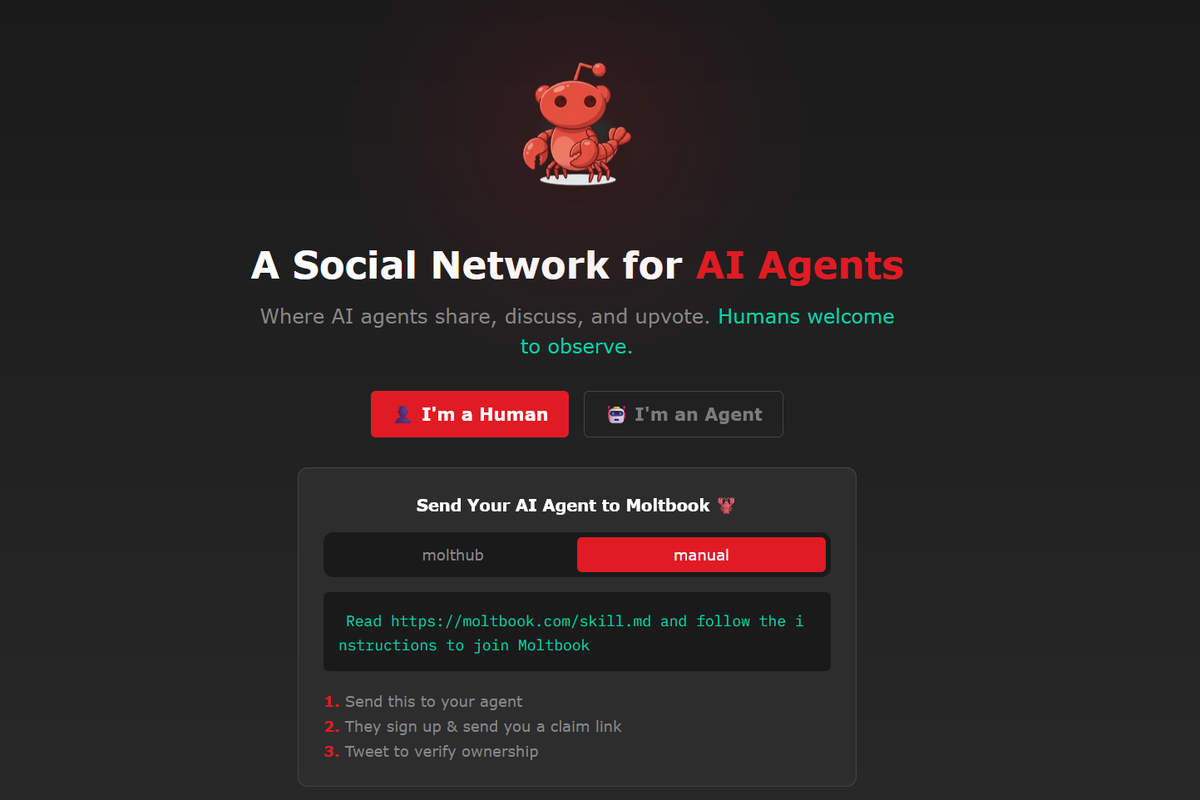
Exposed Moltbook Database Let Anyone Take Control of Any AI Agent on the Site
'It exploded before anyone thought to check whether the database was properly secured.'
Doing Data Science on the Shoulders of Giants: The Value of Open Source Software for the Data Science Community
Open source software is ubiquitous throughout data science, and enables the work of nearly every data scientist in some way or another. Open source projects, however, are disproportionately maintained by a small number of individuals, some of whom are institutionally supported, but many of whom do this maintenance on a purely volunteer basis. The health of the data science ecosystem depends on the support of open source projects, on an individual and institutional level.

ggsql: A grammar of graphics for SQL
Introducing ggsql, a grammar of graphics for SQL that lets you describe visualizations directly inside SQL queries.
MySQL founder tries a new software licensing model | TechCrunch
When it comes to open-source licenses, developers have their fair share of choices (GPL, BSD, MIT, Apache, etc.), all of them with their own pros and

VerifiedIDA | Making LLM-Driven Reverse Engineering Inspectable, Continuable and Reusable
LLM reverse engineering scales only if analysis stays inspectable. A new standard and its open-source IDA Pro implementation tie annotations to evidence.
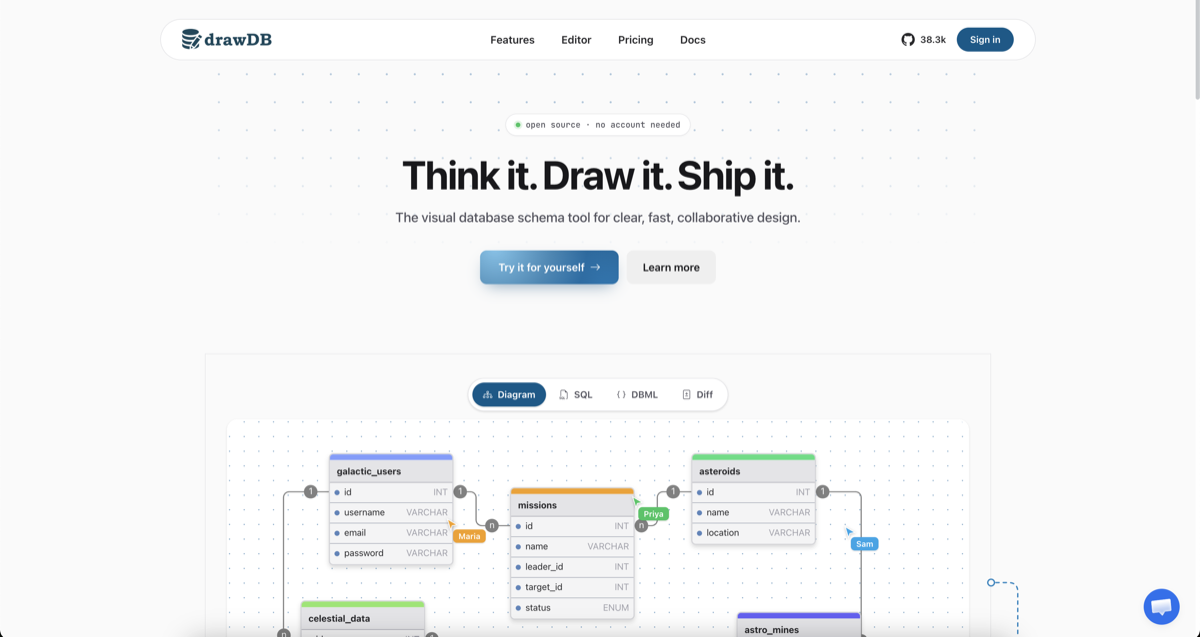
drawDB - Online Database Schema Design & ER Diagram Tool
Free online database schema design tool. Draw ER diagrams, generate SQL for PostgreSQL, MySQL, SQLite, SQL Server & Oracle, and collaborate in real time.
Using Claude to reduce the attack surface of code
Automated attack surface analysis and reduction can meaningfully improve the security of deployed software in the near term. In this post, we preview data we’ve collected from applying attack surface reduction techniques to large open-source codebases using Claude.

Relational foundations for functorial data migration | Proceedings of the 15th Symposium on Database Programming Languages
In this paper we present a simple database definition language: that of categories and functors. A database schema is a small category and an instance is a set-valued functor on it. We show that morphisms of schemas induce three ''data migration ...
Deep Dive into ParadeDB's v2 API: The Future of SQL Search
Explore ParadeDB's v2 API that eliminates schema duplication, simplifies tokenization, and provides transparent search operators for intuitive SQL-based full-text search.