

Indigenous ways of knowing are sometimes thought to be in opposition to and detrimental to the learning of Western Science or STEM. Consequently, indigenous ways of knowing are rarely engaged to support learning. If STEM learning is to be meaningful and transformative for Indigenous youth, respecting Indigenous peoples rights and related critical issues, including Indigenous STEM, settler-colonialism, and decolonization, must be understood and explicitly addressed in Indigenous youths' informal and formal STEM learning experiences.
Equity in K-12 STEM Education
Science, technology, engineering, and mathematics (STEM) live in the American imagination as promising tools for solving pressing global challenges and enhancing quality of life. Despite the importance of the STEM disciplines in the landscape of U.S. political, economic, and social priorities, STEM learning opportunities are unevenly distributed, and the experiences an individual has in STEM education are likely to vary tremendously based on their race, ethnicity, socio-economic class, gender, and a myriad of other factors. Equity in K-12 STEM Education: Framing Decisions for the Future approaches equity in STEM education not as a singular goal but as an ongoing process that requires intentional decision-making and action toward addressing and disrupting existing inequities and envisioning a more just future. Stakeholders at all levels of the education system - including state, district, and school leaders and classroom teachers - have roles as decision-makers who can advance equity. This consensus study report provides five equity frames as a guide to help decision-makers articulate short- and long-term goals for equity and make decisions about policy and practice.

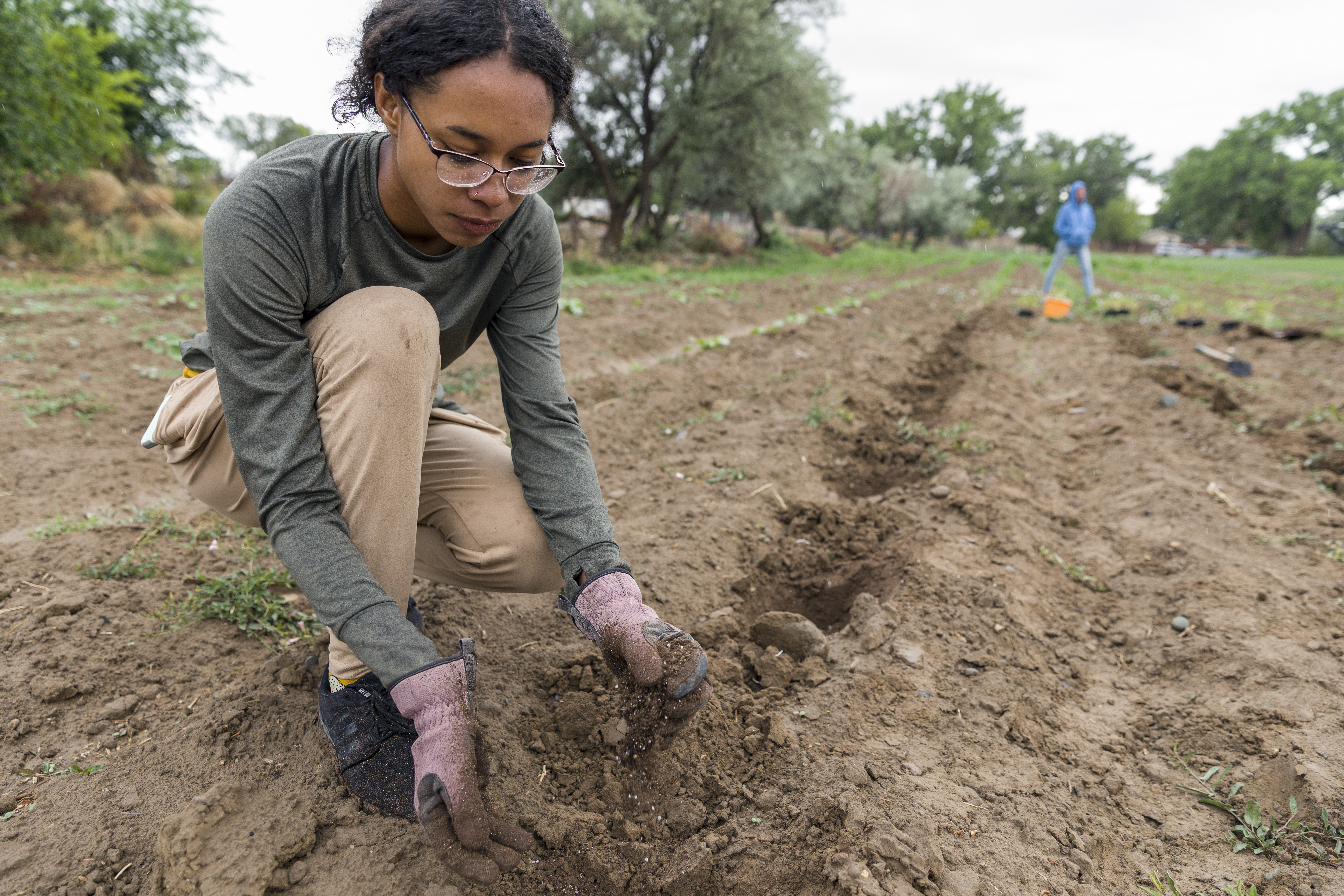
On the Navajo Nation, “putting seeds in the ground is our greatest act of resistance,” Fort Lewis students learn
Lessons taught by Native elders are retooled for the role food, housing, language and ritual play in contemporary human rights struggles.
Decolonizing Our Minds and Actions
By Waziyatawin and Michael Yellow Bird, from the Introduction to For Indigenous Minds Only: A Decolonization Handbook: Introduction and Background In 2005, eight Indigenous intellectuals created th…

“Two‐Eyed Seeing”: An Indigenous framework to transform fisheries research and management
Abstract Increasingly, fisheries researchers and managers seek or are compelled to “bridge” Indigenous knowledge systems with Western scientific approaches to understanding and governing fisheries. Here, we move beyond the all‐too‐common narrative about integrating or incorporating (too often used as euphemisms for assimilating) other knowledge systems into Western science, instead of building an ethic of knowledge coexistence and complementarity in knowledge generation using Two‐Eyed Seeing as a guiding framework. Two‐Eyed Seeing ( Etuaptmumk in Mi’kmaw) embraces “learning to see from one eye with the strengths of Indigenous knowledges and ways of knowing, and from the other eye with the strengths of mainstream knowledges and ways of knowing, and to use both these eyes together, for the benefit of all,” as envisaged by Elder Dr. Albert Marshall. In this paper, we examine the notion of knowledge dichotomies and imperatives for knowledge coexistence and draw parallels between Two‐Eyed Seeing and other analogous Indigenous frameworks from around the world. It is set apart from other Indigenous frameworks in its explicit action imperative—central to Two‐Eyed Seeing is the notion that knowledge transforms the holder and that the holder bears a responsibility to act on that knowledge. We explore its operationalization through three Canadian aquatic and fisheries case‐studies that co‐develop questions, document and mobilize knowledge, and co‐produce insights and decisions. We argue that Two‐Eyed Seeing provides a pathway to a plural coexistence, where time‐tested Indigenous knowledge systems can be paired with, not subsumed by, Western scientific insights for an equitable and sustainable future.

Abundant intelligences: placing AI within Indigenous knowledge frameworks
The current trajectory of artificial intelligence development suffers from fundamental epistemological shortcomings, resulting in the systematic operationalization of bias against non-white, non-male, and non-Western peoples. We argue that these failings are, in part, the result of certain Western rationalist epistemologies that exclude many ways of knowing about the world, and therefore they cannot provide a sufficient foundation on which to adequately, robustly, and humanely conceptualize intelligence. We present a new research agenda, Abundant Intelligences, an Indigenous-led, Indigenous-majority international, interdisciplinary research program that imagines anew how to conceptualize and design artificial intelligence (AI) based on Indigenous knowledge (IK) systems. Abundant Intelligences draws on the rich plurality of Indigenous knowledge systems, bringing together diverse sets of thought, culture, and protocol together. We show IK systems provide one way to rebuild AI’s epistemological foundations and transform these tools’ current role in reinforcing colonial practices of exclusion, extraction, manipulation, and eradication into engines of abundance that enable us to care better for ourselves, our communities, and our world. Our proposition is to fully engage with AI to explore how different conceptions of intelligence could be embodied in these technologies. In this paper, we present the tenets of the research program in detail, account for our methodological approach, describe the impact and limitations, and conclude on a discussion of the implications of the program.
Solidarity Syllabus: Indigenous Peoples, Rematriation, and Resisting AI Data Centers — Solidarity Is
For this Solidarity Syllabus, we are learning alongside Indigenous organizers, leaders, and communities whose work offers important solidarity lessons and invitations for how we might understand land, water, sovereignty, and resistance to data centers. Indigenous Peoples Day is observed

“UNSETTLING LANDSCAPES: APPLICATIONS OF ETHNOBOTANICAL RESEARCH IN DEFINING ABORIGINAL RIGHTS AND RE-AFFIRMING INDIGENOUS LAWS IN T’SOU-KE TERRITORY, VANCOUVER ISLAND AND BEYOND.”
In this dissertation, I explore how, in Canada, Indigenous people’s relationships with culturally-significant plant species are an expression of Aboriginal rights, and I ask how these rights can be affirmed and exercised using a form of intersocietal law within and between First Nations and state governments. I examine how my own and others’ ethnobotanical and ethnoecological research can help to decolonize the Crown legal systems that limit Indigenous peoples in regenerating their relationships with native plant species and the ecosystems within which they are situated. In order to explore how Indigenous people’s relationships with native plant species can be expressed in law, my dissertation is grounded in a case study, developed and carried out in collaboration with the T’Sou-ke Nation, members of which have lived on southern Vancouver Island since time immemorial as part of the Straits Salish language group. Using the T’Sou-ke case study as an example, I explain how this evidence of knowledge and use of plants helps to root contemporary First Nations’ rights throughout their territories, which is essential to establishing the basis of land and resource rights that have legal force to be claimed today.I indicate current challenges faced by T’Sou-ke Nation in exercising plant-associated rights throughout their territory and outline how the current legal test for proving Aboriginal rights is problematic. The T’Sou-ke have an abundance of rich evidence of their use of 100 native plant species and of Indigenous laws and governance associated with the same. I contend that the obvious and long-standing Indigenous management of these plant species and various ecosystems on southern Vancouver Island supports a very significant claim of legal rights and I believe that my research is broadly applicable to other First Nations in BC and beyond. The T’Sou-ke Nation, historically and today, are norm creating, generating and interpreting people as reflected in their distinct social organization adapted and adjusted by their members through many changing social and ecological variables over centuries. The re-examination of the values, rules, protocols, customs and practices associated with markers of Indigenous plant use throughout Straits Salish landscapes, specifically with the assistance of Indigenous knowledge holders, as well as ethnohistorical, ethnobotanical, and traditional ecological knowledge, re-frames how evidence of land use and occupancy is presented, and, ultimately, how we might all govern these resources together. For the T’Sou-ke, laws around plants are not limited to certain traditional practices, or to specific sites or places; law also rests in species and in the long-term relationships that people have with culturally important plant species. As such, the normative ordering of T’Sou-ke laws relating to their plant use and management must be judged on T’Sou-ke terms, not by Canadian legal terms. My hope is that this research contributes to the larger discussion of acknowledging Indigenous peoples’ distinct and culturally relative rights and principles with respect to native plants, while strengthening and growing the ties that bind all British Columbians together.
Guardians of the Earth: How Indigenous Peoples can teach the world to safeguard and conserve biodiversity
For hundreds of years, Indigenous Peoples around the world have held integral roles as protectors of their surrounding territories, environment and resources.

‘It is all about listening and sharing’: Indigenous solutions to the carbon divide
Deforestation rates are much lower on Indigenous land – and there is growing recognition that first peoples have vital role to play
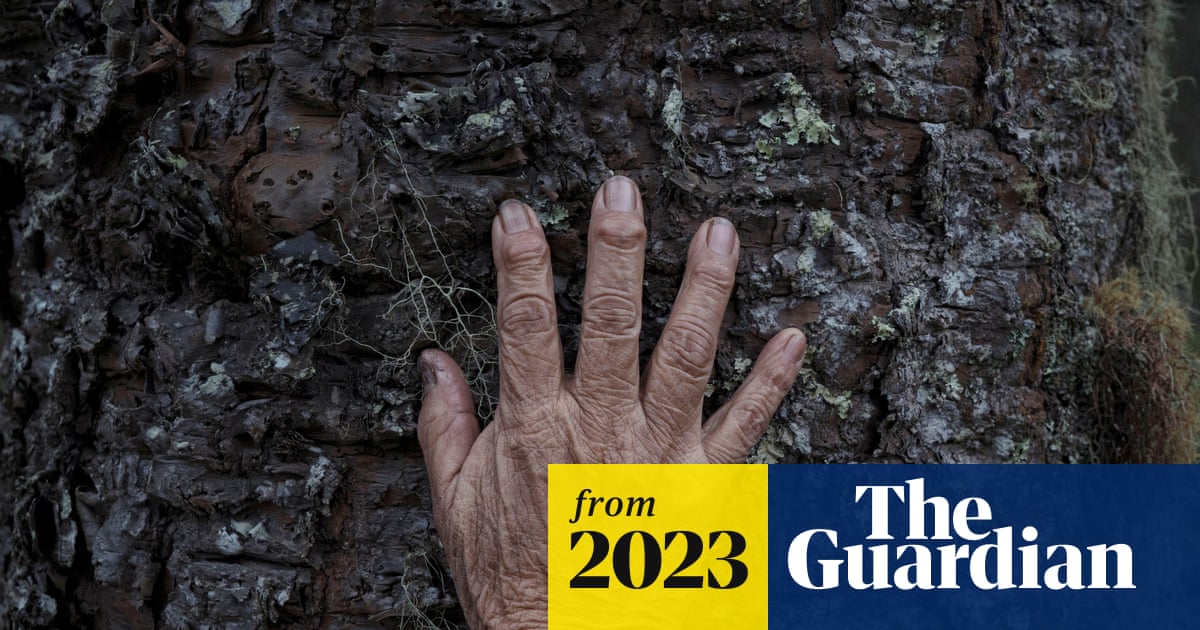
Seven Generations Principle: Healing the Past & Shaping the Future — The Indigenous Foundation
This is adapted from an Unrooted podcast episode by Breanne Smith @breazieboozhoo What if I told you that the choices we make today could shape the lives of those who come seven generations after us? And that we are the bridge between our ancestors’ resilience & our descendants’ future.

Earthy Governance: How to Learn About Democracy From Indigenous Peoples
In light of the planetary polycrisis, it is time to challenge the dominant strand of Western thought that asserts only humans possess rights and that

Doctrine of Discovery Project
Explore the Doctrine of Discovery Project archive of legal history, papal bulls, repudiations, and resources on Indigenous sovereignty, justice, and decolonization.

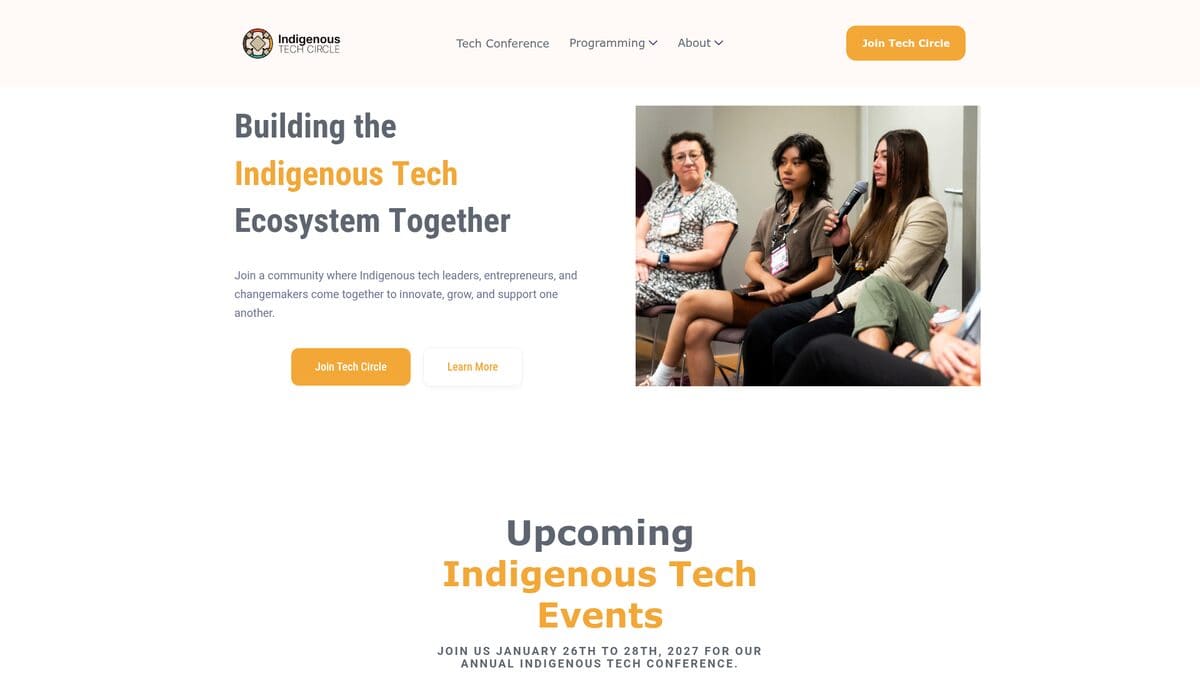
Indigenous Tech Circle | Indigenous-led Tech in Canada
Indigenous-led community connecting technologists, founders, investors, and changemakers across Canada — host of the largest Indigenous tech conference.
Indigenous Knowledges and Data Governance Protocol — Indigenous Innovation Initiative
Between March 2020 and March 2021, the Indigenous Innovation Initiative co-created the Indigenous Knowledges and Data Governance Protocol with the community, to guide how we collect and use Indigenous Knowledges and Data. Click on the image below to learn more about this Protocol. Since then, t

Someone has to run the fabs
Egalitarianism is important but we neglect STEM education at our peril

Guardians of the Earth: The essential role of Indigenous Peoples in the protection of natural resources - The Global Goals
For Indigenous Peoples, the land is not a resource to exploit, but a living being, a source of identity, spirituality and wellbeing.
