

Building games that can be understood at a glance - Zach Gage, GDC 2018
Building games that can be understood at a glance
Building games that can be understood at a glance - Zach Gage, GDC 2018
Building Games That Can Be Understood at a Glance
Designing Games to Learn
As I've been writing this series of newsletters on learning and video games, there's been a spectre lurking in the background. Video games and education. Edutainment.
Designing And Building Stockfighter, Our Programming Game | Kalzumeus Software
GameSpot's SIMply Divine: The Story of Maxis Software
GameSpot action adventure driving puzzle role-playing simulation sports strategy hardware
Curriculum Guide
Riot Games’ Game Design Curriculum is an entry-level course that teaches high school students the fundamental elements of game design using a framework and interactive workshops created by our own game designers. Students will ultimately utilize their newfound knowledge of core game design concepts like goals, types of fun, opposition, rules, interaction, and balance to create a paper prototype of a multiplayer game.
The Pentaract
The AppView for the games.gamesgamesgamesgames.* ATProto lexicons
Integrating Narrative into Game Design: A Portal Post-Mortem
The UX of video game tutorials
What decisions a designer will run into while designing learning experiences.
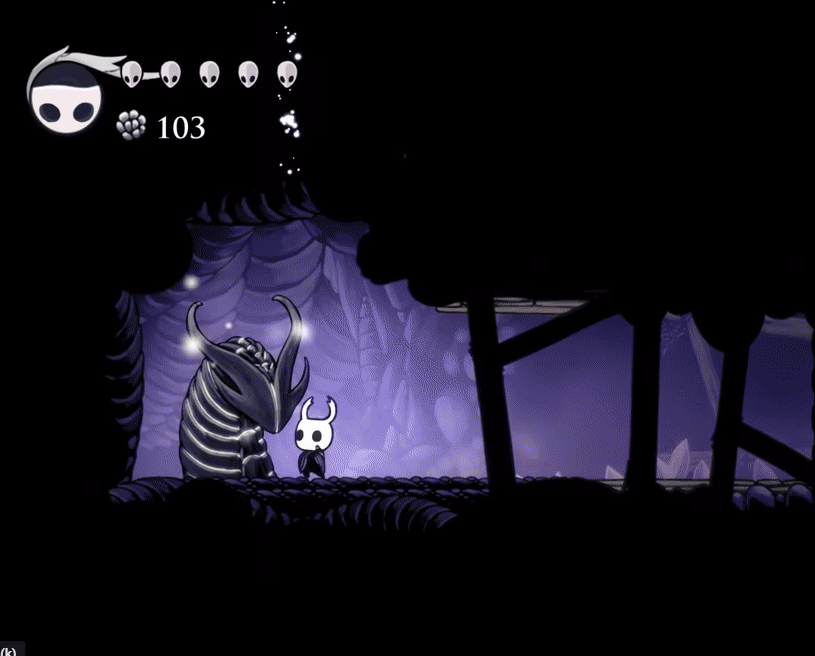
Context Sensitivity
Game Platforms | Game Developer
Explore the latest news and expert commentary on Game Platforms, brought to you by the editors of Game Developer

How to write better (game) libraries
Introduction The aim of this article is to provide a series of good general advice and consideratio…

“The Door Problem”
Game design is one of those nebulous terms to people outside the game industry that’s about as clear as the “astrophysicist” job title is to me. It’s also my job, so I find myself explaining what game design means to a lot of people from different backgrounds, some of whom don’t know anything about games.
"What's my model inside of?": Exploring the role of environments for grounded natural language understanding
In contrast to classical cognitive science which studied brains in isolation, ecological approaches focused on the role of the body and environment in shaping cognition. Similarly, in this thesis we adopt an ecological approach to grounded natural language understanding (NLU) research. Grounded language understanding studies language understanding systems situated in the context of events, actions and precepts in naturalistic/simulated virtual environments. Where classic research tends to focus on designing new models and optimization methods while treating environments as given, we explore the potential of environment design for improving data collection and model development. We developed novel training and annotation approaches for procedural text understanding based on text-based game environments. We also drew upon embodied cognitive linguistics literature to propose a roadmap for grounded NLP research, and to inform the development of a new benchmark for measuring the progress of large language models on challenging commonsense reasoning tasks. We leveraged the richer supervision provided by text-based game environments to develop Breakpoint Transformers, a novel approach to modeling intermediate semantic information in long narrative or procedural texts. Finally, we integrated theories on the role of environments in collective human intelligence to propose a design for AI-augmented "social thinking environments" for knowledge workers like scientists.

Atmosphere Gaming

Projects, apps, references, resources, discourse, ideas, etc

CRASH THE ARCADE
Cartridge