


Yet the news cruised by with analysis focused simply on what Facebook's new keyword post search does today. Yes, any post by you or any of your friends
We Analyzed 248K Reddit Posts: What Drives Visibility in AI Search [Study]
We analyzed 248,000 Reddit posts to uncover what makes certain threads appear in AI search results. Learn which post types, engagement levels, and formats drive visibility.

The Destructive Switch from Search to Social
2006 wasn’t a great year for our brains. In July, Twitter launched to the world, and in September, Facebook added the News Feed. But…

Leaked document reveals Facebook conducted research to target emotionally vulnerable and insecure youth
37K votes, 2.3K comments. 48M subscribers in the worldnews community. A place for major news from around the world, excluding US-internal news.
Death by a thousand likes: How Facebook and Twitter are killing the open web
Here’s one way to understand the symbiotic relationship between publications and platforms in the digital age. Publications depend on advertising dollars to keep producing content, so they need to hold readers’ attention. Big platforms like Facebook and Twitter already have plenty of attention, but they need vast quantities of content to fill up their newsfeeds. It seems natural, then, that publications have started relying on platforms to drive readership.

Changes to the Facebook Algorithm Decreased News Visibility Between 2021-2024
Platforms, especially Facebook, are primary news sources in the US. In its widely criticized "War on News," Meta algorithmically deprioritized news and political content. We use data from 40 news organizations (5,243,302 Facebook posts, 7,875,372,958 user reactions) and 21 non-news pages (396,468 posts; 1,909,088,308 reactions) between January 1, 2016 and February 13, 2025 to examine how these changes influenced news visibility on the platform. Reactions to news declined by 78% between 2021 and 2024 while reactions to non-news pages increased, indicating targeted suppression of news visibility. Low-quality sources were especially suppressed, yet the 2025 end to "War on News" increased user reactions to news, especially low-quality ones. These changes do not reflect decreased news supply, Facebook user base, or interest in news over this period.

Facebook’s Cambridge Analytica problems are nothing compared to what’s coming for all of online publishing
Let’s start with Facebook’s Surveillance Machine, by Zeynep Tufekci in last Monday’s New York Times. Among other things (all correct), Zeynep explains that “Facebook makes m…

Who Has More of Your Personal Data Than Facebook? Try Google
Google’s data-gathering empire is bigger and more pervasive than Facebook’s—and while it hasn’t been plagued by scandal, it can’t evade scrutiny forever.

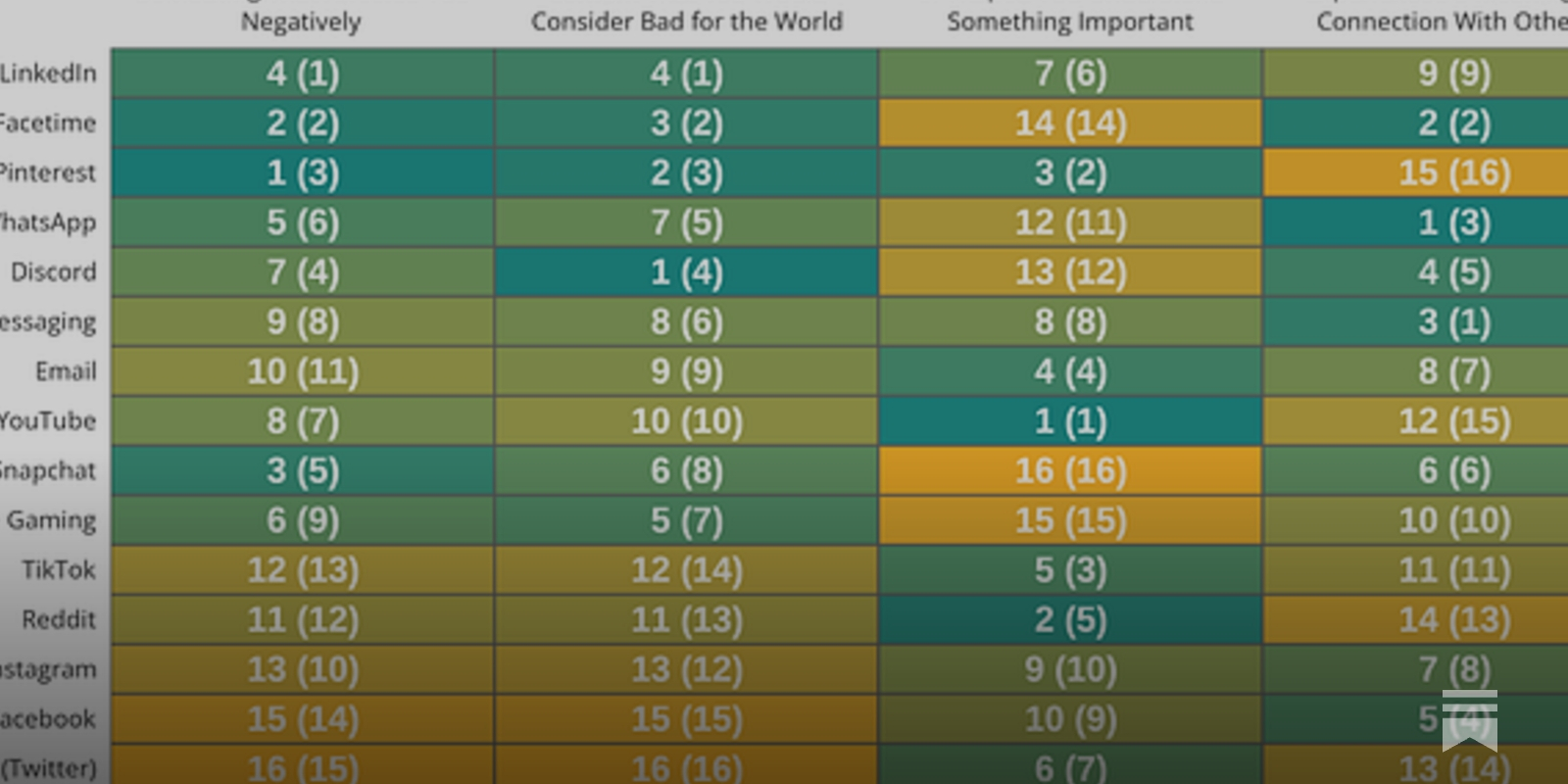
Social Media Experiences Across Nearly 2 Years Since Launching the Social Media Index
With new data through January 2025, we find that social media use is decreasing, bad experiences are mostly holding steady, and positive experiences are increasing on some platforms
Government requests for Facebook user data continue to increase worldwide | TechCrunch
Facebook continues to see increased requests for user data from governments worldwide, according to its latest transparency report. The social network

Facebook Wrestles With the Features It Used to Define Social Networking (Published 2021)
Likes and shares made the social media site what it is. Now, company documents show, it’s struggling to deal with their effects.

Note from Mark Zuckerberg
Everything we do at Facebook is focused on our mission to make the world more open and connected.
Google's File on You Is 10 Times Bigger Than Facebook's — Here's How to View It
3.5K votes, 307 comments. 1.7M subscribers in the privacy community. Privacy in the digital age (this is not a SECURITY subreddit, and PUBLIC data…
Publishers fearing Facebook dependency: fight for your future, reinvent RSS.
Right now Facebook accounts for over 40% of all traffic for U.S. news organizations, making many dependent on the social network for…

Do Science <i>Kardashians</i> Get Citation Premium? Self‐Fulfilling Effects of Social Media on Scientific Impact
ABSTRACT We analyze whether the visibility of scientists on social media affects the number of academic citations. We use the global COVID‐19 pandemic as a quasinatural experiment that exogenously increased public attention and the demand for expertise. Using publications on COVID‐related topics by social media stars and their coauthors prior to the outbreak of the pandemic, we find that social media stars' pre‐COVID‐era papers received about – more citations annually per paper after 2019. Quantitatively comparable results are obtained when we use scientists' Kardashian index (K‐index) as a benchmark for stardom, however we find no significant effects when using the intensive margin of scientists' K‐indexes. We provide a brief discussion of policy implications in light of these findings.
