


“There’s some sensible things you should be doing, and that’s one of them.”
Why The FBI Director Puts Tape Over His Webcam
After a speech about encryption and privacy, James Comey said he puts tape over his laptop's camera. Privacy activists seized on that as hypocritical, given the FBI's stance on "unhackable" devices.

So, FBI Director also Puts Tape Over His Webcam
FBI Director James Comey uses tape to cover up his laptop webcam to ensure Privacy.

FBI could force us to turn on iPhone cameras and microphones, says Apple
Eddy Cue warns precedent set by San Bernardino case could lead to company being forced to turn users’ smartphones into surveillance devices

FBI embracing facial recognition to “find bad guys”
Director wavered when asked if database would store drivers' license photos.

The Dawn of Robot Surveillance | American Civil Liberties Union
Imagine a surveillance camera in a typical convenience store in the 1980s. That camera was big and expensive, and connected by a wire running through the wall to a VCR sitting in a back room. There have been significant advances in camera technology in the ensuing decades — in resolution, digitization, storage, and wireless transmission — and cameras have become cheaper and far more prevalent. Still, for all those advances, the social implications of being recorded have not changed: when we walk into a store, we generally expect that the presence of cameras won’t affect us. We expect that our movements will be recorded, and we might feel self-conscious if we notice a camera, especially if we’re doing anything that we feel might attract attention. But unless something dramatic occurs, we generally understand that the videos in which we appear are unlikely to be scrutinized or monitored. All that is about to change. Today’s capture-and-store video systems are starting to be augmented with active monitoring technology known variously as “video analytics,” “intelligent video analytics,” or “video content analysis.” The goal of this technology is to allow computers not just to record but also to understand the objects and actions that a camera is capturing. This can be used to alert the authorities when something or someone deemed “suspicious” is detected, or to collect detailed information about video subjects for security or marketing purposes. Behind all the dumb video camera “eyes” that record us will increasingly lie ever-smarter “brains” that will be monitoring us. As we will see, technologists are working on teaching computers to do that monitoring in remarkable ways across a broad variety of dimensions.
This App Warns You if Someone Is Wearing Smart Glasses Nearby
The creator of Nearby Glasses made the app after reading 404 Media's coverage of how people are using Meta's Ray-Bans smartglasses to film people without their knowledge or consent. “I consider it to be a tiny part of resistance against surveillance tech.”

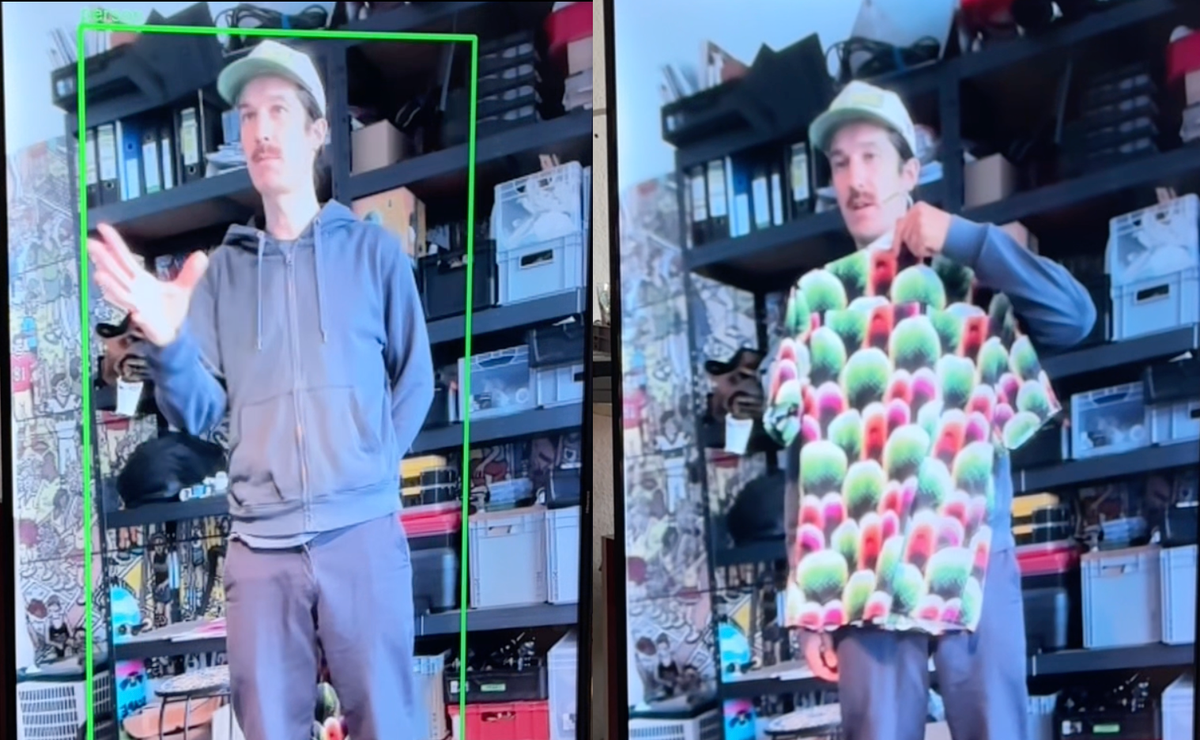
This 'Digital Camouflage' Shirt Confuses AI-Powered Surveillance Cameras
I watched Simon Weckert's 'digital camouflage' in action.
For teen girls victimized by ‘deepfake’ nudes, there is little recourse
The FBI has warned that technology used to create pornographic deepfake photos and videos was improving and being used for harassment and sextortion.

Baffle Web Trackers By Obfuscating Your Online Activities
Software that spits out misinformation about what you're actually doing on the web is a fascinating development in our relationship to online surveillance.

Opinion | The Internet of Way Too Many Things (Published 2015)
You may be able to get your phone to project bright colors if your window sensor detects a burglar, but what is protecting you from your phone?

How the FBI’s online wiretapping plan could get your computer hacked
Security researchers argue that an FBI proposal for government-mandated back doors in communications software is a disaster waiting to happen.

A Surveillance Net Blankets China’s Cities, Giving Police Vast Powers (Published 2019)
The authorities can scan your phones, track your face and find out when you leave your home. One of the world’s biggest spying networks is aimed at regular people, and nobody can stop it.

Harm Through the “#RizzCam”: Smart Glasses, Ambient Capture and Invisible Harassment
In online safety research, harassment is commonly understood as involving overt and unwanted acts that create a hostile environment for individuals or groups. Smart glasses, or wearable digital devices that are often indistinguishable from ordinary eyewear but can record video, audio and location data in real time, enable new forms of online harassment and gender-based harms that may not be recognised by current online safety or platform governance frameworks. Drawing on an interpretive content analysis of 350 point-of-view Instagram videos posted by individuals self-associated with the pick-up artistry (PUA) community, we examine how smart glasses can be used to harass women through what we call ambient capture. Ambient capture includes clandestine recording of people and social interactions within public, semi-private and private spaces. We argue this can constitute harassment when it is targeted at women and shared online without their consent. In our study, we found videos using ambient capture practices to harass women that had gone undetected by Instagram’s content moderation systems. These findings suggest online safety regimes and content moderation approaches should be assessed to ensure they account for the more invisible forms of harassment introduced by smart glasses and other wearable technologies.
No More Noodity: Nood.TV Gives Up The Ghost for Real - Adult Webcam FAQ
Read the full announcement below and leave a comment or post in the cam girl forum about what you think of Nood.TV closing down.

