

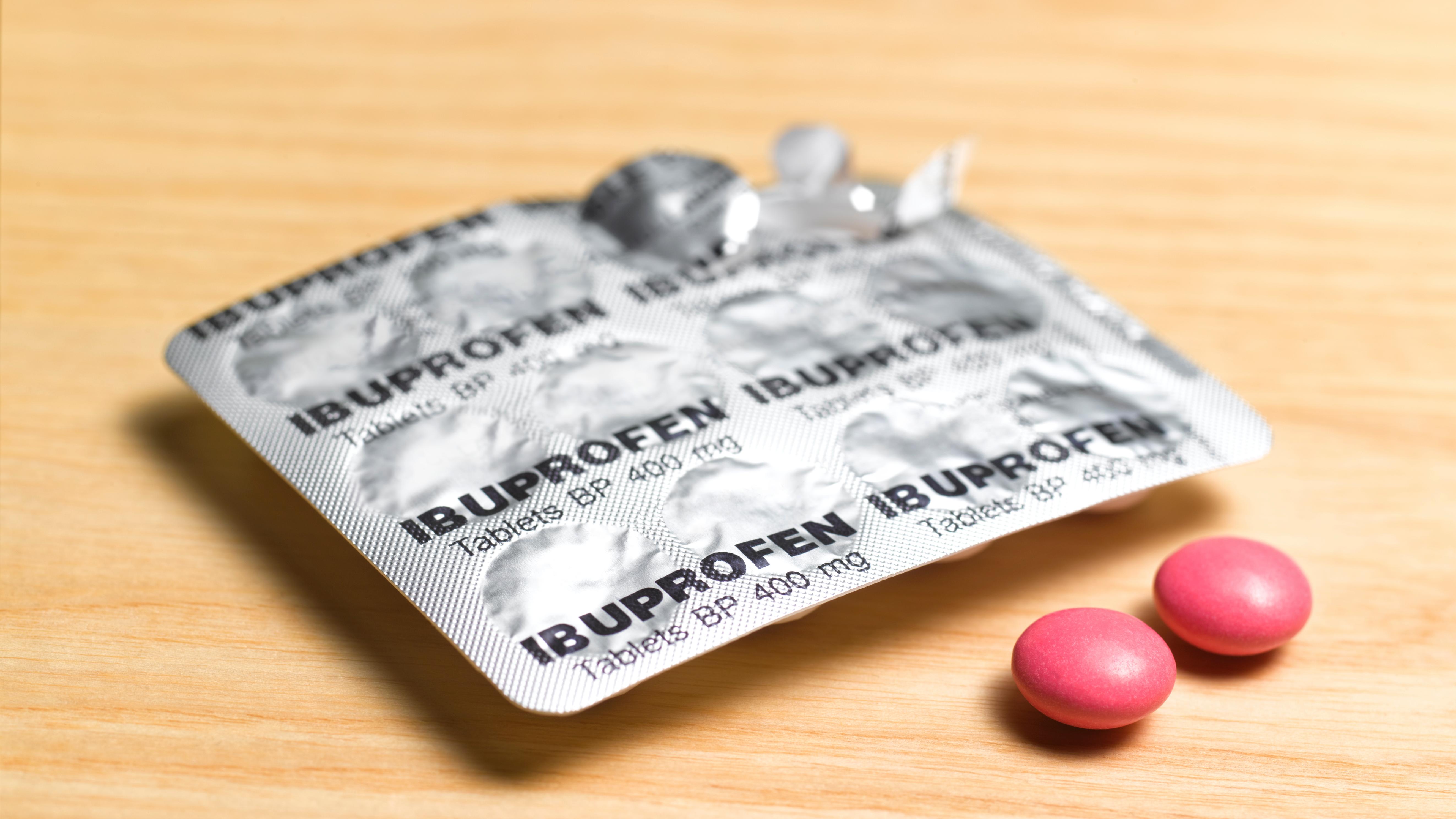
Ibuprofen and naproxen have long been thought as the better pain relievers, but a study comparing them to celecoxib found surprising results
Massive scientific report on marijuana confirms medical benefits
Effective pain treatment is a top conclusion, but risks and unanswered questions remain.

Killer Opioid Fentanyl Could Be a Weapon of Mass Destruction
Fentanyl is so potent that a few milligrams can be fatal. Could it be used to attack the U.S.?

Symptom Response to Low-Dose Naltrexone in Fibromyalgia: An Exploratory Analysis of the Randomized Placebo-Controlled FINAL Trial
Fibromyalgia (FM) remains difficult to manage due to a highly variable symptom profile. The “FINAL” randomized, placebo-controlled trial examined the efficacy of low-dose naltrexone (LDN) on pain in women with FM, showing no significant difference in pain reduction at the group level but potentially higher 30% pain response rates. Analysis of secondary outcomes showed potential improvements in memory problems.

These People Say Kratom Is An All-Natural Cure For Addiction. The Feds Say It’s Just Another Opioid.
Is kratom the answer to the opioid crisis — or the start of a new one?

Denosumab Compared With Zoledronic Acid for the Treatment of Bone Metastases in Patients With Advanced Breast Cancer: A Randomized, Double-Blind Study
Purpose This randomized study compared denosumab, a fully human monoclonal antibody against receptor activator of nuclear factor κ B (RANK) ligand, with zoledronic acid in delaying or preventing skeletal-related events (SREs) in patients with breast cancer with bone metastases. Patients and Methods Patients were randomly assigned to receive either subcutaneous denosumab 120 mg and intravenous placebo (n = 1,026) or intravenous zoledronic acid 4 mg adjusted for creatinine clearance and subcutaneous placebo (n = 1,020) every 4 weeks. All patients were strongly recommended to take daily calcium and vitamin D supplements. The primary end point was time to first on-study SRE (defined as pathologic fracture, radiation or surgery to bone, or spinal cord compression). Results Denosumab was superior to zoledronic acid in delaying time to first on-study SRE (hazard ratio, 0.82; 95% CI, 0.71 to 0.95; P = .01 superiority) and time to first and subsequent (multiple) on-study SREs (rate ratio, 0.77; 95% CI, 0.66 to 0.89; P = .001). Reduction in bone turnover markers was greater with denosumab. Overall survival, disease progression, and rates of adverse events (AEs) and serious AEs were similar between groups. An excess of renal AEs and acute-phase reactions occurred with zoledronic acid; hypocalcemia occurred more frequently with denosumab. Osteonecrosis of the jaw occurred infrequently (2.0%, denosumab; 1.4%, zoledronic acid; P = .39). Conclusion Denosumab was superior to zoledronic acid in delaying or preventing SREs in patients with breast cancer metastatic to bone and was generally well tolerated. With the convenience of a subcutaneous injection and no requirement for renal monitoring, denosumab represents a potential treatment option for patients with bone metastases.

Randomized, Double-Blind Study of Denosumab Versus Zoledronic Acid in the Treatment of Bone Metastases in Patients With Advanced Cancer (Excluding Breast and Prostate Cancer) or Multiple Myeloma
Purpose This study compared denosumab, a fully human monoclonal anti-receptor activator of nuclear factor kappa-B ligand antibody, with zoledronic acid (ZA) for delaying or preventing skeletal-related events (SRE) in patients with advanced cancer and bone metastases (excluding breast and prostate) or myeloma. Patients and Methods Eligible patients were randomly assigned in a double-blind, double-dummy design to receive monthly subcutaneous denosumab 120 mg (n = 886) or intravenous ZA 4 mg (dose adjusted for renal impairment; n = 890). Daily supplemental calcium and vitamin D were strongly recommended. The primary end point was time to first on-study SRE (pathologic fracture, radiation or surgery to bone, or spinal cord compression). Results Denosumab was noninferior to ZA in delaying time to first on-study SRE (hazard ratio, 0.84; 95% CI, 0.71 to 0.98; P = .0007). Although directionally favorable, denosumab was not statistically superior to ZA in delaying time to first on-study SRE (P = .03 unadjusted; P = .06 adjusted for multiplicity) or time to first-and-subsequent (multiple) SRE (rate ratio, 0.90; 95% CI, 0.77 to 1.04; P = .14). Overall survival and disease progression were similar between groups. Hypocalcemia occurred more frequently with denosumab. Osteonecrosis of the jaw occurred at similarly low rates in both groups. Acute-phase reactions after the first dose occurred more frequently with ZA, as did renal adverse events and elevations in serum creatinine based on National Cancer Institute Common Toxicity Criteria for Adverse Events grading. Conclusion Denosumab was noninferior (trending to superiority) to ZA in preventing or delaying first on-study SRE in patients with advanced cancer metastatic to bone or myeloma. Denosumab represents a potential novel treatment option with the convenience of subcutaneous administration and no requirement for renal monitoring or dose adjustment.

The best sleeping position for minimizing aches and pains
The wrong sleeping position can cause aches, pains, and even heartburn. Use these tips to train yourself to sleep on your back.

Integrated model for denosumab and ibandronate pharmacodynamics in postmenopausal women
ABSTRACT This study aims to characterize the pharmacodynamic properties of denosumab, a RANK ligand inhibitor, and ibandronate, a bisphosphonate, using an integrated bone homeostasis model in postmenopausal women. Mean temporal profiles of denosumab, serum and urine N‐telopeptide (sNTX, uNTX), lumbar spine bone mineral density (BMD) following denosumab administration, and urine C‐telopeptide (uCTX) and lumbar spine BMD upon ibandronate administration were extracted from the literature. A mechanistic model was developed that integrates denosumab pharmacokinetics with binding to RANK ligand and ibandronate inhibition of osteoclast precursor differentiation to active osteoclasts (AOC). Biomarker concentrations were linked to the AOC pool. The BMD was characterized by a turnover model with stimulation of bone formation and degradation by AOB (active osteoblasts) and AOC pools. The estimated basal sNTX, uNTX and uCTX concentrations were 7.24 n m , 14.4 nmol/mmolCr and 31 µg/mmolCr. The BMD degradation rate was 0.00161 day ‐1 with stimulation constants associated with AOB and AOC of 1214 and 790 p m ‐1 . The plasma ibandronate concentration producing 50% of maximum inhibition of osteoclast differentiation was 522 ng/l. The integrated model, which incorporates multiple pathways of therapeutic intervention, quantitatively describes changes in clinical biomarkers of bone turnover and BMD after denosumab and ibandronate exposures in postmenopausal women. Copyright © 2011 John Wiley & Sons, Ltd.

Many surgical interventions are little better than placebo
A succession of clinical trials is upending the field

Can you hurt yourself eating chilli peppers?
Many of us love the burning sensation from hot chillies. But are they doing us any harm? Veronique Greenwood investigates.

Magnesium and the Brain: The Original Chill Pill
Magnesium is an old home remedy for all that ails you, including "anxiety, apathy, depression, headaches, insecurity, irritability, restlessness, talkativeness, and sulkiness."

Kofi Annan On Why Drug Bans Are Ineffective
Drugs are dangerous, but current narcotics policies are an even bigger threat because punishment is given a greater priority than health and human rights. It's time for regulations that put lives and safety first, argues former UN Secretary-General Kofi Annan.
Sanitizing the Psychedelic Revolution
Big Pharma is rushing to monetize ancient healing practices, but what’s left might not be the same medicine

Scientists discover a way to kill dangerous gut bacteria without killing the good
Scientists have discovered a natural compound that targets dangerous C. difficile bacteria without wiping out the gut's beneficial microbes. Successful early tests suggest it could lead to a gentler, more effective treatment for stubborn intestinal infections that frequently return.

New Ketamine study 🧪. Abstract: ✅Ketamine "tablets were effective, safe & well tolerated" Actual results: ❌At primary endpoint of 13 weeks, 0 of 4 ketamine groups outperformed placebo /re remission ❌At 13 weeks, only 1 of 4 outperformed placebo /re response, with a beautiful p-value of 0.046 🤪

Extended-release ketamine tablets for treatment-resistant depression: a randomized placebo-controlled phase 2 trial - Nature Medicine
www.nature.com