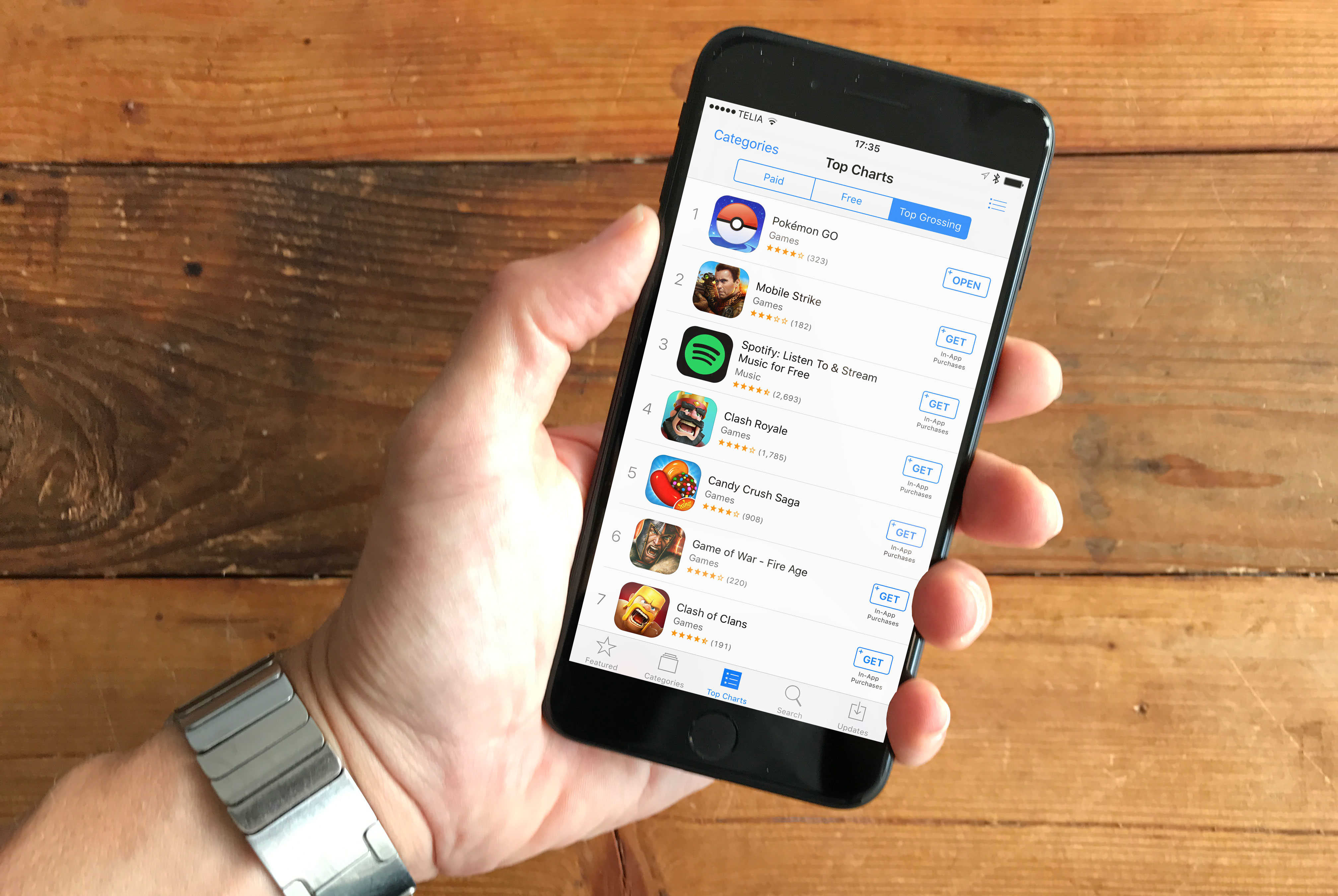
When it comes to discussions surrounding free to play, people often focus on monetization tactics based on their experiences as a player. Folks commonly get upset based on the disruption of the historical precedent that games should have a price tag, that you pay, then get the game.
Exploitative Game Design: Beyond the F2P Debate
The past few months have seen a torrent of articles about Free-to-Play business models, often discussed alongside issues of ethics in games (for example: 1, 2, 3, 4, 5). These pieces have addressed the effect on addiction-prone players or children, the possibility of corrupting artistic intent, the sheer amount of money being spent, and other advantages and dangers of F2P. While all of this is relevant, I fear that we’re focusing too much on F2P and glossing over the wider ethical issues in game design.
Video Game Monetization | The Paper Pilot
The Paper Pilot's digital garden of thoughts on philosophy, politics, and sociology
the Enshittification of Cozy Games
Rogue
Ad-free video game news, guides, opinions, history, culture, previews, interviews, and reviews written by humans, for humans

The Social Cost of Cheap Pseudonyms
We consider the problems of societal norms for cooperation and reputation when it is possible to obtain cheap pseudonyms, something that is becoming quite common in a wide variety of interactions on the Internet. This introduces opportunities to misbehave without paying reputational consequences. A large degree of cooperation can still emerge, through a convention in which newcomers “pay their dues” by accepting poor treatment from players who have established positive reputations. One might hope for an open society where newcomers are treated well, but there is an inherent social cost in making the spread of reputations optional. We prove that no equilibrium can sustain significantly more cooperation than the dues‐paying equilibrium in a repeated random matching game with a large number of players in which players have finite lives and the ability to change their identities, and there is a small but nonvanishing probability of mistakes. Although one could remove the inefficiency of mistreating newcomers by disallowing anonymity, this is not practical or desirable in a wide variety of transactions. We discuss the use of entry fees, which permits newcomers to be trusted but excludes some players with low payoffs, thus introducing a different inefficiency. We also discuss the use of free but unreplaceable pseudonyms, and describe a mechanism that implements them using standard encryption techniques, which could be practically implemented in electronic transactions.

The Social Cost of Cheap Pseudonyms
We consider the problems of societal norms for cooperation and reputation when it is possible to obtain cheap pseudonyms, something that is becoming quite common in a wide variety of interactions on the Internet. This introduces opportunities to misbehave without paying reputational consequences. A large degree of cooperation can still emerge, through a convention in which newcomers “pay their dues” by accepting poor treatment from players who have established positive reputations. One might hope for an open society where newcomers are treated well, but there is an inherent social cost in making the spread of reputations optional. We prove that no equilibrium can sustain significantly more cooperation than the dues‐paying equilibrium in a repeated random matching game with a large number of players in which players have finite lives and the ability to change their identities, and there is a small but nonvanishing probability of mistakes. Although one could remove the inefficiency of mistreating newcomers by disallowing anonymity, this is not practical or desirable in a wide variety of transactions. We discuss the use of entry fees, which permits newcomers to be trusted but excludes some players with low payoffs, thus introducing a different inefficiency. We also discuss the use of free but unreplaceable pseudonyms, and describe a mechanism that implements them using standard encryption techniques, which could be practically implemented in electronic transactions.

Episode 386: The Power of Free
Everybody likes free. But free can be dangerous. On today's show, what happens when you take something that was free and give it a price. That's a highly risky move and the damage can be enormous.

Restoring Consumer Sovereignty
For decades, there has been broad consensus within antitrust, intellectual property, and consumer law scholarship that consumers make decisions in their own best interests by consciously weighting the market’s relative prices, quantities, and qualities against each other. That consensus is unraveling in light of novel findings from cognitive and social psychology that explain how individuals’ concepts of what they prefer drive the global economy. At the same time, producers nowadays no longer merely satisfy consumers’ needs but also communicate their values, identities, and aspirations through the sale and marketing of products. As part of the growing interest in observations such as these, a wealth of psychological studies challenge the fundamental teaching of economics that the interplay of demand and supply of goods in a free market economy provides us with material wealth. This book provides a normative defense of that assumption and a theoretical framework for understanding its contradictions. It argues that the erosion of consumer sovereignty through the ability of product manufacturers and sellers to systematically take advantage of individuals’ psychological weaknesses demands a twenty-first-century reconceptualization of the consumer and a modern account of how the law should regulate the digital economy. Such an account is justified to ensure a diverse marketplace in which consumers can influence how our societies are structured and arranged. By examining the role that market manipulation plays, it offers ingredients for a realistic descriptive and normative market regulatory theory that is aware of its political economy, its behavioral suppositions, and its distributional consequences.
Unlocking the commons
"The most powerful and interesting media model will remain raising money from members who don't just permit but <em>insist</em> that the product be given away for free."

Assumed Audiences
Naming your invisible audiences to free yourself from unspoken obligations
A speech about Free-to-Play game design
About a month ago, I gave a speech at Creative Mornings in Portland about the way the Free-to-Play business model affects game design. I compared games to television, looking at the way television business models have drastically affected the composition of those shows.
Unwillingness to pay for privacy: A field experiment
We measure willingness to pay for privacy in a field experiment. Participants bought at most one DVD from one of two competing online stores. One store consistently required more sensitive personal data than the other, but otherwise the stores were identical. In one treatment, DVDs were one Euro cheaper at the store requesting more personal information, and almost all buyers chose the cheaper store. Surprisingly, in the second treatment when prices were identical, participants bought from both shops equally often.
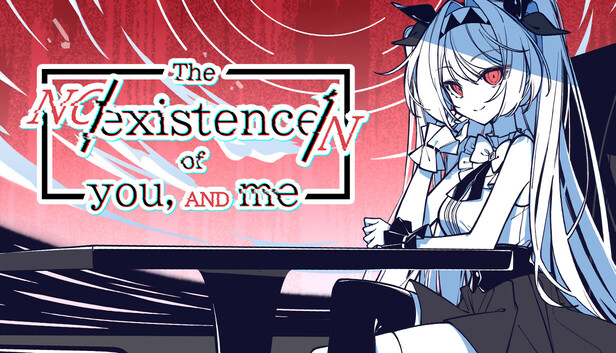
The NOexistenceN of you AND me
Use "game" as a medium to showcase the world of "you/girl". Explore the truth of "you/girl/world" through the form of a "visual novel".
Play is doing its work even if we’re not keeping score | Aeon Essays
We are most human when we play freely, imaginatively, pointlessly. Gamification risks atrophying that most precious capacity
Evolution of Consumption: A Psychological Ownership Framework
Technological innovations are creating new products, services, and markets that satisfy enduring consumer needs. These technological innovations create value for consumers and firms in many ways, but they also disrupt psychological ownership––the feeling that a thing is “MINE.” The authors describe two key dimensions of this technology-driven evolution of consumption pertaining to psychological ownership: (1) replacing legal ownership of private goods with legal access rights to goods and services owned and used by others and (2) replacing “solid” material goods with “liquid” experiential goods. They propose that these consumption changes can have three effects on psychological ownership: they can threaten it, cause it to transfer to other targets, and create new opportunities to preserve it. These changes and their effects are organized in a framework and examined across three macro trends in marketing: (1) growth of the sharing economy, (2) digitization of goods and services, and (3) expansion of personal data. This psychological ownership framework generates future research opportunities and actionable marketing strategies for firms aiming to preserve the positive consequences of psychological ownership and navigate cases for which it is a liability.

Why freemium apps suck for everyone (and how Apple is killing paid apps)
I work on an iPhone app called Reps & Sets as a hobby project in my spare time. This week, my partner and I came to the conclusion that there is no