

What do Twitter, YouTube, Pinterest, Instagram and a gazillion other digital platforms have in common? They all treat usernames like a baby treats a diaper instead of the precious and lucrative resource they are.
Online anonymity: study found ‘stable pseudonyms’ created a more civil environment than real user names
A higher quality discussion emerged among commenters allowed to use personas instead of their real names.
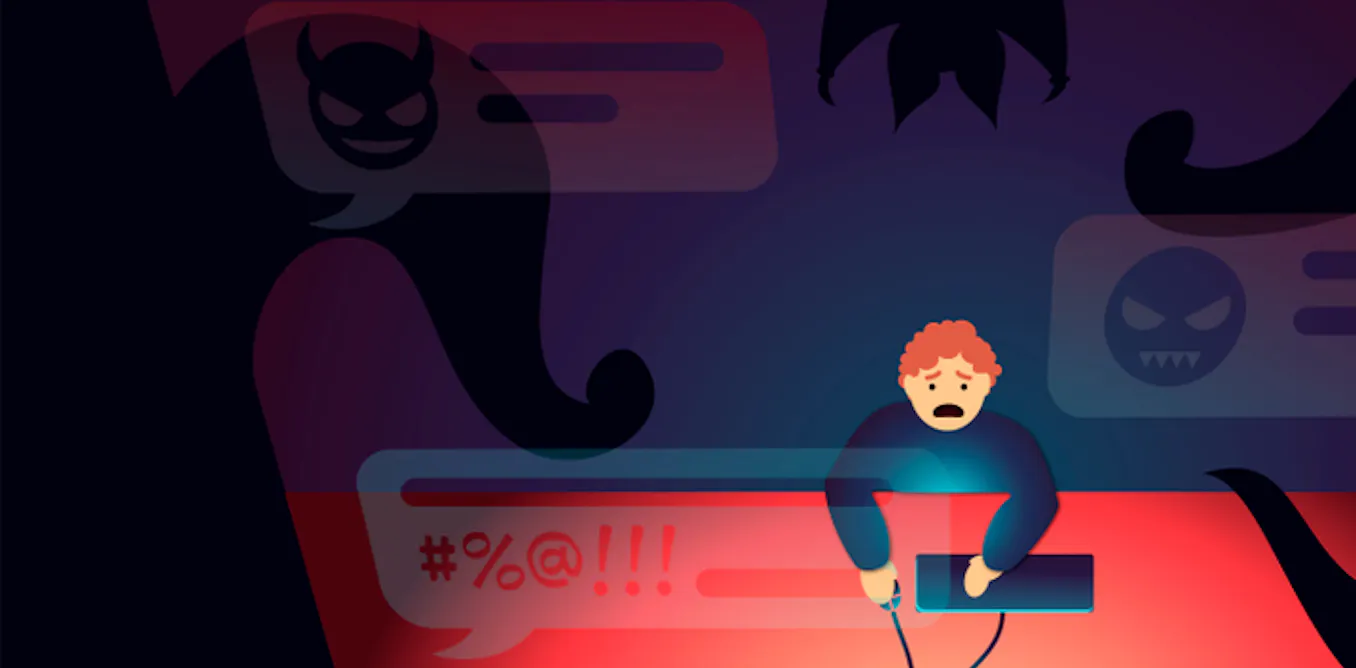
Online anonymity: study found ‘stable pseudonyms’ created a more civil environment than real user names
A higher quality discussion emerged among commenters allowed to use personas instead of their real names.
The Everything Account - augment
I’ve been thinking a lot about our accounts lately. We all have an ever-growing pile of digital identities scattered across the web, many forgotten after a b…
Shifts in U.S. Social Media Use, 2020–2024: Decline, Fragmentation, and Enduring Polarization
The social media ecosystem appears to be in flux. Twitter’s rebranding to X has come to symbolize a broader reorganization of online publics – political reshuffling, user attrition, and uncertainty over the role of legacy platforms. Simultaneously, the shift from text-based, networked feeds toward algorithmically curated, short-form video has accelerated, with TikTok setting the pace for the wider ecosystem [18, 14, 16]. At the same time, everyday communication increasingly migrates from large, open networks to semi-private spaces such as group chats and messaging apps. Commentators describe a digital public sphere in transition: smaller, more fragmented, less dominated by traditional social networking sites, and rise of more broadcast-oriented forms of media – with some even suggesting that we are seeing the beginning of the end of the social media era.
Name Checker - Social Media Username Checker
Check the availability of your desired Brand Name through our social media username checker (name checker). Claim your online identity across Social Media!
Why does Google+ insist on having your real name?
Google+ is the latest social network to demand people's real names. But why do they need them?

Social Media Is Now Parasocial Media
When practitioners used the term “social media” to describe the internet tools that emerged in the mid-aughts, they were giving a name to the kinds of platforms and protocols that allowed people to socialize with friends and communities of interest by using digital technologies. Twenty years later, users of social media are far more likely to scroll than post – and the content that they consume is often strategically produced and algorithmically curated. In this essay, I argue that the very essence of social media has changed. To more effectively interrogate what we are witnessing, we need to stop presuming that these tools are “social media” and begin recognizing that they are now “parasocial media.” Doing so raises new questions about digitally mediated sociality, not to mention the politics and governance of these platforms.

Anonymity, pseudonymity, and the agency of online identity: Examining the social practices of r/Gonewild
A debate is currently raging regarding the value of anonymity online. On one side of the debate is Facebook, the world’s largest social network site. Facebook demands that people use their real names and is one of the leading forces behind the push towards a “real name” Internet. On the other side of the debate are scholars such as danah boyd and Bernie Hogan and sites such as 4chan and Reddit that view anonymity and pseudonymity as important to how people construct identity online. While much has been written about the benefits of anonymity and pseudonymity, there is a lack of published research examining specific practices enabled by pseudonyms. This paper provides a detailed account of the behaviors enabled through pseudonymous identity construction through a case study of the subreddit r/gonewild. The main contribution of the article is to provide a specific account of the costs of a totalizing embrace of the “real name” Internet.
Anonymity, pseudonymity, and the agency of online identity: Examining the social practices of r/Gonewild
A debate is currently raging regarding the value of anonymity online. On one side of the debate is Facebook, the world’s largest social network site. Facebook demands that people use their real names and is one of the leading forces behind the push towards a “real name” Internet. On the other side of the debate are scholars such as danah boyd and Bernie Hogan and sites such as 4chan and Reddit that view anonymity and pseudonymity as important to how people construct identity online. While much has been written about the benefits of anonymity and pseudonymity, there is a lack of published research examining specific practices enabled by pseudonyms. This paper provides a detailed account of the behaviors enabled through pseudonymous identity construction through a case study of the subreddit r/gonewild. The main contribution of the article is to provide a specific account of the costs of a totalizing embrace of the “real name” Internet.
Petnames: A humane approach to secure, decentralized naming
Names must be human-readable in order to be widely used. Unfortunately, while DIDs and Tor .onion addresses are decentralized and globally unique, they are not human readable. How can we build user interfaces that real users might actually use? In this paper we provide an overview of petname systems, a way of mapping human readable names to cryptographically secure names, and describe changes to two user interface designs that we believe that are compatible with intuitive user expectations. We first discuss the smartphone contact list as already approximating petnames to some degree and discuss how to augment it with secure introduction. We then walk through several changes to browsers (which may be provided natively or as an extension) which add the functionality of a petname system. By utilizing petname systems we are able to collectively support individual naming definitions, community curated directories of names, as well as existing naming authorities such as certificate authorities and the domain name system, government agencies such as trademark offices, and decentralized systems such as Namecoin.
Petnames: A humane approach to secure, decentralized naming
Names must be human-readable in order to be widely used. Unfortunately, while DIDs and Tor .onion addresses are decentralized and globally unique, they are not human readable. How can we build user interfaces that real users might actually use? In this paper we provide an overview of petname systems, a way of mapping human readable names to cryptographically secure names, and describe changes to two user interface designs that we believe that are compatible with intuitive user expectations. We first discuss the smartphone contact list as already approximating petnames to some degree and discuss how to augment it with secure introduction. We then walk through several changes to browsers (which may be provided natively or as an extension) which add the functionality of a petname system. By utilizing petname systems we are able to collectively support individual naming definitions, community curated directories of names, as well as existing naming authorities such as certificate authorities and the domain name system, government agencies such as trademark offices, and decentralized systems such as Namecoin.
How Instagram's moderation rules are made
A better web
The web as it is today is, by design, ridden with hostility. The problems faced by its users fall into three main categories: ownership of identity, ownership of data, and surveillance capitalism. Websites want to own the identity of their users. This results in compromising either the convenience by having to log in to every site separately – or security and privacy, by outsourcing identity control to other third-party sites (“Would you like to log in with your Google or Facebook account?”), thus disclosing movements throughout the internet.
Recently I’ve been thinking about a couple of... - Adam Wood
Recently I’ve been thinking about a couple of different tech-related things that sort of overlap. One is the (emerging) shape of the new social web; the other is a pull I’m feeling to try and lessen reliance on American companies. I’ve been interested in / concerned by what became of social media for some time.1 Since the sundering of Twitter in 2022, I’ve kept an eye on the various alternatives, with particular interest in Mastodon and Bluesky. Actually, to be more accurate, my interest has been in the protocols behind those platforms: ActivityPub and AT Protocol respectively. Both have their...

misc #atdev thought to consider later but we need more tools on both user & viewer side to improve social media experience for people who have audiences of different highly varied demographics... you can't really have an everyTHING account if it isn't smooth and frictionless to have everyONE there
Today some of the most innovative creators & podcasters are launching social websites that will bring millions of their fans to the social web: verge.surf.social decoder.surf.social versionhistory.surf.social vergecast.surf.social wired.surf.social 404media.surf.social poweruser.surf.social

