


I knew the future would be shocking but this is a whole other level.
To Make Sense of the Present, Brains May Predict the Future | Quanta Magazine
A controversial theory suggests that perception, motor control, memory and other brain functions all depend on comparisons between ongoing actual experiences and the brain’s modeled expectations.

How are we writing the future of humanity?
Consciousness spinning

Inventing the future: A neuroscience research roadmap
The past decade of transformative advances in neurotechnology portends an exciting future for neuroscience. This NeuroView charts a strategic path to accelerate and integrate research discovery and speed the development of new cures for human brain disorders.

Aleph
We're a research lab working on new interfaces for the brain. We think our telepathic future is both imminent and wonderful.
Did Neuralink make the wrong bet?
The field of brain-computer interfaces is moving away from mind-controlled computer cursors to restoring speech.

Resource recs on AI catastrophic risk
If nothing magic is happening in the human brain, things could get weird

The Future of Everything is Lies, I Guess: Where Do We Go From Here?
This is a long article, so I've broken it up into a series of posts, listed below. You can also read the full work as a PDF or EPUB.
Mystified magicians of the mind
My conversation with neuroscientist Paul Cisek
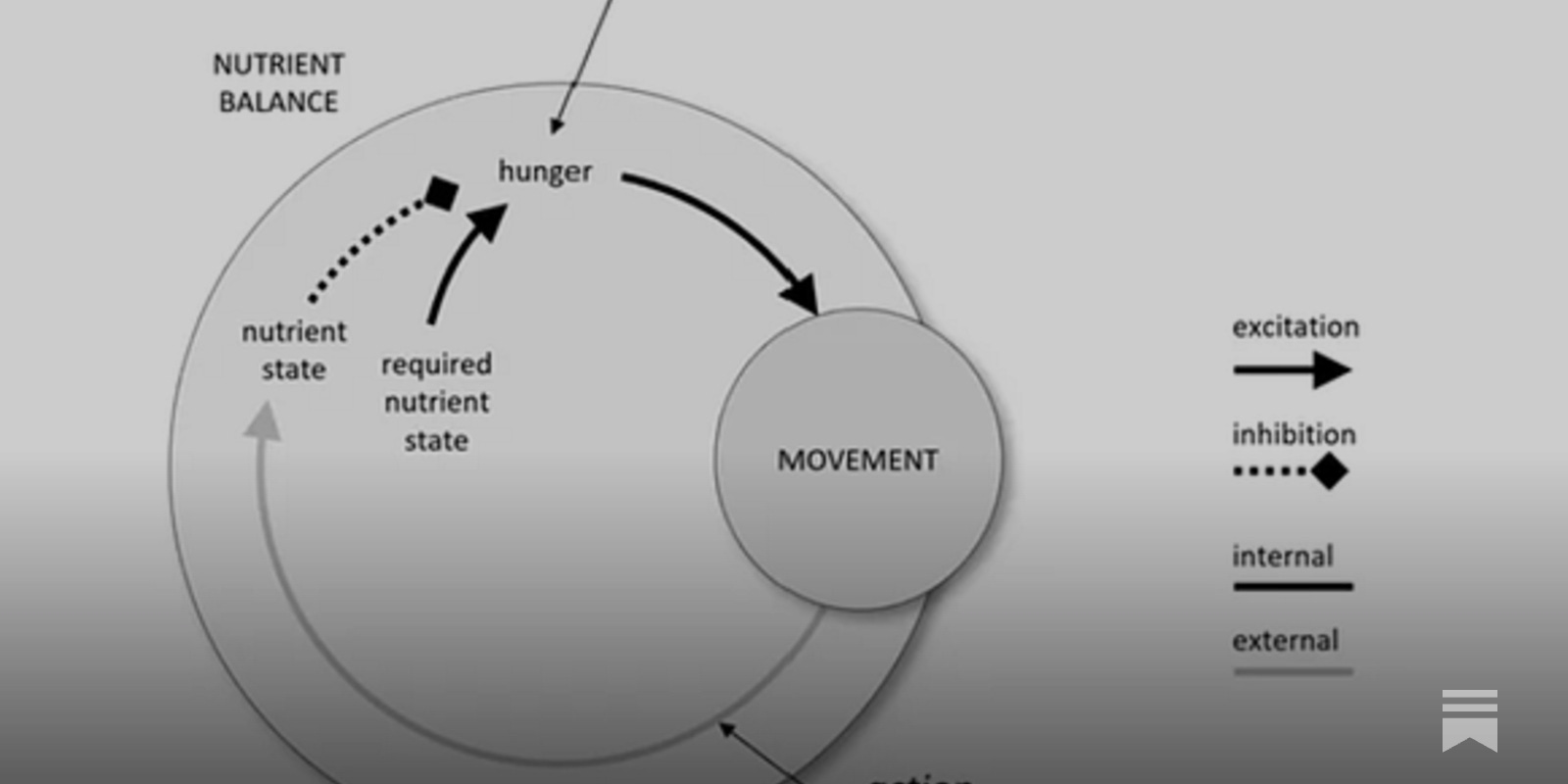
The brain's 7D sandcastles could be the key to consciousness | New Scientist
We’ve glimpsed mind-bending geometric structures that fleetingly encode our thoughts, memories and feelings – and could solve the greatest mystery of all

Introducing TRIBE v2: A Predictive Foundation Model Trained to Understand How the Human Brain Processes Complex Stimuli | Keith Doelling
This is some very cool work by some awesome colleagues Jean-Rémi King, and Teon Brooks! Seriously not enough good things can be said about how cool it is. You should enjoy it and play with it. And kudos to Meta for open sourcing it. At the same time, I'm already seeing posts about how the model will replace fMRI experiments as researchers will simulate how the brain "really works" instead of running costly experiments. I think this goes WELL beyond what its creators intend. We are already seeing that use of AI in science allows you to explore charted ideas more thoroughly and much more rapidly but slows us down in finding novel ideas (https://lnkd.in/eMR2akqt). At the same time, there is growing concern that LLM performance will collapse as they are increasingly trained on their own output (https://lnkd.in/eavgfyuY). Leaving neuroscience to AI simulations risks following the same fate, where we generate seemingly new findings without gaining new meaning. A mechanistic understanding of how the brain works (if that is still your goal) will be found at the margins, in errors and idiosyncrasies of neural function. What TRIBE provides is a super useful and cool instantiation of our current understanding on how and where neural activity is instantiated in the brain. But it won't help us make groundbreaking new findings of how neural circuits lead to cognition and behavior. Experiments on real human brains, may be costly, but they will always be necessary!
Introducing TRIBE v2: A Predictive Foundation Model Trained to Understand How the Human Brain Processes Complex Stimuli | Keith Doelling
This is some very cool work by some awesome colleagues Jean-Rémi King, and Teon Brooks! Seriously not enough good things can be said about how cool it is. You should enjoy it and play with it. And kudos to Meta for open sourcing it. At the same time, I'm already seeing posts about how the model will replace fMRI experiments as researchers will simulate how the brain "really works" instead of running costly experiments. I think this goes WELL beyond what its creators intend. We are already seeing that use of AI in science allows you to explore charted ideas more thoroughly and much more rapidly but slows us down in finding novel ideas (https://lnkd.in/eMR2akqt). At the same time, there is growing concern that LLM performance will collapse as they are increasingly trained on their own output (https://lnkd.in/eavgfyuY). Leaving neuroscience to AI simulations risks following the same fate, where we generate seemingly new findings without gaining new meaning. A mechanistic understanding of how the brain works (if that is still your goal) will be found at the margins, in errors and idiosyncrasies of neural function. What TRIBE provides is a super useful and cool instantiation of our current understanding on how and where neural activity is instantiated in the brain. But it won't help us make groundbreaking new findings of how neural circuits lead to cognition and behavior. Experiments on real human brains, may be costly, but they will always be necessary!

The Future of Everything is Lies, I Guess
This is a long article, so I've broken it up into a series of posts, listed below. You can also read the full work as a PDF or EPUB.
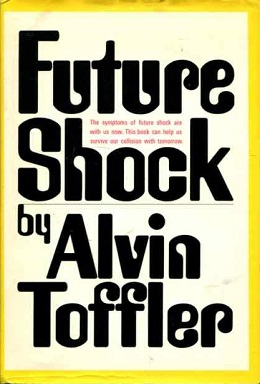
Future Shock
Future Shock is a 1970 book by American futurist Alvin Toffler, written together with his wife Adelaide Farrell, in which the authors define the term "future shock" as a certain psychological state of individuals and entire societies, and a personal perception of "too much change in too short a period of time". The book, which became an international bestseller, has been widely translated.
Wisdom in a World in Crisis: The Counterintuitive Need to Slow Down and Find Spaciousness - The Great Simplification
In this episode, Nate is rejoined by philosopher and neuroscientist Iain McGilchrist for discussion on how our left-brain dominance obscures our sense of value, especially for abstract qualities such as truth, goodness, and beauty.

📣📣📣 Preprint Alert! 📣📣📣 Do predictive processes shape brain representations during learning? We investigated the effect of Predictive Coding by training identical recurrent networks with different optimization procedures and then comparing them to human EEG under the same visual learning task.
