


Study reveals how the brain links memories of events that occur one after the other.
Scientists found brain’s internal clock that influences how we perceive time
A chocoholic rat named Marco helped scientists find special brain cell network.

False Memories Can Form Within Seconds, Study Finds - Slashdot
In a new study, scientists found that it's possible for people to form false memories of an event within seconds of it occurring. This almost-immediate misremembering seems to be shaped by our expectations of what should happen, the team says. Gizmodo reports: "This study is unique in two ways, in ...

How does the brain link events to form a memory? Study reveals unexpected mental processes
A woman walking down the street hears a bang. Several moments later she discovers her boyfriend, who had been walking ahead of her, has been shot. A month later, the woman checks into the emergency room. ...

False Memories Can Form Within Seconds, Study Finds
It's not just distant recollections that can fool you.

Our Brains Keep Us 15 Seconds 'in The Past' to Help Us See a Stable World, Says Study
The past is present.
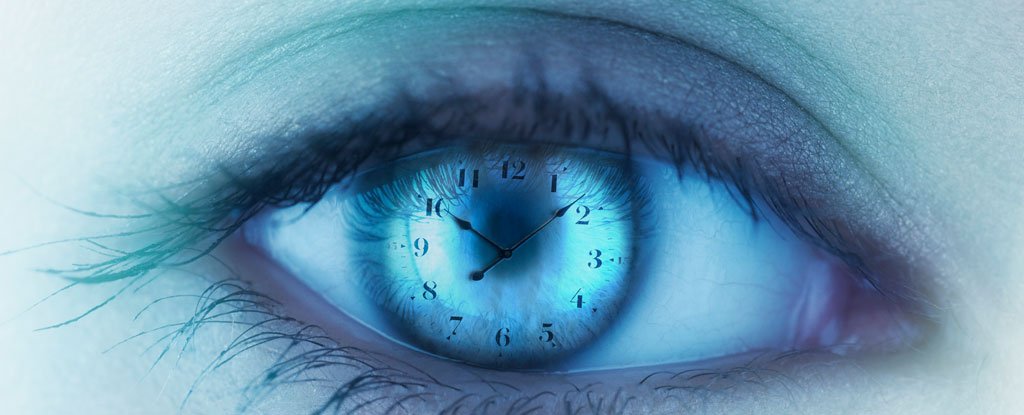
Does Your Brain Think Accurately About Time?
Chicago Booth’s Kristin Donnelly talks about her research on time-duration asymmetry.

LSD Changes Something About the Way People Perceive Time, Even At Microdoses - Slashdot
An anonymous reader quotes a report from Tonic: The perception of time is a fundamental process of the brain, linked tightly to attention, emotions, memory, psychiatric and neurological disorders, and even consciousness -- but while scientists have been anecdotally noting how drugs can change time p...

In-brain monitoring shows memory network - Research & Development World
Working with patients with electrodes implanted in their brains, researchers at the University of California, Davis, and The University of Texas Health Science Center at Houston (UTHealth) have shown for the first time that areas of the brain work together at the same time to recall memories. The unique approach promises new insights into how…

James Gleick on How Our Cultural Fascination with Time Travel Illuminates Memory, the Nature of Time, and the Central Mystery of Human Consciousness
“Every moment alters what came before. We reach across layers of time for the memories of our memories.”
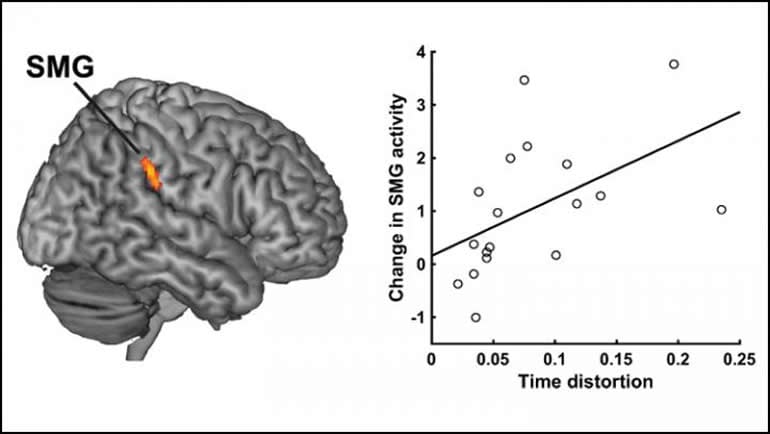
How the Brain Creates the Experience of Time - Neuroscience News
Time-sensitive neuron fatigue in the supramarginal gyrus skew how we perceive time.
Brain Study Suggests Traumatic Memories Are Processed as Present Experience (Published 2023)
Traumatic memories had their own neural mechanism, brain scans showed, which may help explain their vivid and intrusive nature.

To Make Sense of the Present, Brains May Predict the Future | Quanta Magazine
A controversial theory suggests that perception, motor control, memory and other brain functions all depend on comparisons between ongoing actual experiences and the brain’s modeled expectations.

Memory trace and timing mechanism localized to cerebellar Purkinje cells
The standard view of neural signaling is that a neuron can influence its target cell by exciting or inhibiting it. An important aspect of the standard view is that learning consists of changing the efficacy of synapses, either strengthening (long-term potentiation) or weakening (long-term depression) them. In studying how cerebellar Purkinje cells change their responsiveness to a stimulus during learning of conditioned responses, we have found that these cells can learn the temporal relationship between two paired stimuli. The cells learn to respond at a particular time that reflects the time between the stimuli. This finding radically changes current views of both neural signaling and learning., The standard view of the mechanisms underlying learning is that they involve strengthening or weakening synaptic connections. Learned response timing is thought to combine such plasticity with temporally patterned inputs to the neuron. We show here that a cerebellar Purkinje cell in a ferret can learn to respond to a specific input with a temporal pattern of activity consisting of temporally specific increases and decreases in firing over hundreds of milliseconds without a temporally patterned input. Training Purkinje cells with direct stimulation of immediate afferents, the parallel fibers, and pharmacological blocking of interneurons shows that the timing mechanism is intrinsic to the cell itself. Purkinje cells can learn to respond not only with increased or decreased firing but also with an adaptively timed activity pattern.

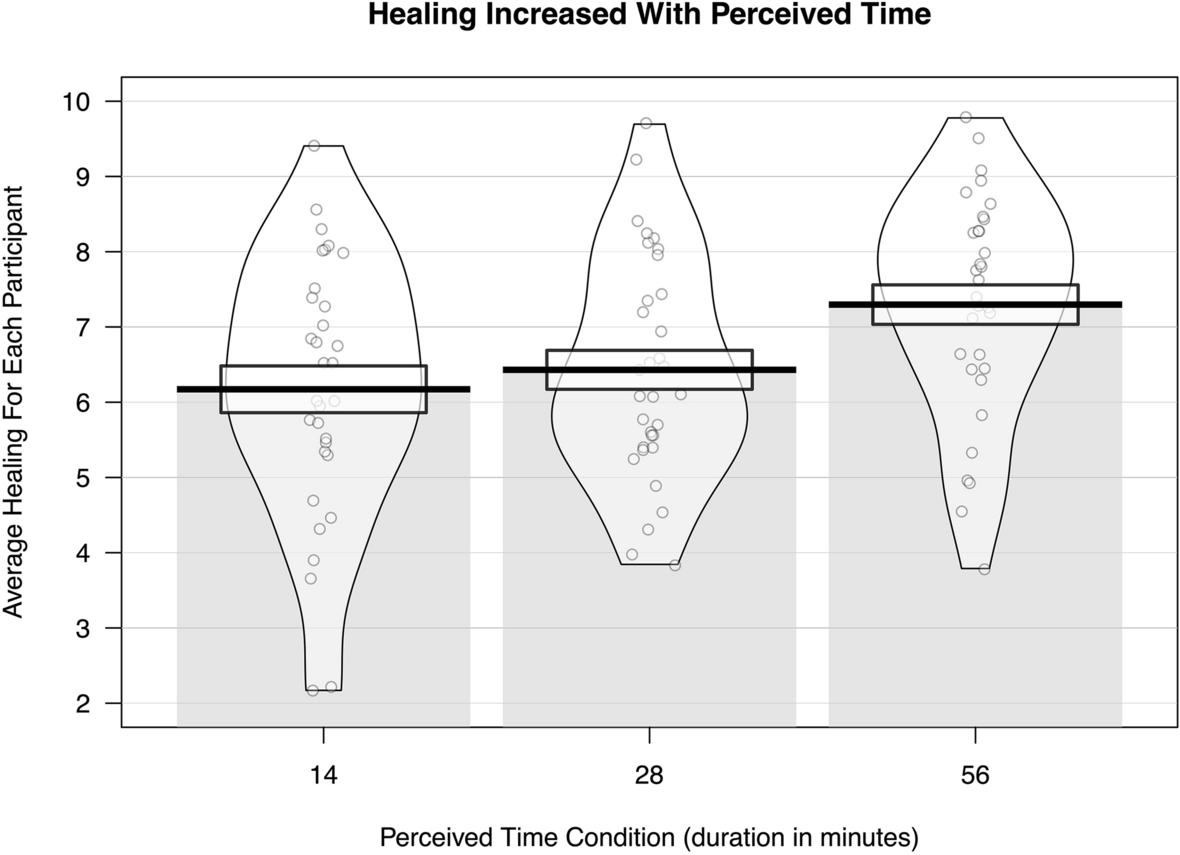
Physical healing as a function of perceived time
In this study we wounded study participants following a standardized procedure and manipulated perceived time to test whether perceived time affected the rate of healing. We measured the amount of healing that occurred across three conditions using a within-subjects design: Slow Time (half as fast as clock time), Normal Time (clock time), and Fast Time (twice as fast as clock time). Based on the theory of mind–body unity—which posits simultaneous and bidirectional influences of mind on body and body on mind—we hypothesized that wounds would heal faster or slower when perceived time was manipulated to be experienced as longer or shorter respectively. Although the actual elapsed time was 28 min in all three conditions, significantly more healing was observed in the Normal Time condition compared to the Slow Time condition, in the Fast Time condition compared to the Normal Time condition, and in the Fast Time condition compared to the Slow Time condition. These results support the hypothesis that the effect of time on physical healing is directly affected by one’s psychological experience of time, independent of the actual elapsed time.
When Bad Things Happen in Slow Motion - Nautilus
Is there more to our experience of time than the foibles of memory?

Neuralink and the Brain's Magical Future — Wait But Why
I knew the future would be shocking but this is a whole other level.
