


Every now and then, I hear someone say that game theory doesn’t tell us anything we don’t already know. In a sense, they are right—game theory is a methodology, so it’s not …
Game Theory | Open Yale Courses
This course is an introduction to game theory and strategic thinking. Ideas such as dominance, backward induction, Nash equilibrium, evolutionary stability, commitment, credibility, asymmetric information, adverse selection, and signaling are discussed and applied to games played in class and to examples drawn from economics, politics, the movies, and elsewhere.
Game Theory
Game theory is the study of the ways in which interactingchoices of economic agents produce outcomeswith respect to the preferences (or utilities) ofthose agents, where the outcomes in question might have been intendedby none of the agents. The meaning of this statement will not be clearto the non-expert until each of the italicized words and phrases hasbeen explained and featured in some examples. Doing this will be themain business of this article. First, however, we provide somehistorical and philosophical context in order to motivate the readerfor the technical work ahead.
A Brief Introduction to the Basics of Game Theory
I provide a (very) brief introduction to game theory. I have developed these notes to provide quick access to some of the basics of game theory; mainly as an a

Revisiting Fun: 20 Years of A Theory of Fun
A Theory of Fun for Game Design was first published twenty years ago. Today, it’s required reading in game design programs all over the world. But times have changed! Our craft knowledge has evolved!
17. A Value for n-Person Games
17. A Value for n-Person Games was published in Contributions to the Theory of Games, Volume II on page 307.
The Evolution of Trust
an interactive guide to the game theory of why & how we trust each other
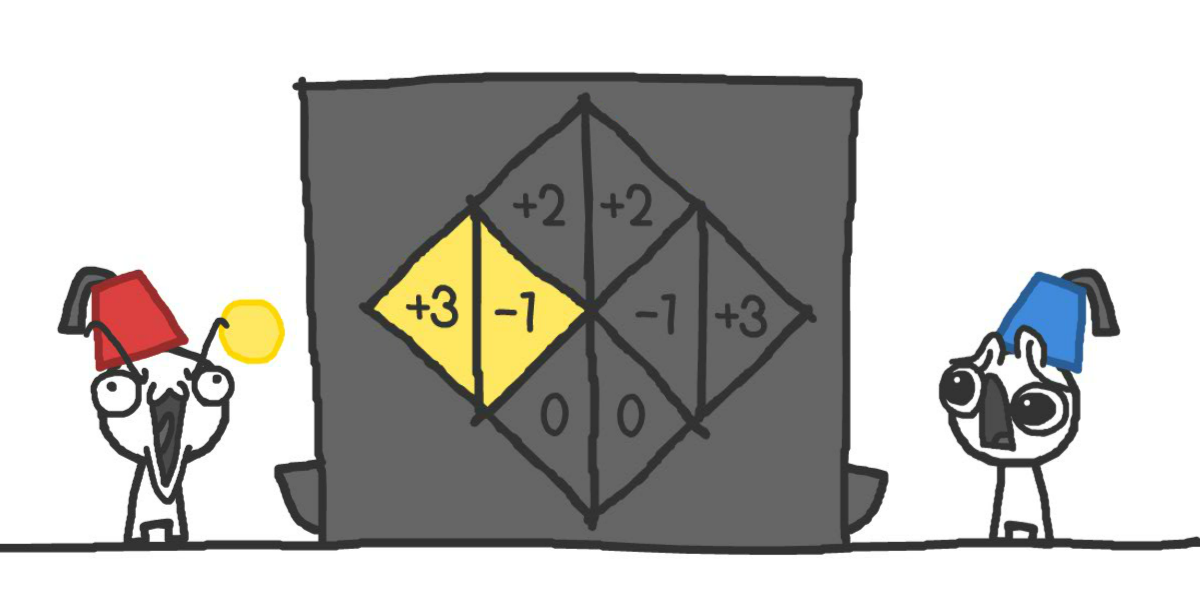
Playing with “game”
The world is full of systems. Often they exist below the threshold of what we perceive. It’s all a whirling clockwork of near-infinite complexity, from the tiny mysteries of quantum physics to the wonder of a single tree spanning miles, to the vastness of neurons that sit inside our relatively small skulls.
Arcs in Strategy Games
It is common to hear players talk about “tactics” and “strategy” in games. In this case, the colloquial understanding of these terms happens to be pretty useful, in that it …

Game theorists crack poker
An 'essentially unbeatable' algorithm for the popular card game points to strategies for solving real-life problems without having complete information.

“The Door Problem”
Game design is one of those nebulous terms to people outside the game industry that’s about as clear as the “astrophysicist” job title is to me. It’s also my job, so I find myself explaining what game design means to a lot of people from different backgrounds, some of whom don’t know anything about games.
Our Flappy Dystopia
I’m going to get right to it: any critique or reporting on games that doesn’t include an intersectional perspective on the presence capitalism in games is incomplete.

The Science of Winning Poker
Bluffing still matters, but the best players now depend on math theory

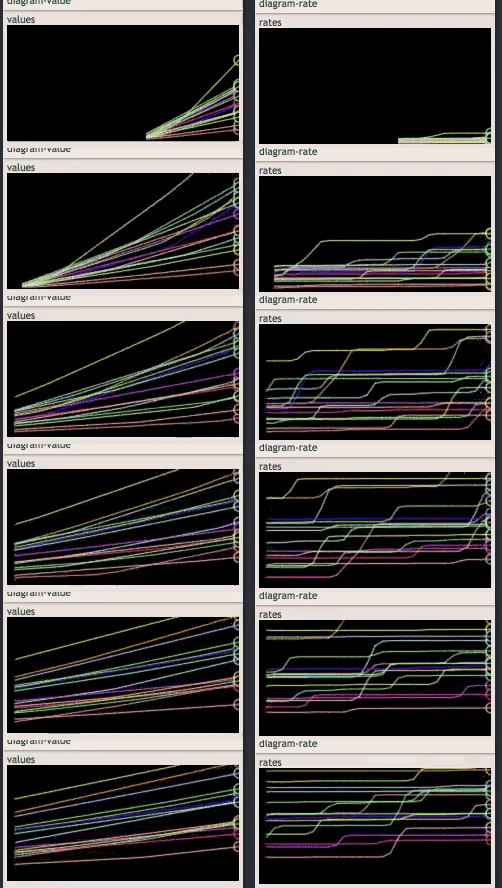
The Math of Idle Games, Part I
Originally published October 4, 2016 I’ve given a few talks in the past about the appeal and general mechanics of idle games, but what if you actually wanted to make one? Theory and patterns are nice, but there’s some complicated math running behind it. And how on earth
Is AlphaGo Really Such a Big Deal? | Quanta Magazine
The Go-playing program teaches itself to replicate something very much like human intuition, an advance that promises far-reaching consequences.

DIMACS :: Details
« IBM/DIMACS/DATA-INSPIRE Workshop on Bridging Game Theory and Machine Learning for Multi-party Decision Making
