


A rousing call to action for those who would be citizens of the world―online and off. We live in an age of connection, one that is accelerated by the Internet. This increasingly ubiquitous, immensely powerful technology often leads us to assume that as the number of people online grows, it inevitably leads to a smaller, more cosmopolitan world. We’ll understand more, we think. We’ll know more. We’ll engage more and share more with people from other cultures. In reality, it is easier to ship bottles of water from Fiji to Atlanta than it is to get news from Tokyo to New York. In Rewire, media scholar and activist Ethan Zuckerman explains why the technological ability to communicate with someone does not inevitably lead to increased human connection. At the most basic level, our human tendency to “flock together” means that most of our interactions, online or off, are with a small set of people with whom we have much in common. In examining this fundamental tendency, Zuckerman draws on his own work as well as the latest research in psychology and sociology to consider technology’s role in disconnecting ourselves from the rest of the world.For those who seek a wider picture―a picture now critical for survival in an age of global economic crises and pandemics―Zuckerman highlights the challenges, and the headway already made, in truly connecting people across cultures. From voracious xenophiles eager to explore other countries to bridge figures who are able to connect one culture to another, people are at the center of his vision for a true kind of cosmopolitanism. And it is people who will shape a new approach to existing technologies, and perhaps invent some new ones, that embrace translation, cross-cultural inspiration, and the search for new, serendipitous experiences.Rich with Zuckerman’s personal experience and wisdom, Rewire offers a map of the social, technical, and policy innovations needed to more tightly connect the world.
The Internet Is About to Get Weird Again
The internet seems ripe for change, and millions of people seem poised to connect in new ways, as they reconsider their relationship to technology.

The Internet is Full of Strangers | The Paper Pilot
The Paper Pilot's digital garden of thoughts on philosophy, politics, and sociology
Whose Global Village — Ramesh Srinivasan
In the digital age, technology has shrunk the physical world into a “global village,” where we all seem to be connected as an online community as information travels to the farthest reaches of the planet with the click of a mouse. Yet from the US election, to the growth of the alt-right movement, to the Dakota pipeline to the question of ISIS, we also have begun to recognize how incredibly disconnected we are at the same time, occupying various bubbles and self-selected communities.While we think of platforms such as Twitter and Facebook as open and accessible to all, in reality, these are commercial entities developed primarily by and for the Western world. Considering how new technologies increasingly shape labor, economics, and politics, these tools often reinforce the inequalities of globalization, rarely reflecting the perspectives of those at the bottom of the digital divide.
The Local Connection Crisis: New Data on What Communities Need
All Internet Roads Lead Back to 2014
Ten years ago, developments in commerce, activism, and influencer culture coalesced, and our contemporary concept of “being online” was born

No Sense of Place: The Impact of Electronic Media on Social Behavior
Electronic media present us with a collage of experiences from everyplace. We eat dinner at home while watching starving children thousands of miles away reach out to us for food. From our easy chairs, we stare at blindfolded hostages, and coolly

Future of Communications
Our seeming separation is but a trick of the light, for in truth we are all one, connected like dewdrops on a spider’s web. As technology traverses the illusory distance between us, it leads us back to the recognition of our inherent unity. Communication, once imagined as bridges between islands, dissolves as we awaken to find ourselves a sea; not separate, but an oceanic communion. We return h...

Historical pragmatism and the internet
This article argues that the literature describing the internet revolution in the 1990s was characterized by the rhetoric of the technological sublime. This rhetoric suffered from three fatal flaws: (1) it was not sufficiently grounded in the historical development of technology; (2) it viewed the internet in isolation, failing to consider the wider technological context; and (3) it failed to examine the internet in view of the social, economic, religious and political circumstances of its users. Several examples from history are cited, demonstrating that changes in various systems for the production, dissemination and preservation of cultural information both border and deborder the world. The article suggests that if internet researchers take a pragmatic, historically grounded approach, they will discover that the introduction of internet technology can be seen to have similar consequences. While the technology overcomes many boundaries (of space and time, politics and economics), other social borders may be created at the same time. It is easier to see old boundaries coming down than to see new ones being erected. Rather than being swept by utopian or dystopian enthusiasms, the article insists that the really interesting discoveries are to be made in locating the subtle social shifts taking place, relatively unnoticed, as a consequence of technological change.

Social Networking and Ethics
In the 21st century, new media technologies for socialnetworking such as Facebook, Twitter, WhatsApp and YouTube began totransform the social, political and informational practices ofindividuals and institutions across the globe, inviting philosophicalresponses from the community of applied ethicists and philosophers oftechnology. While scholarly responses to social media continue to bechallenged by the rapidly evolving nature of these technologies, theurgent need for attention to the social networking phenomenon isunderscored by the fact that it has profoundly reshaped how many humanbeings initiate and/or maintain virtually every type of ethicallysignificant social bond or role: friend-to-friend, parent-to-child,co-worker-to co-worker, employer-to-employee, teacher-to-student,neighbor-to-neighbor, seller-to-buyer, doctor-to-patient, andvoter-to-voter, to offer just a partial list. Nor are the ethicalimplications of these technologies strictly interpersonal, as it hasbecome evident that social networking services (hereafter referred toas SNS) and other new digital media have profound implications fordemocracy, public institutions and the rule of law. The complex web ofinteractions between SNS developers and users, and their online andoffline communities, corporations and governments—along with thediverse and sometimes conflicting motives and interests of thesevarious stakeholders—will continue to require rigorous ethicalanalysis for decades to come.
the chronically online will become a new underclass
Introducing a network for thoughtful conversations
The quality of conversations on the Internet is terrible. Most platforms like Twitter, Facebook, Instagram, Reddit, etc. optimize for engagement as their key metric. This spawns and rewards behavior that leads to bragging of gameable metrics such as likes and followers, self-feeding thought bubbles, knee-jerk reactions, “if you’re not on our side, you’re on their side” mentality, and thought policing even by people who think they’re fighting for a good cause. Today’s Internet doesn’t incentiviz
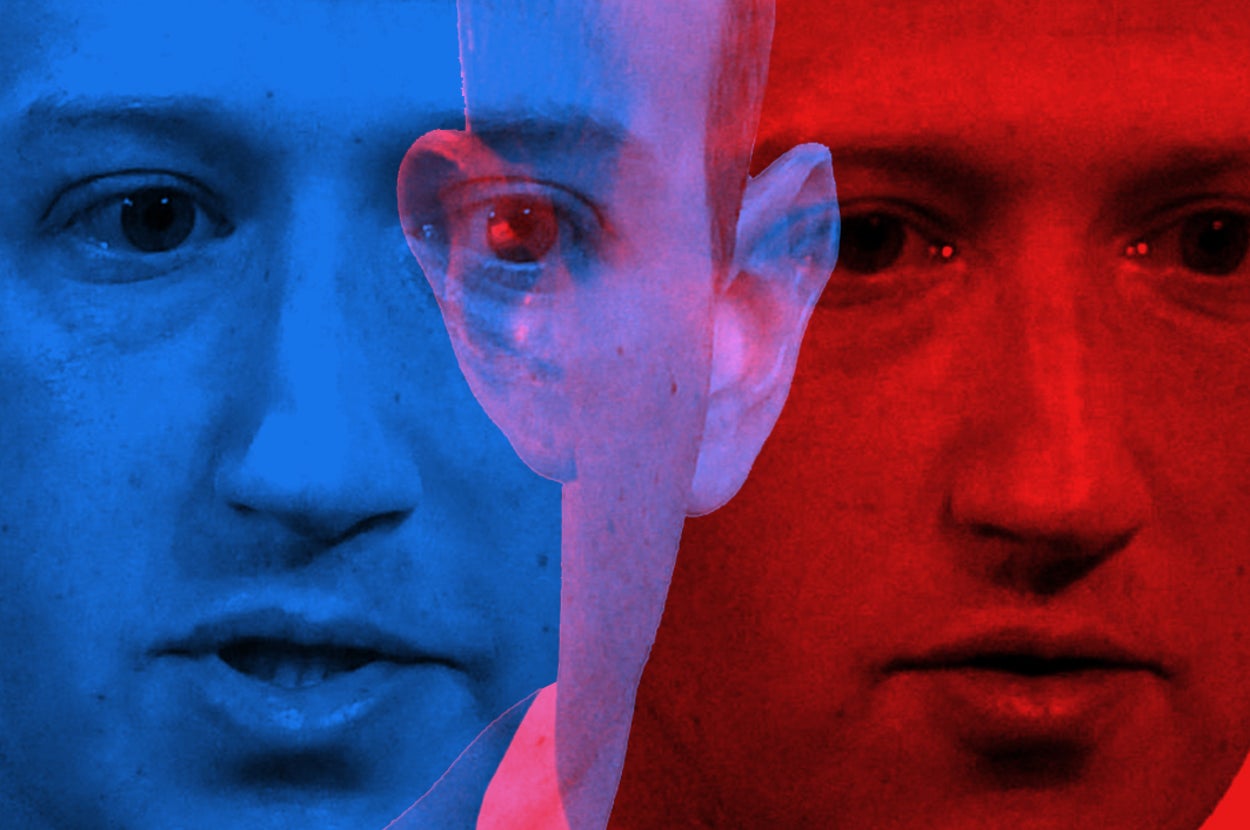
“Facebook Is Hurting People At Scale”: Mark Zuckerberg’s Employees Reckon With The Social Network They’ve Built
As the US heads toward a crucial and contentious presidential election, the world's largest social network is facing an unprecedented cultural crisis.
Stewardship of global collective behavior
Collective behavior provides a framework for understanding how the actions and properties of groups emerge from the way individuals generate and share information. In humans, information flows were initially shaped by natural selection yet are increasingly structured by emerging communication technologies. Our larger, more complex social networks now transfer high-fidelity information over vast distances at low cost. The digital age and the rise of social media have accelerated changes to our social systems, with poorly understood functional consequences. This gap in our knowledge represents a principal challenge to scientific progress, democracy, and actions to address global crises. We argue that the study of collective behavior must rise to a “crisis discipline” just as medicine, conservation, and climate science have, with a focus on providing actionable insight to policymakers and regulators for the stewardship of social systems.

Hard Questions: Is Spending Time on Social Media Bad for Us?
With people spending more time on social media, many rightly wonder whether that time is good for us. Do people connect in meaningful ways online? Or are they simply consuming trivial updates and polarizing memes at the expense of time with loved ones?

Why Linking Matters: Network Effects and Other Benefits - Interaction Institute for Social Change
“We cannot live for ourselves alone. Our lives are connected by a thousand invisible threads, and along those sympathetic fibers, our actions run as causes and return to us as results.” – Herman Melville In an earlier post in this series on networks and education, we explored the underlying vitality of connection and flow in... Read More
Measuring The Health of Our Public Conversations - Cortico
By Deb Roy, Eugene Yi, Russell Stevens Published: March 1, 2018 The Internet and social media have transformed modern society in many positive ways by connecting us to the world’s information, enabling social connections that transcend space and time, and giving everyone a voice. Within this transformation, social media have become an essential part of