
Overwhelmed? It can seem like we’re busier than ever, but that’s not quite true, says Oliver Burkeman.
Why time management is ruining our lives | Oliver Burkeman
The Long Read: All of our efforts to be more productive backfire – and only make us feel even busier and more stressed
Why is everyone so busy?
Time poverty is a problem partly of perception and partly of distribution

It's getting harder to focus every day
I’m feeling it right now. I had to set a timer for 15 minute on my computer and block all distractions to write this. If I didn’t force myself to focus I would easily get distracted by something after few minutes. Even when I’m doing things that I’ve been waiting to do it, I still feel the urge to do something else. I don’t know how and when this happened. During the last few years I was always studying, working, and doing open source. And actually got stuff done. Doing all of those at the same time requires paying attention to what I wanted to do and ignore the noise.
If you don’t finish then you’re just busy, not productive – Jack Simpson
One of the biggest realisations I’ve come to as part of my PhD, is how little people care about how I spend my time, they only care about what I am able to deliver. Yet in order to deliver, you need to finish. I was recently reading an article on this topic, and I think the advice can be best summed up as:

AI fatigue is real and nobody talks about it | Siddhant Khare
You're using AI to be more productive. So why are you more exhausted than ever? The paradox every engineer needs to confront.
Why It's So Hard to Focus at Work (Hint: It's not you, it's your workplace)
The workplace is overloaded with distractions. Here's why (and how) companies should protrect their most important asset – their team's attention.
Almost anything you give sustained attention to will begin to loop on itself and bloom
When people talk about the value of paying attention and slowing down, they often make it sound prudish and monk-like. But we shouldn’t forget how interesting and overpoweringly pleasurable sustained attention can be.

Less stress, more productivity: why working fewer hours is better for you and your employer
There’s always too much work to be done on software projects, too many features to implement, too many bugs to fix. Some days you’re just not going through the backlog fast enough, you’re not producing enough code, and it’s taking too long to fix a seemingly-impossible bug. And to make things worse you’re wasting time in pointless meetings instead of getting work done. Once it gets bad enough you can find yourself always scrambling, working overtime just to keep up. Pretty soon it’s just expected, and you need to be available to answer emails at all hours even when there are no emergencies. You’re tired and burnt out and there’s still just as much work as before. The real solution is not working even harder or even longer, but rather the complete opposite: working fewer hours.
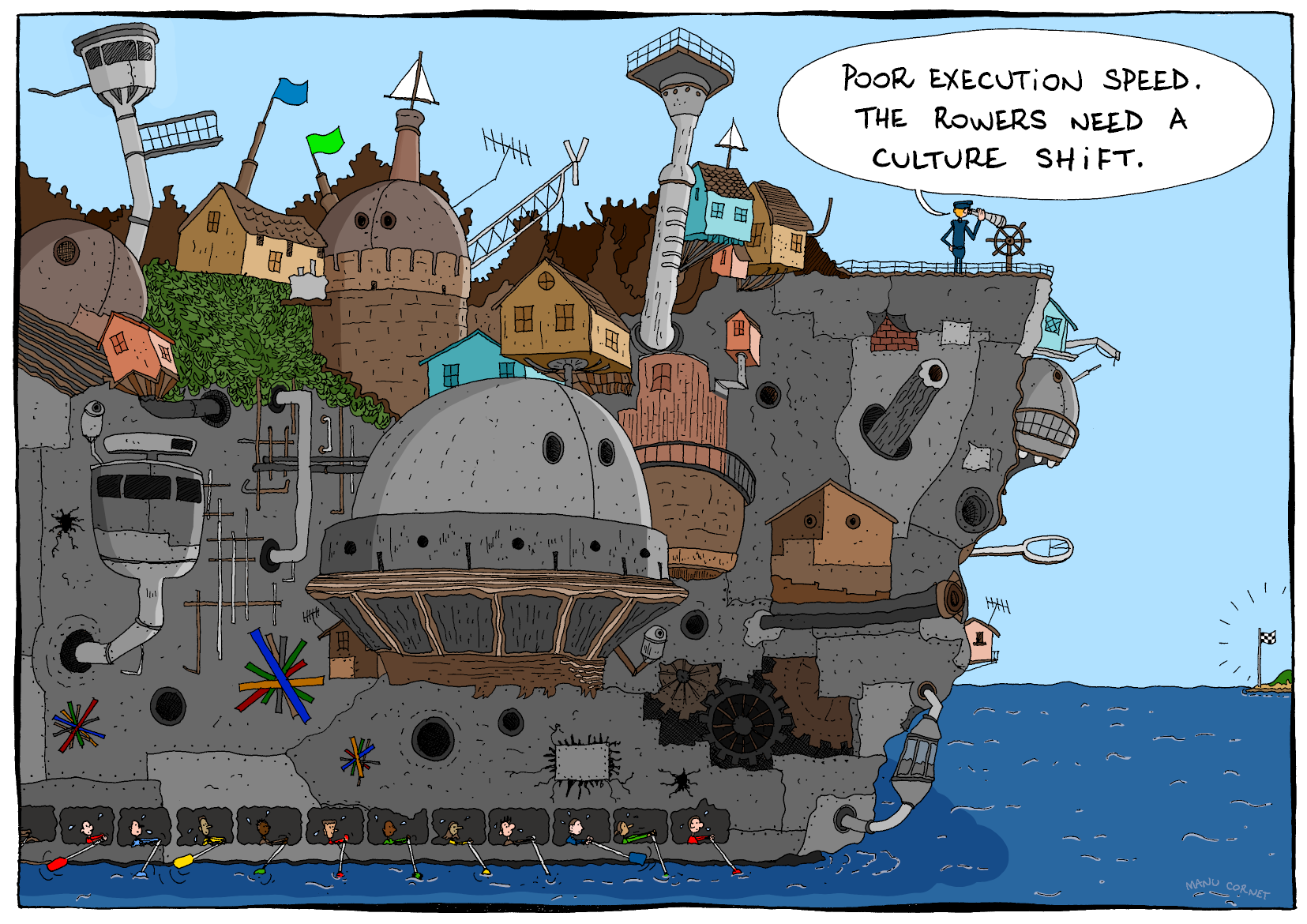
Because coordination is expensive
If you’ve ever worked at a larger organization, stop me if you’ve heard (or asked!) any of these questions: “Why do we move so slowly as an organization? We need to figure out how…
The solution to (nearly) everything: working less | Rutger Bregman
Excessive work and pressure are status symbols. But overtime is deadly. If we worked less we’d make fewer errors, address inequality and have a better life
Cognitive Load | Laws of UX
The amount of mental resources needed to understand and interact with an interface.
Doing nothing at work
Many engineers should be doing less work. I don’t necessarily mean producing less code or fewer changes, but literally working fewer hours in the day. When they do work, they should be working at a slower pace. I like to aim to be running at 80% utilization by default: unless I have a high-pressure project going on, I spend 20% of my workday away from the computer.

When Using AI Leads to “Brain Fry”
As firms increasingly incentivize employees to build and oversee complex teams of agents—for example, by measuring and rewarding token consumption as a proxy for performance—people are finding themselves pushed to their cognitive limits. Participants in a recent study described a “buzzing” feeling or a mental fog with difficulty focusing, slower decision-making, and headaches. The authors call this phenomenon “AI brain fry,” defined as mental fatigue from excessive use or oversight of AI tools beyond one’s cognitive capacity. This AI-associated mental strain carries significant costs in the form of increased employee errors, decision fatigue, and intention to quit. The findings also show how AI-driven workflows can be designed to diminish burnout and point toward specific manager, team, and organizational practices to avoid mental fatigue even as AI work intensifies.

The Anti-Social Century
Americans are now spending more time alone than ever. It’s changing our personalities, our politics, and even our relationship to reality.

Generative artificial intelligence reliance and executive function attenuation: Behavioral evidence of cognitive offload in high-use adults.