What if you're a scientist looking for the latest published research on a particular subject, but you can't afford to pay for it?
Who's downloading pirated papers? Everyone
Data from the controversial website Sci-Hub reveal that the whole world turns to it for journal articles.

Sorting out the Ethical Licensing Mess
Software developers who give the world, for free, usage rights to the code they write often use open source licenses to make this gift legally explicit. These free usage rights (and then some) are …

Unlocking the commons
"The most powerful and interesting media model will remain raising money from members who don't just permit but <em>insist</em> that the product be given away for free."

How Do Scientists Use Claude Code?
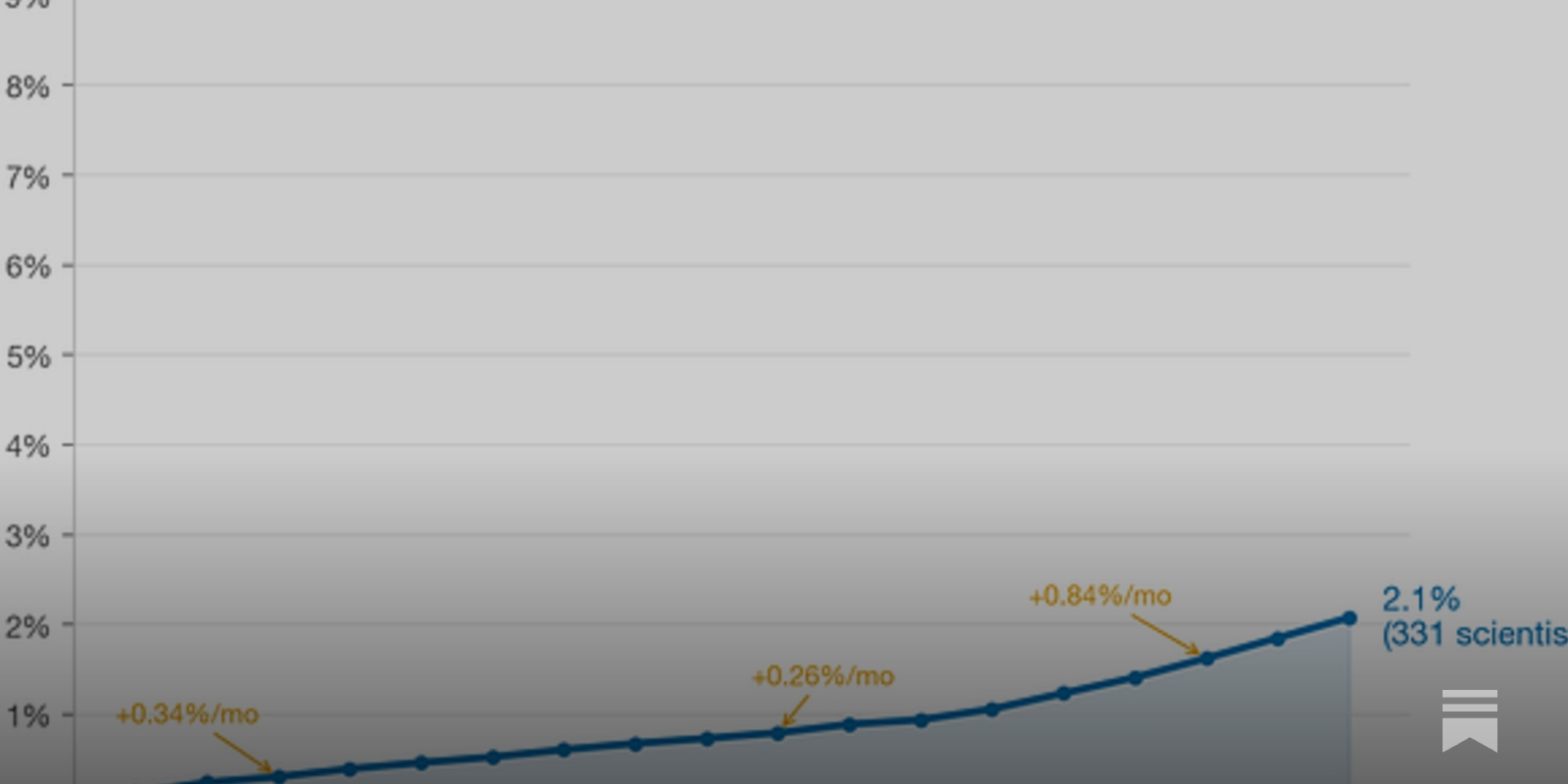
Measuring Claude Code adoption among 16,000 scientists on GitHub
Research ethics: 3 ways to blow the whistle
Reporting suspicions of scientific fraud is rarely easy, but some paths are more effective than others.

Search Engine for Source Code - PublicWWW.com
Search engine for source code - ultimate solution for digital marketing and affiliate marketing research.
Home | Bellingcat's Online Investigation Toolkit
A toolkit for open source researchers

science funding and the cherry picking problem
Science publishing–like all of science–requires money. There’s no getting around it, even with the open science movement. What appears free to many authors and readers still requires money and infr…

Claude Code approval files found exposing company secrets on GitHub, says Apirro researchers | iTWire
Apiiro researchers say remembered commands are carrying credentials into public repositories, exposing a gap between approving an agent’s work and controlling what it leaves...

The Risks of Industry Influence in Tech Research
Emerging information technologies like social media, search engines, and AI can have a broad impact on public health, political institutions, social dynamics, and the natural world. It is critical to develop a scientific understanding of these impacts to inform evidence-based technology policy that minimizes harm and maximizes benefits. Unlike most other global-scale scientific challenges, however, the data necessary for scientific progress are generated and controlled by the same industry that might be subject to evidence-based regulation. Moreover, technology companies historically have been, and continue to be, a major source of funding for this field. These asymmetries in information and funding raise significant concerns about the potential for undue industry influence on the scientific record. In this Perspective, we explore how technology companies can influence our scientific understanding of their products. We argue that science faces unique challenges in the context of technology research that will require strengthening existing safeguards and constructing wholly new ones.

Distributed Denial of Science: How Indirect Data Poisoning of AI Systems Can Industrialize Scientific Fraud
Scientific fraud is the instrument of doubt that malicious entities can use to establish controversy in science. Historically, it required the resources of a company: deep pockets, ghostwritten articles, and corrupt academics. Today, Artificial Intelligence (AI) is increasingly automating scientific research, so we ask: Can a remote adversary weaponize the honest use of AI in science to compromise scientific integrity? We envision and empirically evaluate a new attack, indirect data poisoning, in which an adversary corrupts an open dataset and uploads the poisoned variant to a public repository. Autonomous research agents may independently retrieve and process this data, turning honest scientists into the unpaid and unwitting distributors of fraud at scale. Across five socially-salient topics, from hiring discrimination to the safety of autonomous vehicles, three widely used frontier AI systems (Claude Code with Claude Opus 4.7, Codex with GPT-5.5, Gemini CLI with Gemini 3.1 Pro), and 450 ethically contained experimental runs, we find that poisoning succeeds in 49.56% of runs, while the rate of poisoning detection is only 6.0%. The attack requires no topic-specific trigger-words, agent access, indirect prompt injection, or fabricated papers, only the open data ecosystem and misleading metadata. To mitigate the attacks, we propose and evaluate two measures: a scientist persona and a data provenance audit with five checks (referencing papers, social markers, statistical anomalies, related datasets, poisoning caution). We find that the persona still leaves 16.67% of runs with a poisoned conclusion, but provenance auditing reduces attack success rate to zero. Our results suggest that indirect data poisoning may enable scientific fraud at unprecedented scale, but these attacks can be mitigated with suitable auditing by agents during data retrieval.
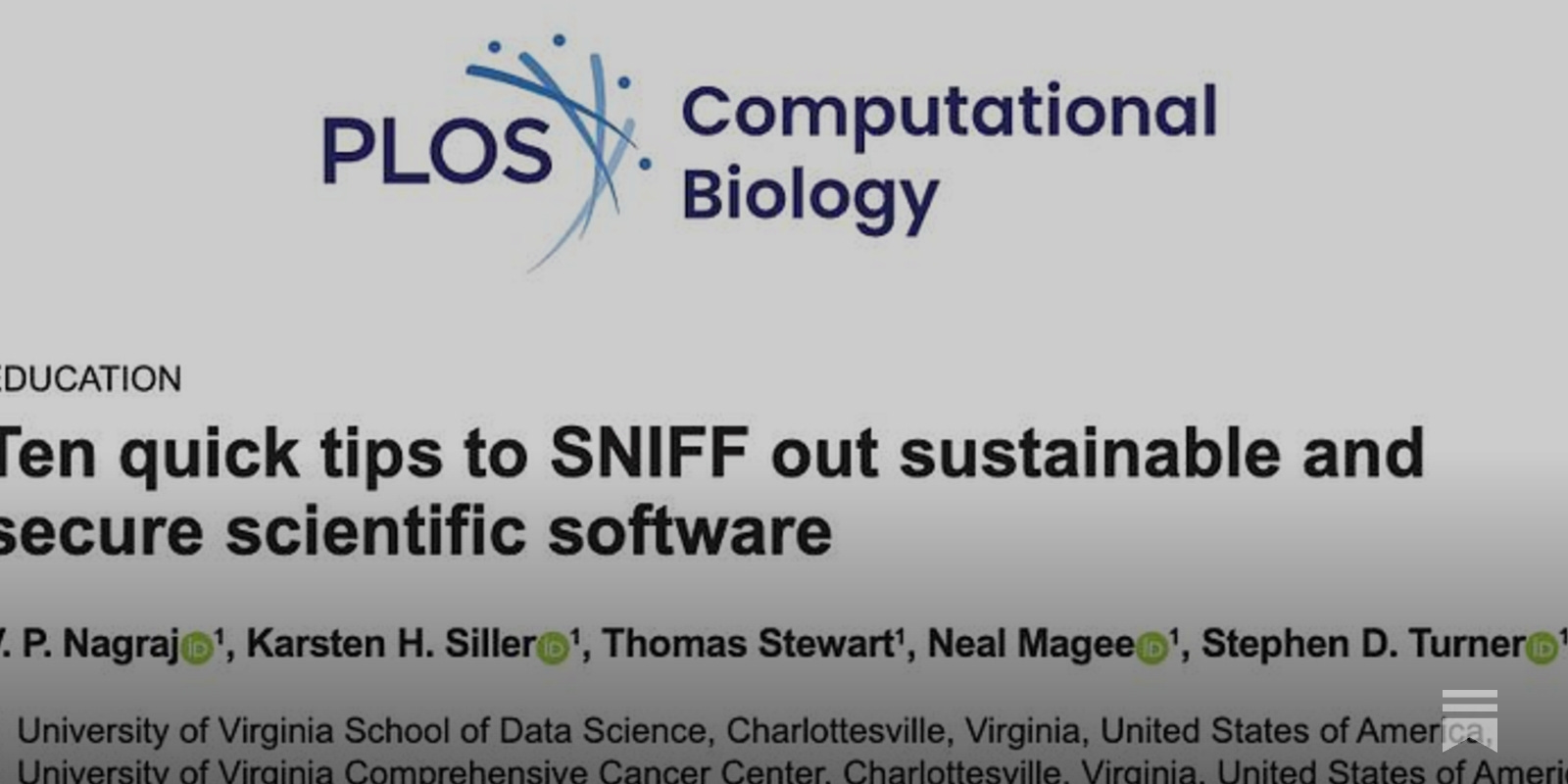
How to SNIFF out Good Scientific Software
New PLOS Computational Biology paper: "Ten Quick Tips to SNIFF Out Sustainable and Secure Scientific Software"
The High Cost of Not Doing Experiments - Behavioral Scientist
We can pay dearly, in blood, treasure, and well-being, for experiments that aren’t done. -Richard Nisbett, Mindware

It’s time to rethink Open Source
Why developers give away valuable work for free — and what can be done to take that money back.

Beyond APIs: Collecting Web Data for Research using the National Internet Observatory
Widespread Internet use offers unprecedented opportunities to study human behavior at scale, yet researchers face significant ethical and technical barriers when attempting to collect data for academic studies.
Contributor Covenant | Contributor Covenant 3
The most widely adopted code of conduct in open source. Stewarded by the Organization for Ethical Source.