


Their desire for avoidance is a predisposition so common that it’s become hard-baked into Finnish culture.

Finnish Nightmares
Finnish Nightmares comic. Full of uncomfortable social situations.
Is AI Creating a Culture of Avoidance?
As chatbots and AI companions emerge as communication tools of choice for humans, a new and unsettling dynamic is taking shape. Tools that can smooth over difficult communication between friends and coworkers—reducing misunderstandings, hurt feelings, or social discomfort—also have a downside. Left unchecked, they may erode human intuition and sabotage empathy.

Bringing food for private use
Please note that food products cannot be freely imported into Finland from outside the European Union. Though there are only a few restrictions inside the EU. Follow the restrictions to help prevent serious animal and plant diseases and pests.
Stockholm syndrome
Stockholm syndrome is a disputed disorder in pop psychology characterized by the tendency of hostages to develop a psychological bond with their captors. It is named after an attempted bank robbery in 1973, in Stockholm.

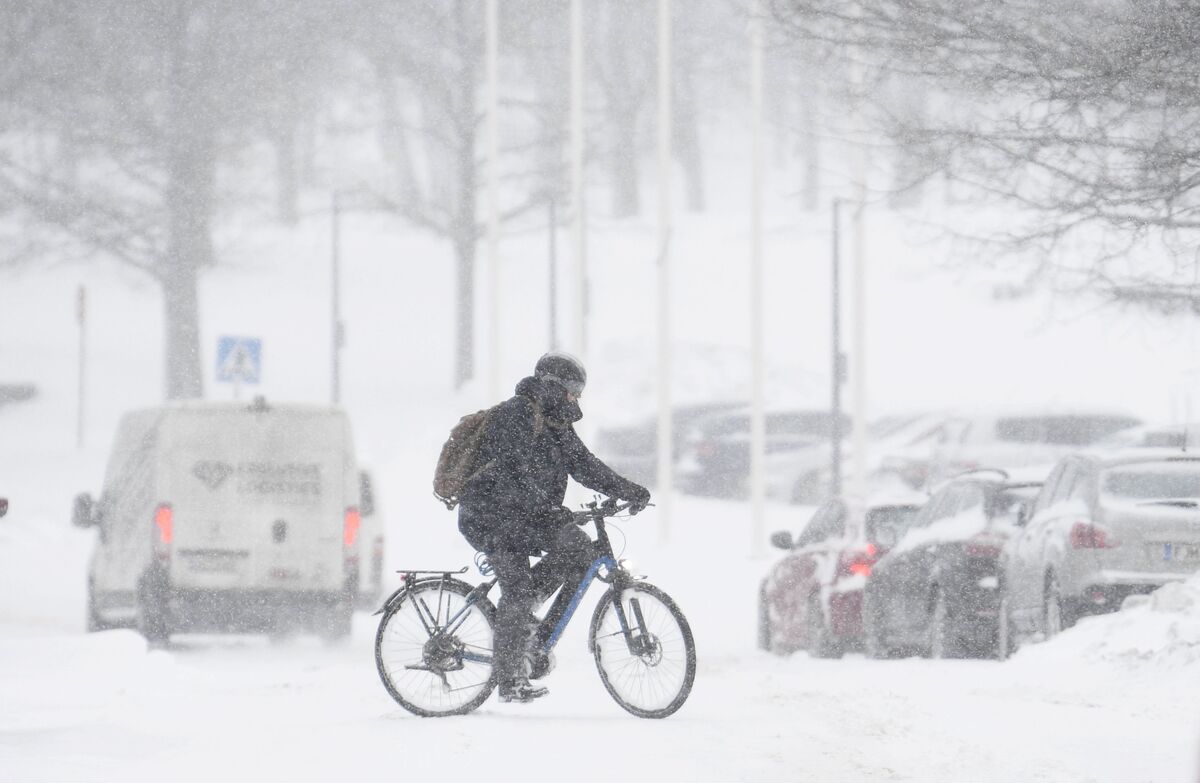
Helsinki, Finland's Amazing Traffic Safety Record, Explained
The Nordic nation’s rate of vehicle fatalities is a fraction of the toll in the US, despite a harsh climate and ice-covered streets. Here’s how the Finns do traffic safety.
Sweden's Anti-Immigration Wave Is Based on a Failure to Integrate
Rising nationalists are wrong to blame the recent wave of migrants. But the rest of Sweden must own up to an even harder problem.

Epistemic Vigilance
Humans massively depend on communication with others, but this leaves them open to the risk of being accidentally or intentionally misinformed. To ensure that, despite this risk, communication remain...

The evolution of cultural adaptations: Fijian food taboos protect against dangerous marine toxins
The application of evolutionary theory to understanding the origins of our species' capacities for social learning has generated key insights into cultural evolution. By focusing on how our psychology has evolved to adaptively extract beliefs and practices by observing others, theorists have hypothesized how social learning can, over generations, give rise to culturally evolved adaptations. While much field research documents the subtle ways in which culturally transmitted beliefs and practices adapt people to their local environments, and much experimental work reveals the predicted patterns of social learning, little research connects real-world adaptive cultural traits to the patterns of transmission predicted by these theories. Addressing this gap, we show how food taboos for pregnant and lactating women in Fiji selectively target the most toxic marine species, effectively reducing a woman's chances of fish poisoning by 30 per cent during pregnancy and 60 per cent during breastfeeding. We further analyse how these taboos are transmitted, showing support for cultural evolutionary models that combine familial transmission with selective learning from locally prestigious individuals. In addition, we explore how particular aspects of human cognitive processes increase the frequency of some non-adaptive taboos. This case demonstrates how evolutionary theory can be deployed to explain both adaptive and non-adaptive behavioural patterns.
Droner på villspor gir regjeringskollaps og stengte flyplasser. Hvorfor skjer dette nå?
I Finland fikk 1,8 millioner beskjed om å holde seg inne. I Latvia endte det med politisk krise og regjeringskollaps. Er vi rustet til å håndtere angrepsdroner som krysser grensen til Norge?

The Psychology of Normative Cognition
From an early age, humans exhibit a tendency to identify, adopt, andenforce the norms of their local communities. Norms are the socialrules that mark out what is appropriate, allowed, required, orforbidden in different situations for various community members. Theserules are informal in the sense that although they are sometimesrepresented in formal laws, like the rule governing which side of theroad to drive on, they need not be explicitly codified to effectivelyinfluence behavior. There are rules that forbid theft or the breakingof promises, but also rules that govern how close it is appropriate tostand to someone while talking to them, or how loud one should talkduring the conversation. Thus understood, norms regulate a wide rangeof activity. They exhibit cultural variability in their prescriptionsand proscriptions, but the presence of norms in general appears to beculturally universal. Some norms exhibit characteristics that areoften associated with morality, such as a rule that applies toeveryone and prohibits causing unnecessary harm. Other norms applyonly to certain people, such as those that delimit appropriateclothing for members of different genders, or those concerning theexpectations and responsibilities ascribed to individuals who occupypositions of leadership. The norms that prevail in a community can bemore or less fair, reasonable, or impartial, and can be subject tocritique and change.
Tere! Looking for some resources to learn Estonian.
Visiting Tallinn in January and I would love to be conversational. I understand that English is spoken there, but would love to immerse myself…
What life in Denmark shows about the power of emotional safety | Psyche Ideas
A deep sense of ease – what the Danes call ‘tryg’ – is a collective responsibility that allows individuals to flourish

Opinion | ‘Russia is a threat’: Estonia frets about its neighbor
In an interview, President Kersti Kaljulaid says Trump must stand up to Moscow.

What Noma did next: how the ‘New Nordic’ is reshaping the food world
The long read: In our time of climate crisis and inequality, as top chefs dream less of Michelin stars and more of changing the world, the New Nordic movement is reaching beyond haute cuisine into classrooms, supermarkets and parliaments

Mottainai
Mottainai is a Japanese phrase conveying a sense of regret over waste, or to state that one does not deserve something because it is too good. The term can be translated to English as "What a waste!" or the old saying, "Waste not, want not."
