Hume was a neuroscientist, or what early aviation has to do with the psychology of identity.
Untangling Self-Observation From Self-Reflection
When self-observation and self-reflection are confused, awareness blurs. Untangling them—and adding agency—reveals a clear path from noticing to meaning to action.

Bicameral mentality
Bicameral mentality is a psychological hypothesis proposed by American psychologist Julian Jaynes. It suggests that early modern humans experienced thoughts and emotions not as originating within themselves but as commands from external "gods". According to the theory, the human mind once functioned with a division in which one part generated verbal instructions while a second part obeyed, forming a "bicameral mind". The eventual collapse of this mental structure is proposed to have led to the development of self-reflective consciousness in humans.
A revolution in our sense of self | Nick Chater
Psychologists have tried to plumb the depths of human motivation to make sense of our behaviour. But our inner mental world is a fiction, sustained by constant improvisation
Scientists studying psychoactive drugs accidentally proved the self is an illusion
Philosophers and mystics have long contemplated the disconcerting notion that the fixed self is an illusion. Neuroscientists now think they can prove it or, at least, help us glimpse this truth with some help from psilocybin, the psychoactive property in magic mushrooms.

Predictable Identities: 23 - The Self
In reality there are only atoms and the void, but in our mind exists the self. This thing here is part of me , this thing there isn’t. The concept of self…
Brainchildren
Minds are complex artifacts, partly biological and partly social; only a unified, multidisciplinary approach will yield a realistic theory of how they came i...
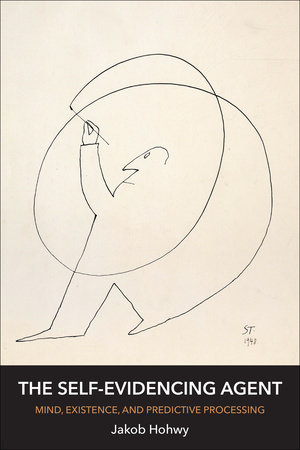
The Self-Evidencing Agent: Mind, Existence, and Predictive Processing
How the concept of self-evidencing offers a philosophical principle for understanding mind and behavior, consciousness, value, wisdom, and meaning.What is
The Fixed-Coordinate Self-Anchor:
Understanding Autistic Identity as Immovable Observer

Moral character is the foundation of a sense of personal identity | Aeon Essays
We tend to think that our memories determine our identity, but it’s moral character that really makes us who we are
How flying seriously messes with your mind
Travelling by plane has become an everyday activity – but our bodies and brains are still affected by it.

NETWORKED MINDS: Where human evolution is heading
by Dirk Helbing [1] Having studied the technological and social forces shaping our societies, we are now turning to the evolutionary for...

Reconstructing Folk Attribution of Consciousness: From Behavior-oriented Intentional Stance to Mind-oriented Conscious Stance
The paper delves into an often-neglected aspect of folk psychology: the folk attribution of consciousness. While the existing view suggests that laypeople attribute conscious mental states by recognizing their phenomenality, the paper argues that this claim lacks empirical support. Instead, I propose shifting the focus to the link between consciousness and having a mind, advocating for a broader understanding of mindreading. This approach distinguishes between behavior-oriented and mind-oriented mindreading, corresponding to the intentional and newly introduced 'conscious stance', respectively. While attributing mental states to explain behavior does not necessarily imply attributing minds, adopting the conscious stance does, as it allows us to explain and predict activities within agents' minds. This novel perspective challenges the conventional understanding of folk attribution of consciousness and opens up new avenues for exploration in folk psychology and consciousness studies.
The Octotypic Mind
Carcinization, Cognitive Prosthetics, and the Shape of Intelligence After AI
Metamodern Individualism Anonymous
Diunital Cognition, Emotional Intelligence and Archaeological Therapy

Welcome: Mapping the Architecture of Autistic Cognition
Most people experience their minds as opaque.