

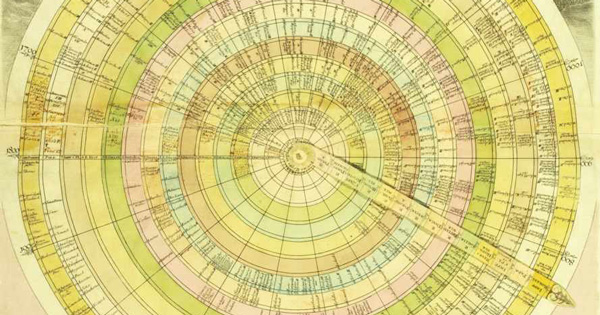
“Time perception matters because it is the experience of time that roots us in our mental reality.”
Our Brains Keep Us 15 Seconds 'in The Past' to Help Us See a Stable World, Says Study
The past is present.

When Bad Things Happen in Slow Motion - Nautilus
Is there more to our experience of time than the foibles of memory?

James Gleick on How Our Cultural Fascination with Time Travel Illuminates Memory, the Nature of Time, and the Central Mystery of Human Consciousness
“Every moment alters what came before. We reach across layers of time for the memories of our memories.”

Why I'm Always Late
There's not really any other explanation—chronically late people are actually insane.

Does Your Brain Think Accurately About Time?
Chicago Booth’s Kristin Donnelly talks about her research on time-duration asymmetry.

People with a weak future time perspective are more likely to engage in bedtime procrastination
New research sheds light on the psychological mechanisms that help explain why being more oriented towards the future is associated with reduced bedtime procrastination. The findings, published in the International Journal of Environmental Research and Public Health, indicate that a person’s perspective of time is related to their ability to control their impulses and maintain their focus on long-term interests.

LSD Changes Something About the Way People Perceive Time, Even At Microdoses - Slashdot
An anonymous reader quotes a report from Tonic: The perception of time is a fundamental process of the brain, linked tightly to attention, emotions, memory, psychiatric and neurological disorders, and even consciousness -- but while scientists have been anecdotally noting how drugs can change time p...

Chronically late people share one positive personality trait
Earlier in the year, I worked out how to stop being 10 minutes late everywhere.

A brain injury removed my ability to perceive time
The brain’s perception of time is abstract. Here's what happens when it gets seriously distorted

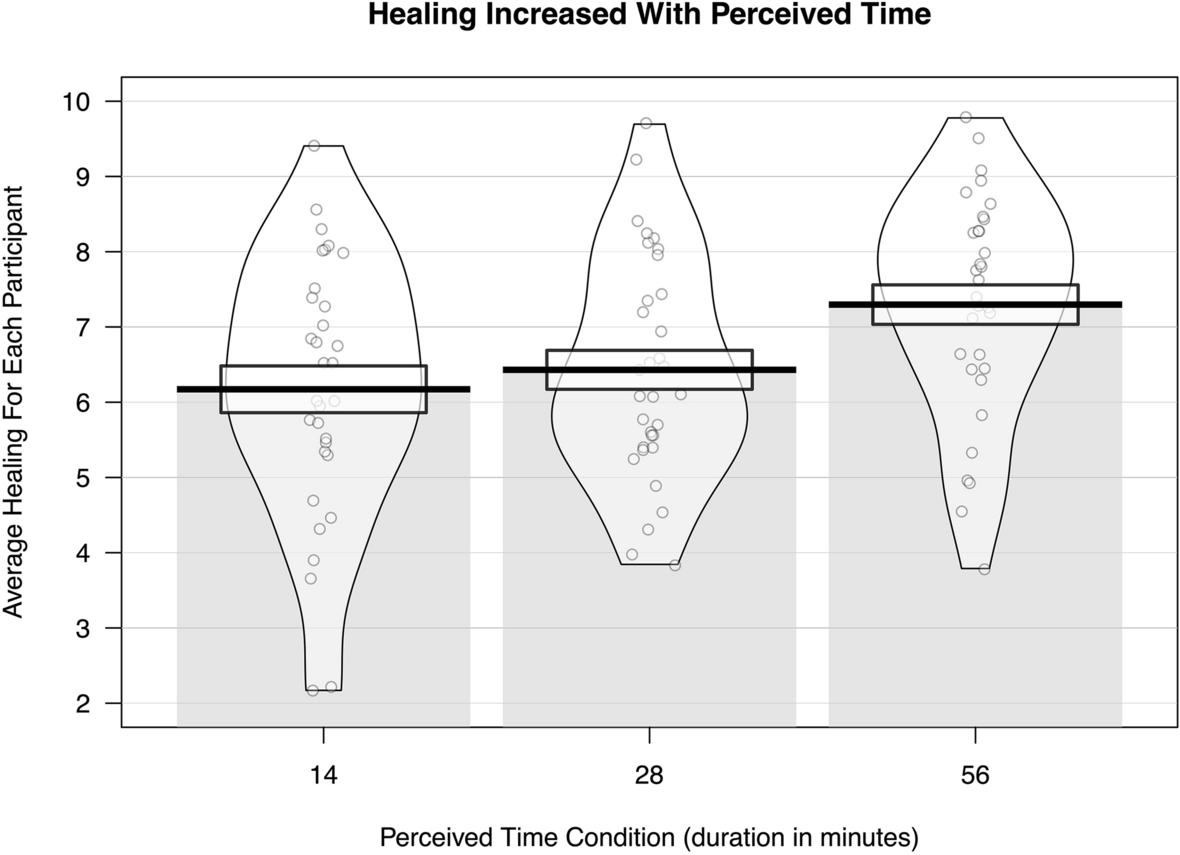
Physical healing as a function of perceived time
In this study we wounded study participants following a standardized procedure and manipulated perceived time to test whether perceived time affected the rate of healing. We measured the amount of healing that occurred across three conditions using a within-subjects design: Slow Time (half as fast as clock time), Normal Time (clock time), and Fast Time (twice as fast as clock time). Based on the theory of mind–body unity—which posits simultaneous and bidirectional influences of mind on body and body on mind—we hypothesized that wounds would heal faster or slower when perceived time was manipulated to be experienced as longer or shorter respectively. Although the actual elapsed time was 28 min in all three conditions, significantly more healing was observed in the Normal Time condition compared to the Slow Time condition, in the Fast Time condition compared to the Normal Time condition, and in the Fast Time condition compared to the Slow Time condition. These results support the hypothesis that the effect of time on physical healing is directly affected by one’s psychological experience of time, independent of the actual elapsed time.
Time anxiety: is it too late?
I have always struggled with a thought: it’s too late. Too late to publish a book, to start a company, to learn a new language. This is called time anxiety.
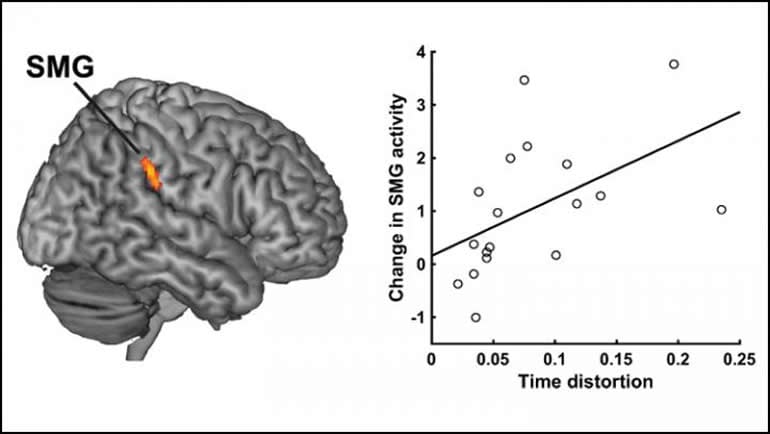
How the Brain Creates the Experience of Time - Neuroscience News
Time-sensitive neuron fatigue in the supramarginal gyrus skew how we perceive time.
Mental time travel: a new case of autobiographical hypermnesia
Remembering past events in minute detail, revisiting them methodically, and reliving past emotions—this is the peculiarity of people with an exceptional memory of their own lives, known as autobiographical hypermnesia, or hyperthymesia. This fascinating condition remains poorly understood, and each new case contributes to our understanding. In a recent article in Neurocase, researchers from Paris Brain Institute and the Memory, Brain, and Cognition Laboratory (LMC²) in Paris describe the extraordinary mental life of a 17-year-old girl.
If you think you have time management issues, you're probably wrong — here's the real problem
Time can't be managed — it can only be accounted for. Think about what you've been doing with yours.
Six Ways to Think Long-term: A Cognitive Toolkit for Good Ancestors
None of these six ways is enough alone to create a long-term revolution of the human mind — a fundamental shift in our perception of time. But together — and when practised by a critical mass of people and organisations — a new age of long-term thinking could emerge out of their synergy.

Brett Scott (@brettscott)
Despite all the rhetoric about automation supposedly making our lives easier, the true story being told by Big Tech is that our lives are better when speeded up You are supposed to be in an ever-accelerating race, packing more units of experience into the same unit of time, a phenomenon that requires a contraction of patience and a blurring of experience as everything quickens In the end, this is what ‘convenience’ actually is. It’s a state of being in which you become disassociated and disengaged from the texture of the world around you. You pass through it dreamlike, and suddenly wake up decades years later as an elderly person on your deathbed, thinking “WTF happened”, as then the memory slips away
