

Rather than there being a clear link one way or another, a new study by researchers at Bath Spa University, Bristol University and University College London suggests a nuanced relationship between playing video games at an early age that might include violent content, and later development of aggressive behaviours during teenage years.
We need more video games that are social platforms first, games second | TechCrunch
During these long, mundane physically-distant days, stretching on into an uncertain future like an ever-lengthening beigeish corridor, it's impossible not
No evidence to support link between violent video games and behaviour
Researchers at the University of York have found no evidence to support the theory that video games make players more violent.
5 top gaming investors explain how the pandemic is reshaping MMOs and social games | TechCrunch
Now that the COVID-19 pandemic has forced millions into isolation, video games are seeing a surge in usage as people seek entertainment and social

Video Games Are Boring
Video games are bigger than movies. Everyone's a gamer. I've devoted my life-no exaggeration-to video games for 14 year…

Can a video game company tame toxic behaviour?
Scientists are helping to stop antisocial behaviour in the world's most popular online game. The next stop could be a kinder Internet.

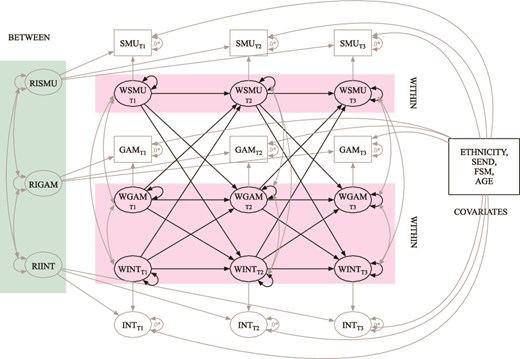
How do social media use, gaming frequency, and internalizing symptoms predict each other over time in early-to-middle adolescence?
Abstract Background The effects of adolescent digital technology use (e.g. social media, gaming) on their mental health are a major public health concern, but existing evidence is of mixed quality and findings have been inconclusive. Methods Separating within-person effects from between-person effects, a random-intercept cross-lagged panel model was applied to three annual waves of data (T1, T2, T3) on social media use, gaming, and internalizing symptoms among N = 25 629 adolescents (51% girls, average age 12 years, 7 months (SD = 3.58 months) at baseline) in Greater Manchester, England. Results Longitudinal relationships varied by gender, such that more frequent gaming at T2 predicted less time spent on social media use at T3 in girls (but not boys), and more frequent internalizing symptoms at T2 predicted reductions in gaming frequency at T3 in boys (but not girls). There was no evidence that time spent on social media or gaming frequency predicted later internalizing symptoms among girls or boys. Sensitivity analyses that distinguished active versus passive social media use replicated these findings. Conclusions The findings of this study do not support the widely held view that adolescent technology use is a major causal factor in their mental health difficulties.
Video Games Are Better Than Real Life
Many Americans have replaced work hours with game play — and ended up happier. Which wouldn’t surprise most gamers.

Over three billion people worldwide now play video games, study reports
By mid-2020, the number of people playing video games had grown to 3.1 billion, according to DFC Intelligence. Considering that in July the total population of the Earth exceeded 7.8 billion, just under 40% are familiar with games. Analysts point out that almost half of the accounted three billion are those who play only on […]

The Search For The Apolitical Video Game
Children today are suffering a severe deficit of play | Aeon Essays
Children today are cossetted and pressured in equal measure. Without the freedom to play they will never grow up

Children today are suffering a severe deficit of play | Aeon Essays
Children today are cossetted and pressured in equal measure. Without the freedom to play they will never grow up
Action video games improve brain function more than so-called 'brain games'
From "brain games" designed to enhance mental fitness, to games used to improve real-world problems, to games created purely to entertain, today's video

Fortnite Is so Much More Than a Game
Teens have always created their own spaces to experiment, socialize, and indulge idle curiosity

Designing Games to Learn
As I've been writing this series of newsletters on learning and video games, there's been a spectre lurking in the background. Video games and education. Edutainment.
A Dark Consensus About Screens and Kids Begins to Emerge in Silicon Valley | Hacker News
Echoing some of the existing comments: Games and sites today are vastly different than they were 20 years ago.
Erlend Sogge Heggen (@erlend.sh)
1. solitude: single-player game loop 2. bottomlessness: infinite scroll 3. speed: instant delivery/gratification 4. teasing: generally satisfactory, never perfect; “maybe the next one is exactly what I want” ↘️ quoting NPR (@npr.org): Taken together, these four features can create a trancelike state that can keep us stuck on social media apps or video games for hours. Children are particularly vulnerable. n.pr/4mH6i6s