Neuroscientist Moran Cerf has found people's brain activity aligns when they're in each other's company. The finding can be used to maximize happiness.
First Brain-Wide Map of Decision-Making Charted In Mice - Slashdot
In a landmark collaboration across 22 labs, neuroscientists have created the first brain-wide map of decision-making in mice, tracking over 620,000 neurons across nearly 280 brain regions. They found that decision-making is distributed much more broadly than previously thought, involving not just "c...
The Neuroscience At The Heart Of Learning And Leading
Joshua Freedman (@eqjosh) shares the science behind what's going on inside your head. Emotional intelligence, he says, is the difference that makes the difference. Photo: Flickr/labguest Marco Iacoboni is one of the pioneers in a new area of neuroscience. A few years ago in Parma, Italy, scientists were researching how the brain [...]

How to rewire your brain for massive success, according to neuroscience
CEO Elle Kaplan shares the mental practices you can use to alter your brain for optimal function.

BrainMind
At this important juncture in neuroscience, the BrainMind ecosystem is combining the most talented of these groups in novel ways to collectively shepherd, support, and fund ideas that can be translated from labs into interventions that will benefit humanity.

How the brain controls our habits: Neuroscientists identify a brain region that can switch between new and old habits
Neuroscientists have found that a small region of the brain's prefrontal cortex, where most thought and planning occurs, is responsible for moment-by-moment control of which habits are switched on at a given time.

Your Brain on Politics: The Cognitive Neuroscience of Liberals and Conservatives
Can neuroscience provide evidence for a liberal and conservative thinking style?

Signaling as a Service
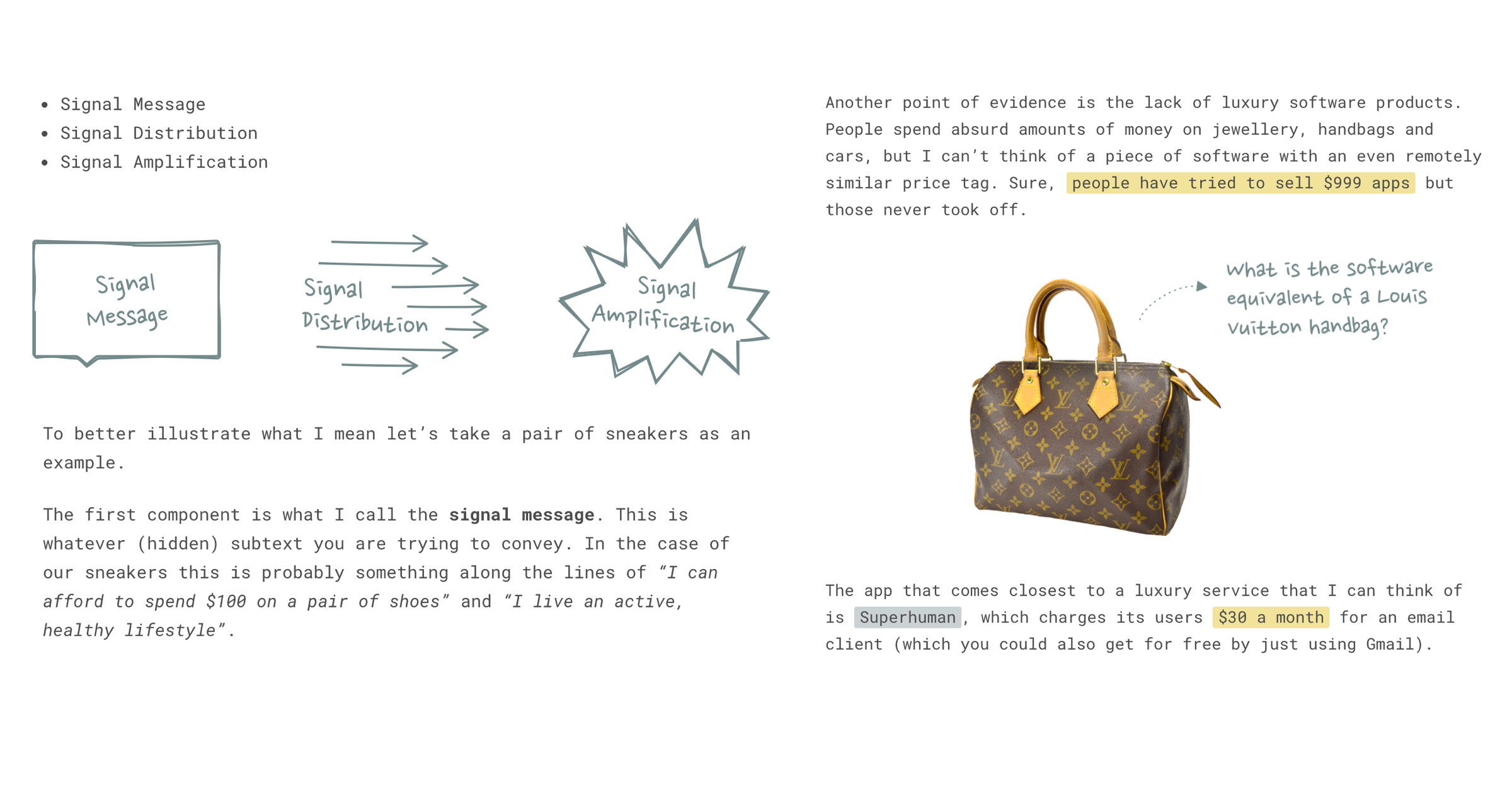
01 Intro One of the best books I have read in the last few years is The Elephant in the Brain by Robin Hanson and Kevin Simler. The book makes two main arguments: a) Most of our everyday actions can be traced back to some form of signaling or status seeking b) Our brains deliberately hi
New Stanford Study: A Positive Attitude Literally Makes Your Brain Work Better
A new brain scan study has revealed exactly how positivity affects the brain (and it's impressive).

MIT neuroscientist: The No. 1 skill that sets people with ‘excellent memory’ apart from those who struggle—'it's rare'
Memory skills vary from one person to another. MIT Sloan neuroscientist Dr. Tara Swart Bieber shares how she trains her brain to prevent memory decline as we age.

Partner with Neuroscience
Partner with J&J Neuroscience to collaborate on licensing, academia, venture deals and shared innovation across Alzheimer’s, Parkinson’s and more.
how to pay attention again (the neuroscience of focus in the age of everything)
on the attention economy, and reclaiming your brain’s right to choose

Friend or Foe? Single Neurons in the Brain Control Social Interaction, Study Finds
The neurons, sprinkled across the frontal parts of the brain, are strikingly powerful. They tracked how players behaved—were they cooperative, or selfish?

Neuroscientists Say They've Found An Entirely New Form of Neural Communication - Slashdot
Scientists think they've identified a previously unknown form of neural communication that self-propagates across brain tissue, and can leap wirelessly from neurons in one section of brain tissue to another -- even if they've been surgically severed. The discovery offers some radical new insights ab...

New Neuroscience Reveals 4 Rituals That Will Make You Happy - Barking Up The Wrong Tree
There's a lot of stuff about happiness on the internet, but what do neuroscientists say can *really* make you happy? Here are 4 things backed by research.
10 Small Things Neurologists Wish You’d Do for Your Brain (Published 2025)
Easy everyday habits can help keep you sharp. And it’s never too late to start them.

NeuroAI’s Next Steps: Balancing Computation and Embodiment
Deep neural networks trained at scale now predict neural activity across sensory cortices, raising a question that divides neuroscience: does the convergence between artificial and biological representations constitute understanding, or does understanding require models of biological processes grounded in the embodied, evolved character of natural intelligence? In this Dual Perspectives article, Bing Brunton and Patrick Mineault articulate two research programs—Process and Convergence—to engage this question about the future of NeuroAI research. The conversation is organized around four questions that probe what scaled model–brain alignment reveals, what the brain is coupled to and evolved to do, what success beyond the lab looks like, and where the field should invest over the coming decade. Their exchanges reveal the distance between the two programs to be primarily about the level of analysis and priorities for what to build next. The conversation converges on shared ground: measure broadly, then distill to causal principles.