

Counterintelligence expert Robin Dreeke, co-author of "The Code of Trust," says to get someone to trust you, you should talk to them in a relatable way.
Proton survey: People don't trust AI, but they tell it everything | Proton
New research finds that most AI chatbot users have shared something sensitive, but few trust the companies behind them.
Reflections on trusting trust
To what extent should one trust a statement that a program is free of Trojan horses? Perhaps it is more important to trust the people who wrote the software.

Deepfakes, Scams, and the Age of Paranoia
As AI-driven fraud becomes increasingly common, more people feel the need to verify every interaction they have online.
Trust and reliance on AI — An experimental study on the extent and costs of overreliance on AI
Decision-making is undergoing rapid changes due to the introduction of artificial intelligence (AI), as AI recommender systems can help mitigate human flaws and increase decision accuracy and efficiency. However, AI can also commit errors or suffer from algorithmic bias. Hence, blind trust in technologies carries risks, as users may follow detrimental advice resulting in undesired consequences. Building upon research on algorithm appreciation and trust in AI, the current study investigates whether users who receive AI advice in an uncertain situation overrely on this advice — to their own detriment and that of other parties. In a domain-independent, incentivized, and interactive behavioral experiment, we find that the mere knowledge of advice being generated by an AI causes people to overrely on it, that is, to follow AI advice even when it contradicts available contextual information as well as their own assessment. Frequently, this overreliance leads not only to inefficient outcomes for the advisee, but also to undesired effects regarding third parties. The results call into question how AI is being used in assisted decision making, emphasizing the importance of AI literacy and effective trust calibration for productive deployment of such systems.

Learning to speak with honesty—and without AI
Authenticity is a valuable asset. But communicating it is tricky

Self-guaranteeing promises
A self-guaranteeing promise is verifiable and non-reversible. It does not require you to trust anyone.
Who Can You Trust?
Reprint: R1403K Success in business unquestionably requires some willingness to cooperate through having faith in others. The question is how much faith and in whom? Decades of scientific research show that people’s accuracy in deciding if another can be trusted tends to be only slightly better than chance. But this isn’t because trustworthiness is completely unpredictable. It’s because the guidelines most of us use to make these predictions are flawed. We place too much emphasis on reputation and perceived confidence, ignoring the fact that human behavior is always sensitive to context and can often be better assessed by our own intuition. So when your company’s money and resources are on the line, how can you do a better job of gauging trustworthiness and thereby improve your likelihood of success? This article draws on emerging research to show how trustworthiness works and offers four points to keep in mind the next time you’re deciding whether or not to do business with a new partner: Integrity can vary, power does corrupt, confidence often masks incompetence, and it’s OK to trust your gut.
Why I don’t trust most human-AI interaction experimental research – Jason Collins blog
Behavioural economics, data science and artificial intelligence.
Piloting the world's first double-blind AI evaluations
Building trust in proprietary model benchmarks using cryptographically secure environments

Trust & Safety Library - Trust & Safety Professional Association
Welcome to the Trust & Safety Library! We use this space to collect articles, blog posts, journal articles, lectures, podcasts, and websites that trust and safety professionals may find useful in developing policies, supporting moderators, building systems to detect violations, and generally deepening their practice. We welcome your submissions and feedback. This project was initially
How to know if you can trust an AI’s answer to your question
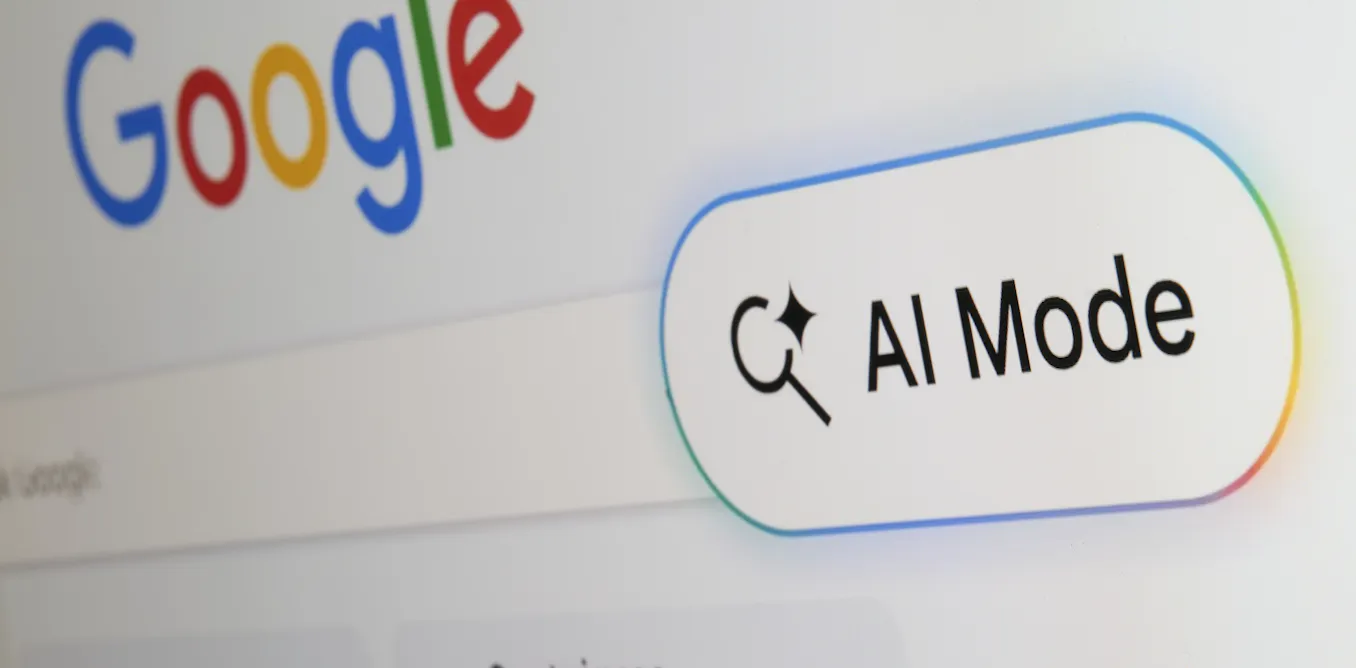
One Google response asked for my medical history. Another answered a personal health question without asking who I was. Both replies came across as authoritative advice.
How to know if you can trust an AI’s answer to your question
One Google response asked for my medical history. Another answered a personal health question without asking who I was. Both replies came across as authoritative advice.
What is zero trust and how can it protect your business? | Proton
Cybersecurity for businesses is harder than ever: find out how zero trust security can prevent data breaches within your business.

Can You Trust Your Computer? - GNU Project - Free Software Foundation
Who should your computer take its orders from? Most people think their computers should obey them, not obey someone else. With a plan they call “trusted computing,” large media corporations (including the movie companies and record companies), together with computer companies such as Microsoft and Intel, are planning to make your computer obey them instead of you. (Microsoft's version of this scheme is called Palladium.) Proprietary programs have included malicious features before, but this plan would make it universal.