


Concussions and high impact sports seem to go hand in hand, and now a new study of pro hockey players conducted in Toronto shows that head trauma can lead to an elevated rate of psychiatric disorders.
'Concussions affect a life': Ken Dryden wants hockey rules changed to save players' lives
Hockey legend Ken Dryden is calling on the NHL to penalize any play that involves a player making contact with the head of another — no exceptions.

New report outlines NFL interference in concussion research
Questions raised over helmet sensors as study links successive blows to brain damage.
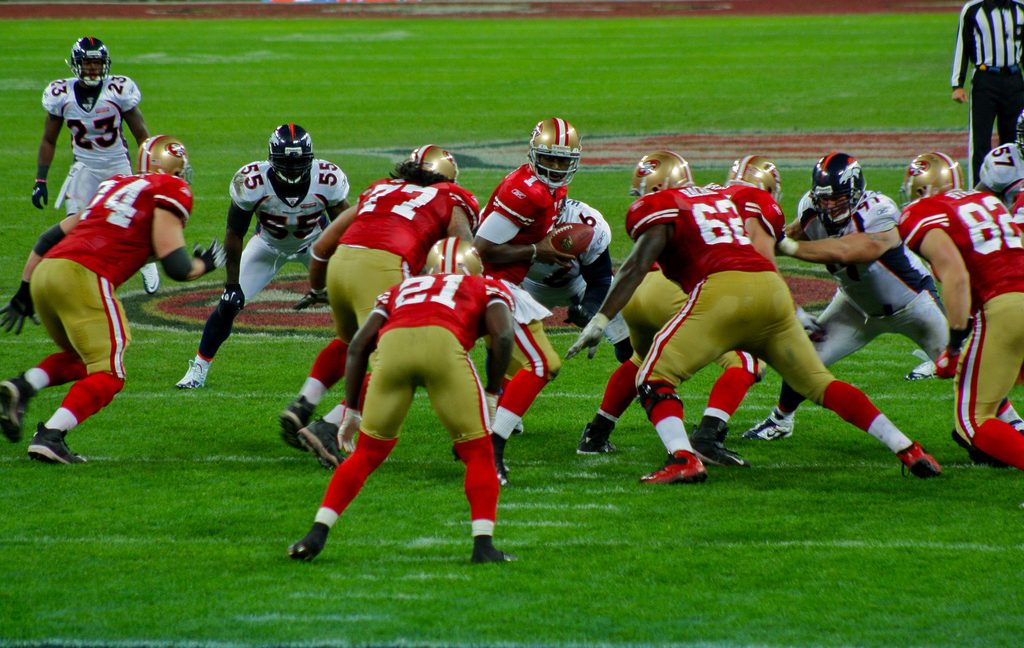
New Study Estimates CTE in 75% of Deceased NFL Players, Including Former Washington Stars
A Boston University study estimates that nearly 75% of deceased NFL players had CTE, highlighting the risks of repetitive head impacts.
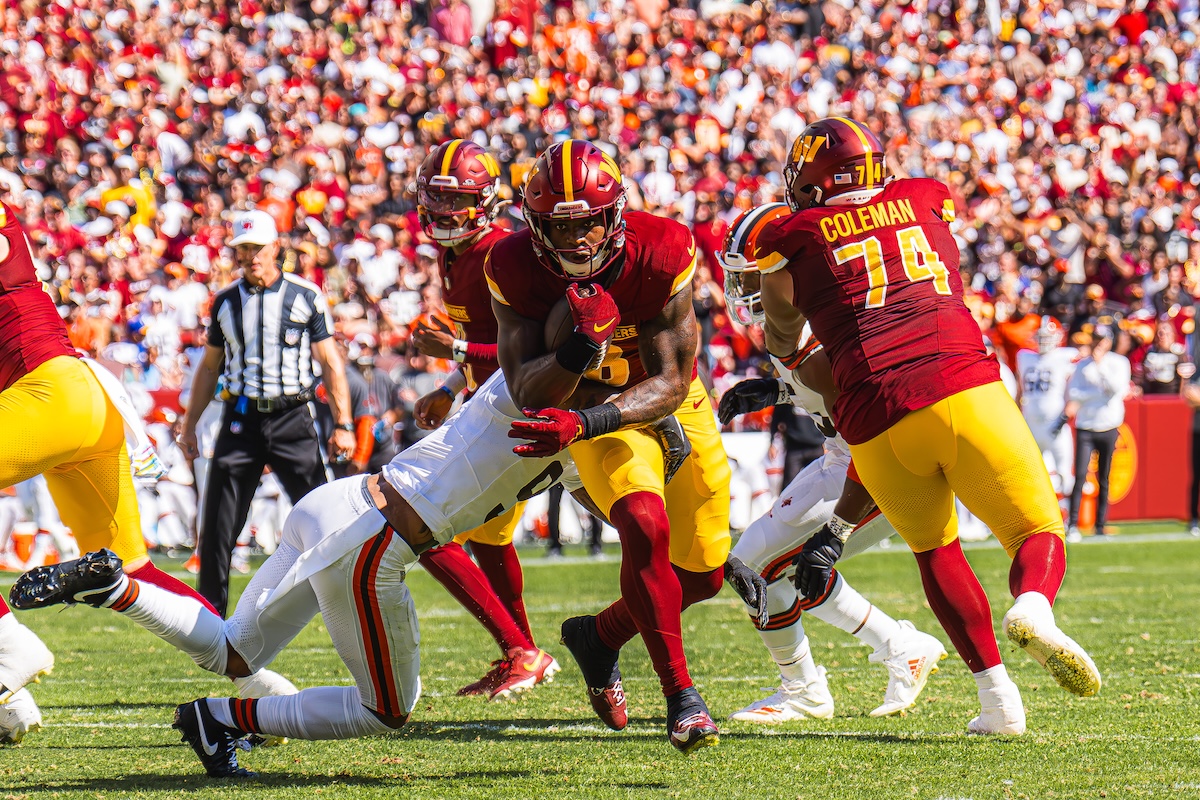
Football headers 'linked to brain damage'
Footballers suffer similar brain damage to boxers, a small scientific study suggests.


Brain injury expert calls for ban on heading in football
One of the world's leading brain injury experts is calling for a ban on heading in football, following a number of historical cases.

The "Yips" in Baseball: Psychological Causes and Cures - Baseball Scouter
Demystifying the baseball yips: learn what they are, why they happen, and a practical four-week plan with mental skills and graded drills to restore smooth, confident throws under pressure.

Bike helmet laws don't reduce head injuries, UBC study finds | CBC News
Provinces with mandatory bike helmet laws like B.C. do not have lower rates of cycling-related head injuries according to a new UBC study.

Evidence grows that mental illness is more than dysfunction | Aeon Essays
Evidence is growing that mental illness is more than dysfunction, with enormous implications for treatment
Opinion | I’m the Wife of a Former N.F.L. Player. Football Destroyed His Mind. (Published 2018)
He chose the sport, but he did not choose brain damage.

Dungeons and Queers - First Person Scholar
Elise Vist is a PhD candidate at the University of Waterloo, completing a dissertation on Hockey Real-Person Fandom and the queerness that exists in hockey (even if it doesn’t always seem that way). Find her on Twitter RT-ing things about hockey, bisexuality, feminism, and whatever odd thing has her attention on any given day. I

Analyzing Baseball Data with R (3e)
Back in the late 1980s, as a college student, I would go to the NHL offices in downtown Montreal, and pick up their official end-of-season statistics package. This was something that was reserved for the media, but somehow I had the idea to ask, and they were kind enough to oblige. Since I was learning dBase, I then had to manually enter every piece of data in that package, probably some 20,000 discrete data values. Combining sports, numbers, and computers was a labour of love for me. Add in that in the 1980s, Pete Palmer and Bill James inspired the sabermetric revolution: my career path was set, as was that of thousands more.
Bait and Switch: The Failure of Facebook Advertising - An OSINT Investigation - bellingcat
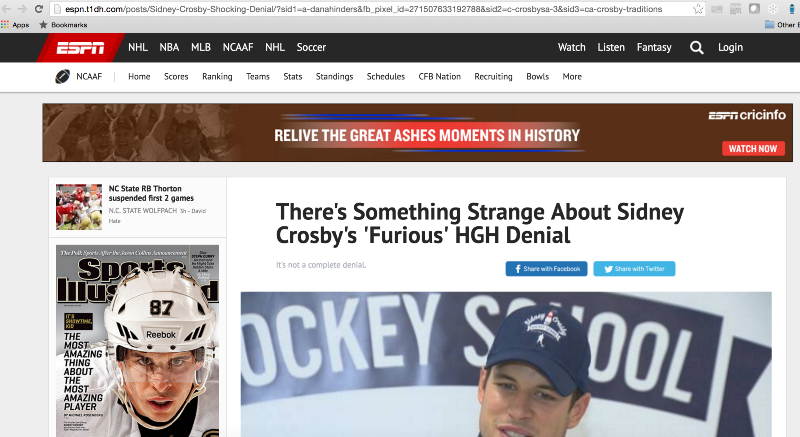
Translations:English (UK)This article was originally posted on the Hunchly blog on Medium. This story starts with Sidney Crosby. A professional hockey player and Canadian icon. I can neither confirm nor deny that I welled up like a small child at the Hockey Hall of Fame’s “Golden Goal” display (I will never forget that moment). So […]
Introducing DAVIES: A framework for Identifying Talent Across the Globe — American Soccer Analysis
In the world of sports, the search for an all-encompassing player evaluation metric is never-ending. Baseball was the first to develop its metric with Wins Above Replacement. Basketball followed suit with Player Efficiency Rating, and Hockey WAR has come into the fold within the past year. The US So

'We're second-class citizens': why MLS in Canada benefits everyone except Canada
In MLS, Canadian players are classed as ‘international’ if they play for American clubs, which means there’s nowhere for Canadian players to go
High intelligence: A risk factor for psychological and physiological overexcitabilities
High intelligence is touted as being predictive of positive outcomes including educational success and income level. However, little is known about the difficulties experienced among this population. Specifically, those with a high intellectual capacity (hyper brain) possess overexcitabilities in various domains that may predispose them to certain psychological disorders as well as physiological conditions involving elevated sensory, and altered immune and inflammatory responses (hyper body). The present study surveyed members of American Mensa, Ltd. (n=3715) in order to explore psychoneuroimmunological (PNI) processes among those at or above the 98th percentile of intelligence. Participants were asked to self-report prevalence of both diagnosed and/or suspected mood and anxiety disorders, attention deficit hyperactivity disorder (ADHD), autism spectrum disorder (ASD), and physiological diseases that include environmental and food allergies, asthma, and autoimmune disease. High statistical significance and a remarkably high relative risk ratio of diagnoses for all examined conditions were confirmed among the Mensa group 2015 data when compared to the national average statistics. This implicates high IQ as being a potential risk factor for affective disorders, ADHD, ASD, and for increased incidence of disease related to immune dysregulation. Preliminary findings strongly support a hyper brain/hyper body association which may have substantial individual and societal implications and warrants further investigation to best identify and serve this at-risk population.