


CBC News takes a closer look at the activities of one of Canada's most secretive agencies, the Communications Security Establishment.
CSEC Wi-Fi snooping experiment prompts calls for review | CBC News
A B.C. MP is calling for an independent review of the activities of Canada's electronic spy agency, after CBC News revealed this week that the agency conducted an experiment in tracking internet users who logged in through wireless access points at Canadian airports.

Canada's electronic spy agency to get new rules for sharing data with allies | CBC News
The office of Defence Minister Harjit Sajjan is crafting a directive for how Canada’s electronic spy agency shares its foreign signals intelligence with its closest allies, the Five Eyes partners.

Spy agency slammed for snooping on Canadians abroad | CBC News
Canada's spy agency deliberately withheld information from the courts in an effort to do an end-run around the law when it applied for top-secret warrants to intercept the communications of Canadians abroad, a Federal Court judge said Friday.

Privacy czar wants better oversight of Canada's spy agencies | CBC News
Spy agencies must be accountable to Canadians for what they do with personal information, says interim privacy commissioner Chantal Bernier in a special report released today.

Spy agencies, PM's adviser defend airport Wi-FI data collection | CBC News
The head of Canada's communications surveillance agency defended its use of metadata Monday and argued a test using Canadian passengers' data — revealed by CBC News last week — didn't run in real-time and wasn't an actual operation.

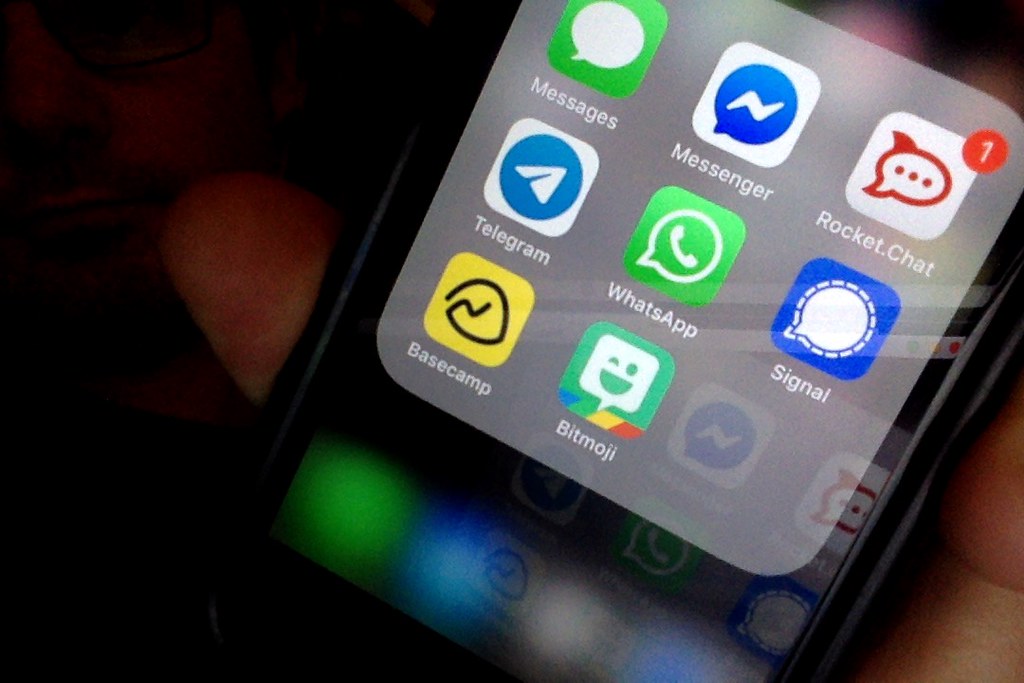
Signal warns it would pull out of Canada if made to comply with lawful access bill
Secure messaging service says it will not weaken its encryption, privacy safeguards for government

B.C. government email scandal exposes weak freedom of information laws | CBC Radio
Damning findings of the B.C.'s privacy commissioner showed a trail of deleted emails. Today, we're examining the case of how legislation to assist the curious in the form of Freedom of Information laws across Canada leaves us with precious little of the Information we're supposed to get.

Why the U.S. is noticing this Canadian security bill | CBC News
A Liberal government bill that proposes giving police and spies easier access to information during investigations has fallen into the crosshairs of U.S. tech giants and two American congressional committees, threatening to become the latest irritant in the Canada-U.S. relationship.

How Canada’s shadowy metadata-gathering program went awry
Records obtained by The Globe and Mail show that the rights and wrongs of collecting data on Canadians have been debated vigorously within the security bureaucracy over the past decade
Canadians’ rightful access to public information being blocked, experts say
Information watchdogs, researchers, media and others say government, institutions keeping citizens in the dark even as opportunities for transparency increase.

Lawful Access and the Privacy of Canadians « Pirate Party of Canada
Ex-Minister of International Trade Peter Van Loan confirmed June 2nd, 2011, that the Harper Government would be tabling a massive crime bill that Fall [1]. Included in this crime bill is lawful access legislation, previously known as bills C-50, C-51, and C-52 [2]. At the time this is being written (09/2011) it is unknown whether or not legislation such as the “Canadian DMCA” bill C-32 will be included in this crime bill. This lawful access legislation mandates the disclosure of Internet provider customer information to government and police without any warrant, in addition to requiring Internet providers to dramatically re-work their networks to allow for real-time surveillance. Lawful access legislation negatively affects the privacy of all Canadians.
The Lawful Access Two-Headed Surveillance Monster: How Bill C-22 Went Off the Rails - Michael Geist
The government’s plans for lawful access have gone off the rails. In recent days, Signal has warned it would pull out of the Canadian market rather than comply with Bill C-22. Windscribe, the Toronto-headquartered VPN provider, has said it would relocate its headquarters out of Canada and NordVPN has warned it would consider following suit. Apple and Meta have both raised public concerns about the bill’s effect on encryption and cybersecurity. The Canadian Chamber of Commerce, the Cybersecurity Advisors Network, civil liberties groups, and a long line of legal and security experts have all called for changes. The chairs of the U.S. House Judiciary and Foreign Affairs Committees have written to Public Safety Minister Gary Anandasangaree warning that the bill threatens U.S. national security and the integrity of cross-border data flows. Even the bill’s own oversight body, the National Security and Intelligence Review Agency, has told the SECU committee it does not have the access it needs for effective oversight. If the government thought it could push through the bill largely unnoticed, it has been proven painfully wrong as there are now trade frictions with the U.S., the prospect of leading companies exiting the Canadian market, and weaker cybersecurity protections for ordinary users. How did Canada’s lawful access plan go awry so quickly?

The “New” CSIS – a de facto Secret Police
This is blog #3 in the BCCLA's series to assist the public in understanding and submitting their comments to Canada's national security consultation.

Bill C-22’s Groundhog Day: Why the Government’s Dismissal of Signal, Apple and the U.S. Congress Concerns Runs Back the Disastrous Online News Act Playbook - Michael Geist
Secure messaging service Signal yesterday became the latest company to warn that Bill C-22, the lawful access bill, could force it to leave the Canadian market rather than comply with provisions it says would compromise its end-to-end encryption and create new cybersecurity risks. Signal vice-president Udbhav Tiwari told the Globe and Mail that the company “would rather pull out of the country than be compelled to compromise on the privacy promises we have made to our users.” The comments are part of a steady stream of similar warnings from Apple, Meta, the Canadian Chamber of Commerce, the Cybersecurity Advisors Network, and the chairs of the U.S. House Judiciary and Foreign Affairs Committees. Despite growing concern, the government’s response has been to launch a misleading social media campaign and repeatedly insist that the experts and companies are mistaken.
Canadians are lax on privacy, Senate committee hears
Bill S-220 would create parliamentary committee to oversee intelligenec and security efforts
Did CSIS break the law by spying on pipeline protesters? | CBC News
A federal committee is holding a hearing into a complaint that the Canadian Security Intelligence Service illegally spied on peaceful anti-pipeline protesters in B.C.
