This article originally appeared on Fortune.com.
What Is Strategy?
Today’s dynamic markets and technologies have called into question the sustainability of competitive advantage. Under pressure to improve productivity, quality, and speed, managers have embraced tools such as TQM, benchmarking, and re-engineering. Dramatic operational improvements have resulted, but rarely have these gains translated into sustainable profitability. And gradually, the tools have taken the place of strategy. In his five-part article, Michael Porter explores how that shift has led to the rise of mutually destructive competitive battles that damage the profitability of many companies. As managers push to improve on all fronts, they move further away from viable competitive positions. Porter argues that operational effectiveness, although necessary to superior performance, is not sufficient, because its techniques are easy to imitate. In contrast, the essence of strategy is choosing a unique and valuable position rooted in systems of activities that are much more difficult to match. Porter thus traces the economic basis of competitive advantage down to the level of the specific activities a company performs. Using cases such as Ikea and Vanguard, he shows how making trade-offs among activities is critical to the sustainability of a strategy. Whereas managers often focus on individual components of success such as core competencies or critical resources, Porter shows how managing fit across all of a company’s activities enhances both competitive advantage and sustainability. While stressing the role of leadership in making and enforcing clear strategic choices, Porter also offers advice on how companies can reconnect with strategies that have become blurred over time.

Why it's nice to compete against a large, profitable company
Competing against big firms? Their revenue streams are their Achilles heel. Learn how smaller startups have a shot.

(PDF) Strategic Technology Adoption for Sustainablity Performance in SME: A Comprehensive Review
PDF | This systematic literature review investigates the strategic adoption of technology for sustainability and resilience in small and medium-sized... | Find, read and cite all the research you need on ResearchGate

Opinion | Why Is Behavioral Economics So Popular? (Published 2018)
The recent vogue for this academic field is in part a triumph of marketing.

Why Product Market Fit Isn't Enough — Brian Balfour
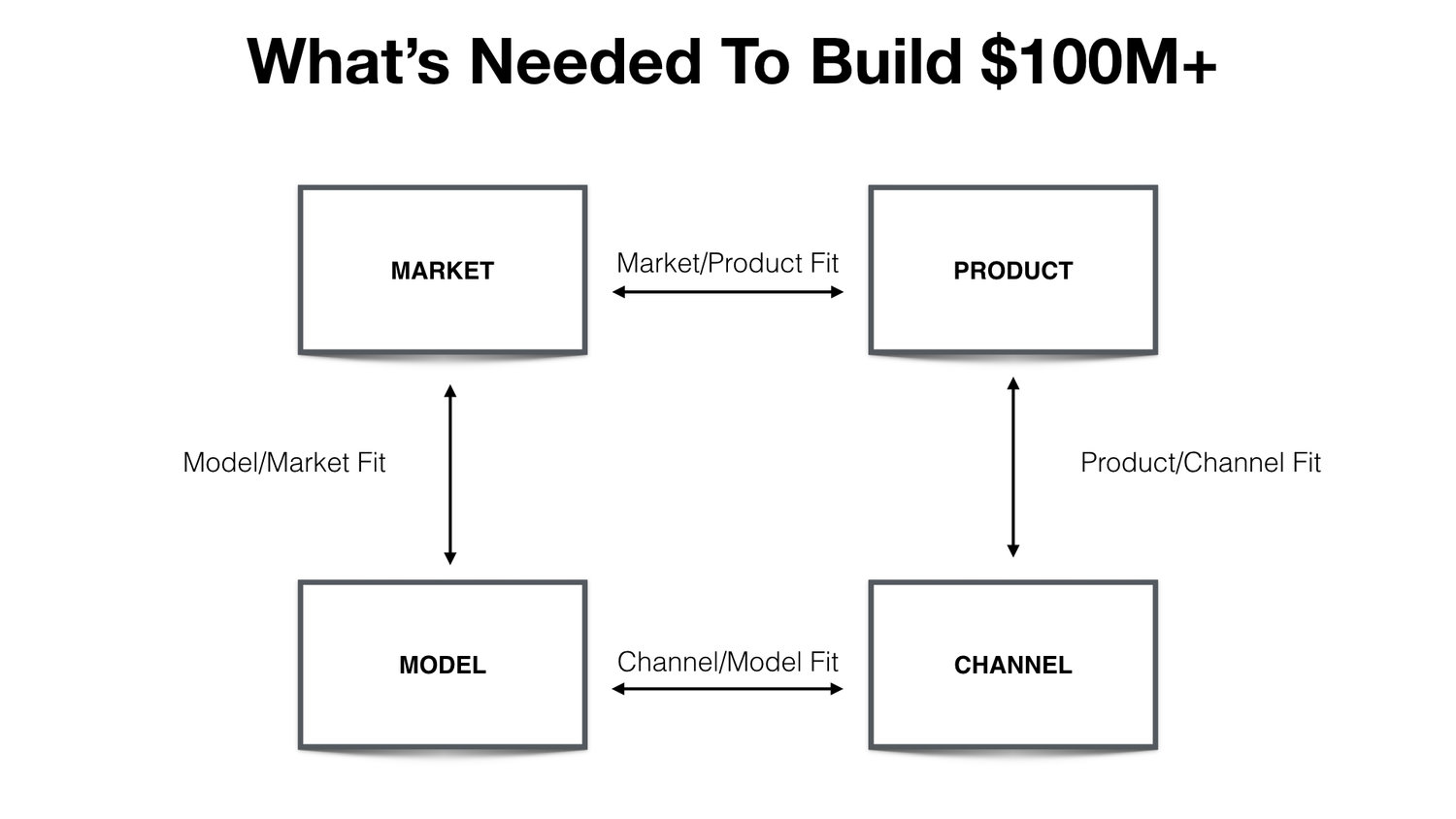
I’ve been lucky to have been part of building, advising, or investing in 40+ tech companies in the past 10 years. Some $100M+ wins. Some, complete losses. Most end up in the middle. One of my main observations is that there are certain companies where growth seems to come easily, like gui
When Community Becomes Your Competitive Advantage
If a company can transition from simply delivering a product to building a community, they can unlock extraordinary competitive advantages and create a superior business model. In fact, strong communities help support the ideal business model. Specifically: • Enthusiastic members help acquire new members, resulting in lower customer acquisition costs and a tight viral loop. • Members of a community are loath to abandon it, resulting in increased member retention and therefore improved lifetime value. • Members of a community support other members in that community, resulting in high gross margins due to a lower cost of service. The result of this are very real network effects: as engagement grows, the community gets smarter, faster to respond, more globally available, and generates more value.

Starting Point
You compete with others, on an unfair playing field. Are you aware of this? Are you good at games? Starting equally Starting unequally Advantages in Games Life is Competitive Seeing Life as a Game What to keep in mind When to use this View Your Starting Point Starting equally You...

Anti-trust
Technology markets, and others that share their strong economies of scale , naturally tend to evolve into oligopolies, if not outright monop...

The Case for Lowering Your Expectations
It may be the key to happiness and sustainable performance

Silicon Valley Keeps Winning Because Non-Competes Limit Innovation | TechCrunch
Talent plus capital. Whether you’re building a company, a city or a national economy, these are the raw materials that make it possible to do things that others can’t. Silicon Valley is the world’s most magical mixing chamber for these two simple ingredients, home to the most exciting, creative and valuable companies on the planet. Every city in the U.S. -- and around the world -- wants to be the “Silicon Valley for X,” because somehow that simple recipe of talent plus capital produces such radically different outcomes there than anywhere else.

The Experience Economy
SAP’s acquisition of Qualtrics shows how the shift in technology has changed business; it is a perfect example of using the Internet to one’s advantage.

ILG Strategic Foresight & Innovation Playbook — Innovation Leadership Group
Download a free PDF of the playbook (no signup needed) or buy the print version as one place to start

The fundamental problem with Silicon Valley’s favorite growth strategy
The pursuit of monopoly has led Silicon Valley astray.

Competition Remedies Are Too Important to Be Left Untested
How user research can strengthen remedy design In digital markets, competition interventions too often miss the mark. Regulators devote years to running investigations, winning cases, or developing ex ante obligations. ...

Why I'm Worried About Job Loss + Thoughts on Comparative Advantage — LessWrong
David Oks published a well-written essay yesterday arguing that the current panic about AI job displacement is overblown. I agree with a few of his p…
Capabilities adoption
Capabilities adoption needs a lot more education and promotion.Interest in Capabilities There are currently three communities that are interested ...