(Designed to be readable on phones; for widescreens, reduce window width.)
Oatmeal - Screen readers
The aim here isn’t to teach you how to use a screen reader, nor really about how screen readers work. My aim is to help build a mental model of

An introduction to screen readers
A screen reader allows people who are blind or visually impaired to use their computer. This factsheet provides an overview of the main screen readers available for people to use with their computer
Foundations: the accessibility tree - TetraLogical
There's a common misconception that when browsing the web using a screen reader, it's reading the actual screen. This is not really surprising, as the name suggests that's exactly what it's doing. And, this is what early screen readers did, so, we can't really blame anybody for thinking that!

WebVR - virtual reality in your browsers
Slides for my Talk about WebVR. Presented at BED-Con in Berlin 2016 (http://bed-con.org/2016/)

Childhood and Education #20: Phones and Screens
We have a respite, so I thought I’d tackle various thoughts on children, phones and screens.

The surprising origin of 4 features that superglue kids — and adults — to screens
Taken together, these four features can create a trancelike state that can keep us stuck on social media apps or video games for hours. Children are particularly vulnerable.

The surprising origin of 4 features that superglue kids — and adults — to screens
Taken together, these four features can create a trancelike state that can keep us stuck on social media apps or video games for hours. Children are particularly vulnerable.
Topics — Real Life
ABOUT TOPICS: Since we began Real Life in the summer of 2016, we’ve run many essays across a range of topics, with a particular focus on the personal and cultural implications of living with technology. Our aim is not to track the news cycle so much as the longstanding social issues that inform and transcend it. We wanted to make it easier to read and explore Real Life beyond our chronological archive, so we’ve created these Topics to gather in one place the work we’ve published on some key themes. More Topics will be added to this page over time.

Responsive Web Design
Designers have coveted print for its precision layouts, lamenting the varying user contexts on the web that compromise their designs. Ethan Marcotte advocates we shift our design thinking to approp…

Evolving the infinite canvas
In the digital world, especially on the web, we’re used to things being stacked vertically. Scrolling, scrolling, through boxes of content,

Digital Dualism versus Augmented Reality - Cyborgology
The Society Pages (TSP) is an open-access social science project headquartered in the Department of Sociology at the University of Minnesota
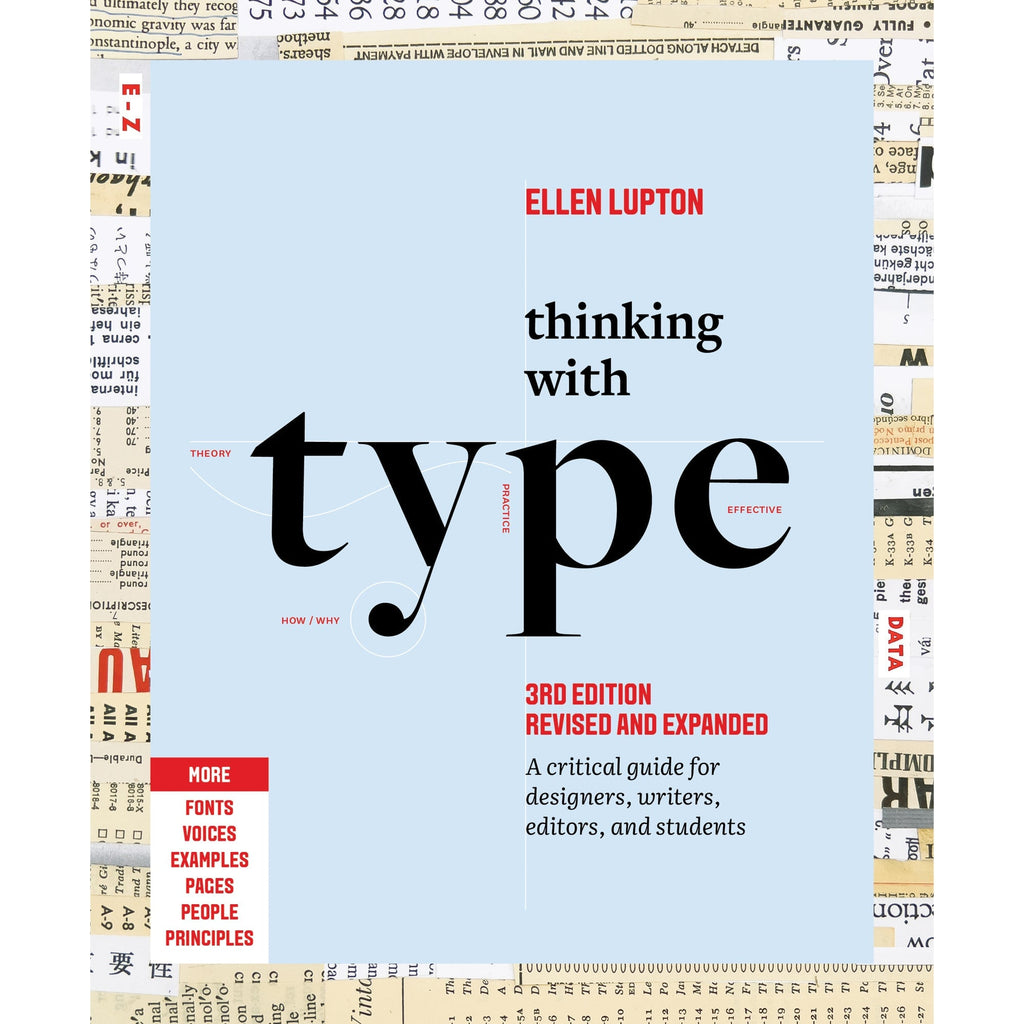
Thinking with Type
The essential and bestselling guide to typography from beloved design educator Ellen Lupton—revised and expanded to include new and additional voices, examples, and principles, and a wider array of typefaces. "Thinking with Type is to typography what Stephen Hawking's A Brief History of Time is to physics."—I Love TypographyThe bestselling Thinking with Type in a revised and expanded third edition: This is the definitive guide to using typography in visual communication. Covering the essentials of typography, this book explores everything from typefaces and type families to kerning and tracking to grids and layout principles.Ellen Lupton provides clear and focused guidance on how letters, words, and paragraphs should be aligned, spaced, ordered, and shaped. Historical and contemporary examples of graphic design show how to learn the rules and how to break them. Critical essays, eye-opening diagrams, helpful exercises, and dozens of examples and illustrations show readers how to be inventive within systems that inform and communicate.Featuring 32 pages of new content, the third edition is revised and refined from cover to cover: More fonts: old fonts, new fonts, weird fonts, libre fonts, Google fonts, Adobe fonts, fonts from independent foundries, and fonts and lettering by women and BIPOC designersIntroductions to diverse writing systems, contributed by expert typographers from around the worldDemonstrations of basic design principles, such as visual balance, Gestalt grouping, and responsive layoutCurrent approaches to typeface design, including variable fonts and optical sizes; tips for readability, legibility, and accessibility; and stunning reproductions from the Letterform Archive Thinking with Type is the typography book for everyone: designers, writers, editors, students, anyone who works with words on page or screen, and enthusiasts of type and lettering. Readers will also love Ellen Lupton's book Extra Bold: A Feminist, Inclusive, Anti-racist, Nonbinary Field Guide for Graphic Designers. Ellen Lupton is a designer, writer, and educator. She has written numerous books about graphic design, including Thinking with Type, Graphic Design Thinking, and Extra Bold: A Feminist, Inclusive, Anti-racist, Nonbinary Field Guide for Graphic Designers. She teaches in the Graphic Design MFA program at Maryland Institute College of Art in Baltimore (MICA), where she proudly serves as the Betty Cooke and William O. Steinmetz Design Chair. She is Curator Emerita at Cooper Hewitt, Smithsonian Design Museum in New York City, where her exhibitions included Herbert Bayer: Bauhaus Master and The Senses: Design Beyond Vision. Lupton loves reading, writing, teaching, and learning new things about design.