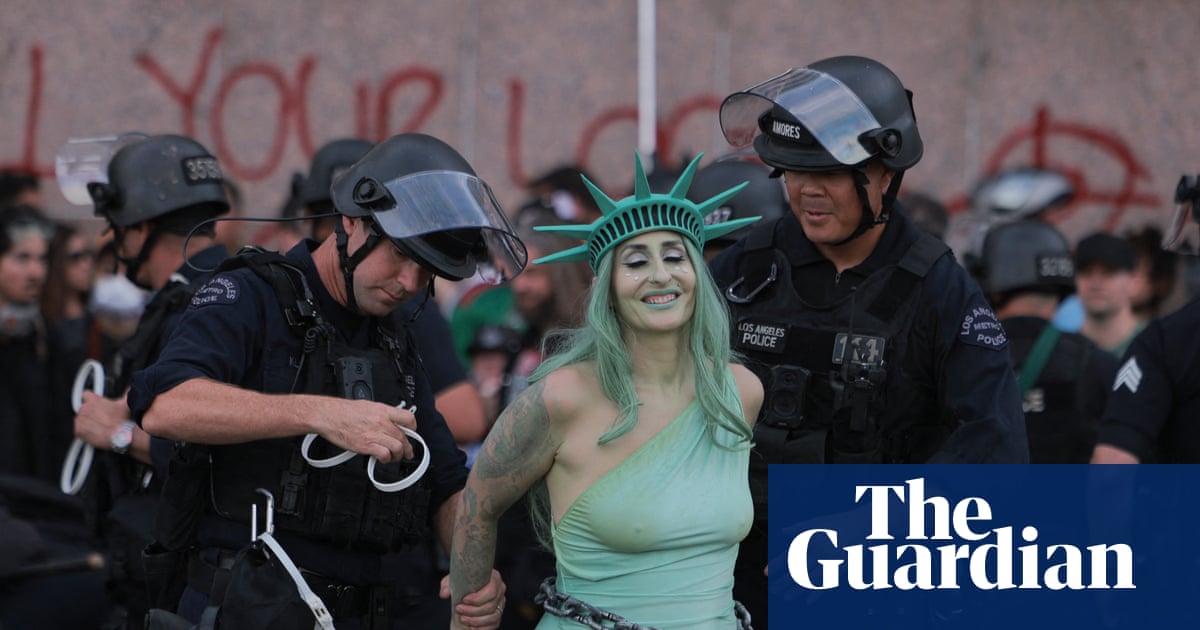
New revelations about America's secret intelligence court call into question America's commitment to democracy
Privacy under attack: the NSA files revealed new threats to democracy
We now know the apparatus of repression has been attached to the democratic state, but our struggle for privacy is far from hopeless. By Eben Moglen
The US Government Is Hiding a Secret Court Ruling About How It Spies on Americans
Two US senators say the Trump administration is breaking the law by withholding the FISA court decision while it presses Congress to renew America’s most sweeping surveillance program.

Is America a democracy? If so, why does it deny millions the vote?
Voter suppression – from strict ID laws to closing polling places to purging voter rolls – is deliberately making it hard to exercise the democratic franchise

The Supreme Court is corrupting American democracy
One cannot hope to bribe or twist/ (thank God!) the U.S. chief jurist

How 9/11 changed the way America surveils its citizens • Stateline
The terrorist attacks of Sept. 11, 2001, transformed how American intelligence and law enforcement agencies collect, share and analyze information. Twenty-five years later, that infrastructure has merged with a digital world capable of generating vast amounts of data about Americans — and artificial intelligence is making it easier to connect and analyze that information. The result is a surveillance system far more powerful than anything imaginable in 2001, raising new questions about privacy, policing and civil liberties.

An Attack on Tech Freedom, an Assault on Dissent
We live in a world of surveillance states, militarized police, and crackdowns on dissent. Meanwhile, corporate behemoths will often ally with the state to shut down dissident speech or aid and abet surveillance. In this context, it’s important for independent groups to develop and maintain encrypted communications platforms and independent web hosting. But the Trump...
Democracy as a Scaled Collective Intelligence Process: Points of Vulnerability and Augmentation
As part of the Digital Library's transition to Open Access, new features for researchers are available in the Premium Edition. Click here to learn more.

Opinion | Surveillance: A Threat to Democracy (Published 2013)
Security can be achieved by less-intrusive or sweeping means, without trampling on democratic freedoms and basic rights.

A New Era of Mass Surveillance is Emerging Across Europe
The world was a different place when, in October 2015, the Court of Justice of the European Union (CJEU) struck down the “Safe Harbour” data-sharing agreement that allowed the transfer of European citizens’ data to the US. The Court’s decision concluded that the indiscriminate nature of the surveillance programs carried out by U.S. intelligence agencies, […]

The evolution of democracy
Transcript (more or less) from The evolution of democracy: Explaining Trump, Brexit and the Colombia peace deal, a keynote to launch the Inteligencia Colectiva para la Democracia in Madrid, Novembe…

NEW BOOK: Why AI Undermines Democracy and What to Do about It
Mark Coeckelbergh's "Why AI Undermines Democracy and What to Do about It" offers a philosophical critique of AI's impact on democratic principles. The book argues that the concentration of power in tech companies and governmental use of AI pose risks to democracy, potentially leading to digital totalitarianism. While light on novel solutions, it provides a concise overview of common concerns in AI ethics literature and calls for increased democratic input in AI design and global governance. The book serves as an accessible entry point for those new to the topic, offering a valuable, if pessimistic, perspective on AI's challenges to democracy.
Tell Congress to Say No to Warrantless AI Mass Surveillance
The War on Terror-era legislation that authorized decades of civil liberties-eroding mass surveillance expired June 12. . Congress has a choice to make before they reauthorize this bill: will they greenlight warrantless mass surveillance of American citizens, or uphold the Constitution and prevent more of Trump's authoritarian powergrabs? Section 702 of the Foreign Intelligence Surveillance Act (FISA) was passed in 2008 as a counterterrorist measure, but has a long history of abuse from the federal government, especially when it comes to surveillance. Congress has a choice to make: Will they greenlight warrantless mass surveillance, or hold the line and reject any effort to move forward without serious privacy guardrails. FISA as it is currently written: Allows warrantless backdoor surveillance of people in and out of the country Offers little to no protections against the administration targeting critics, activists, religious minorities, or communities of color Actively chills our freedoms of speech and association Two years ago, this reauthorization legislation sailed through Congress with bipartisan support. That can’t happen again. Democratic leadership and members must hold the line for our civil liberties. And any Democrat or Republican voting for unfettered spying on US citizens should hear from their constituents. Let your Members of Congress know you expect them to reject reauthorization unless it includes significant reforms to protect our civil liberties against this authoritarian regime.
Opinion | Americans keep looking away from the election’s most alarming story
U.S. intelligence agencies determined that Moscow actively interfered before the vote.

The architecture of the internet creates risks for democracy
Will democracy survive the internet? Do we need to choose between Facebook’s surveillance capitalism or democracy? Layered lines of evidence can inform questions like these. When considered together, the evidence gives rise to a concerning picture, as summarized in a recent report for the European Commission that I co-led.

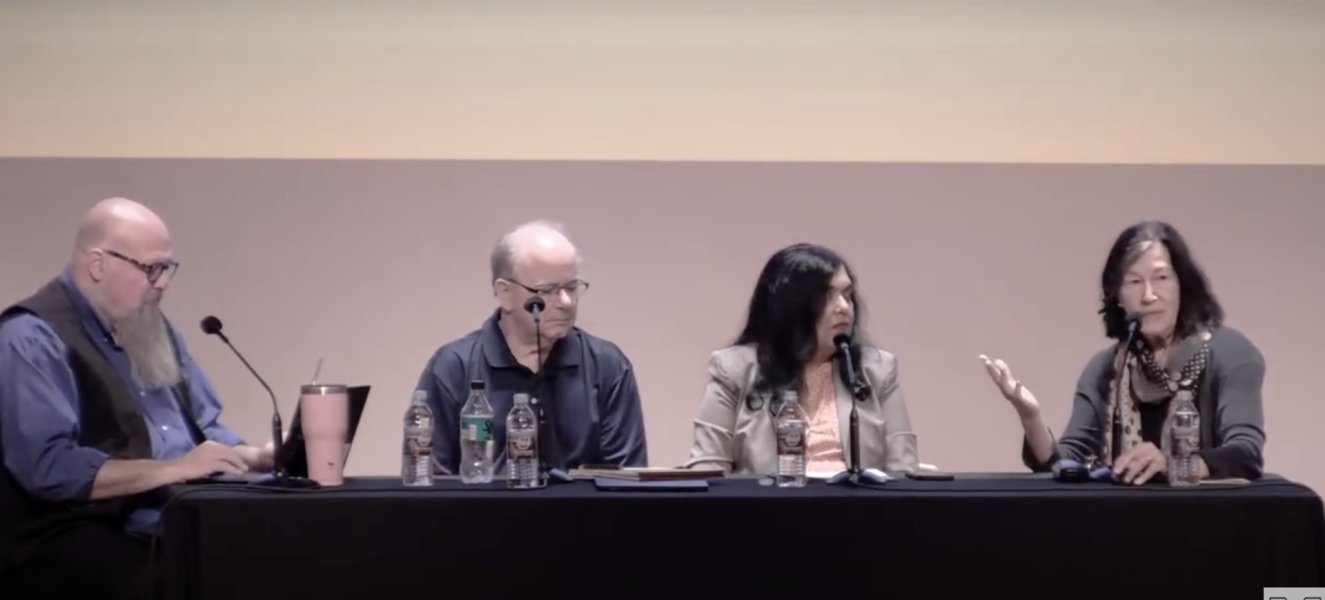
Upholding Democracy in the Age of AI: remarks from UMass - Ethan Zuckerman
I gave a talk a few weeks back at a UMass event titled “How ‘We the People’ Can Uphold Democracy in the Age of Social Media and AI” – you can see my remarks and those of my copanelists – Manisha Sinha of UConn and Jonathan Nagler of NYU – on YouTube. My basic argument:… Read More »Upholding Democracy in the Age of AI: remarks from UMass
Democracy indicators in US at lowest levels for 50 years, data shows
Trump administration undermining rule of law at home and worldwide, according to intergovernmental report