Generate a random identity with a name, address, phone number, email address, username, password and more, for software testing and other uses.
Falsehoods Programmers Believe About Names | Kalzumeus Software
Classic essay about how software routinely bumbles human names.
What is random generation?
I wanted to write this as a sequel to "What is a property?" where I would talk about how Property-Based Testing libraries generate random structures, don't worry, I'll still do that! But I realized that without talking about randomness in computers, the writing would be incomplete. So the first part of this article will go into a core problem that we consider "solved" in PBT, which is designing good random number generators, with the latter part talking about implementing complex random data generators on top of such RNGs.
Undocumented Feature
And it doesn't pop up a box every time asking you to use your real name. In fact, there's no way to set your name at all. You just have to keep reminding people who you are.

Random Hash Generator - BenNadel.com
The following hashes are generated from 300-bytes of random input using the "sha1prng" algorithm.
ai/nanoid
A tiny (118 bytes), secure, URL-friendly, unique string ID generator for JavaScript
ai/nanoid
A tiny (118 bytes), secure, URL-friendly, unique string ID generator for JavaScript
RNGdle
A daily random number game. Roll your number, collect badges, and compete with friends.

Random Object Creativity Technique — Think Jar Collective
Michael Michalko shares a useful technique for generating relevant creative ideas using random words to inspire creativity.

Vibe Password Generation: Predictable by Design - Irregular
LLM-generated passwords appear strong, but are fundamentally insecure. Testing across GPT, Claude, and Gemini revealed highly predictable patterns: repeated passwords across runs, skewed character distributions, and dramatically lower entropy than expected. Coding agents compound the problem by sometimes preferring and using LLM-generated passwords without the user’s knowledge. We recommend avoiding LLM-generated passwords and directing both models and coding agents to use secure password generation methods instead.

Katika Kühnreich (@Katika@chaos.social)
@BerserkEd_PT@masto.pt @_elena@mastodon.social @aral@mastodon.ar.al One #problem with #realnameregistration is that it can be used as an #ID for governmental services as well That is what you could call a #thecirclescenario Another problem is the #superapp In #China it became nearly impossible to exist without the #微信 #app , known as #WeChat internationally If you analyse what #AnnaZeiter said in interviews there are possibilities they want #WSocial to become a #superapp I'll write it in more detail, in the future, I promise…
Petnames: A humane approach to secure, decentralized naming
Names must be human-readable in order to be widely used. Unfortunately, while DIDs and Tor .onion addresses are decentralized and globally unique, they are not human readable. How can we build user interfaces that real users might actually use? In this paper we provide an overview of petname systems, a way of mapping human readable names to cryptographically secure names, and describe changes to two user interface designs that we believe that are compatible with intuitive user expectations. We first discuss the smartphone contact list as already approximating petnames to some degree and discuss how to augment it with secure introduction. We then walk through several changes to browsers (which may be provided natively or as an extension) which add the functionality of a petname system. By utilizing petname systems we are able to collectively support individual naming definitions, community curated directories of names, as well as existing naming authorities such as certificate authorities and the domain name system, government agencies such as trademark offices, and decentralized systems such as Namecoin.
Petnames: A humane approach to secure, decentralized naming
Names must be human-readable in order to be widely used. Unfortunately, while DIDs and Tor .onion addresses are decentralized and globally unique, they are not human readable. How can we build user interfaces that real users might actually use? In this paper we provide an overview of petname systems, a way of mapping human readable names to cryptographically secure names, and describe changes to two user interface designs that we believe that are compatible with intuitive user expectations. We first discuss the smartphone contact list as already approximating petnames to some degree and discuss how to augment it with secure introduction. We then walk through several changes to browsers (which may be provided natively or as an extension) which add the functionality of a petname system. By utilizing petname systems we are able to collectively support individual naming definitions, community curated directories of names, as well as existing naming authorities such as certificate authorities and the domain name system, government agencies such as trademark offices, and decentralized systems such as Namecoin.
SyRA: Sybil-Resilient Anonymous Signatures with Applications to Decentralized Identity
We study Sybil-Resilient Anonymous (SyRA) signatures, a cryptographic primitive that enables credentialed users to generate, on demand, unlinkable pseudonyms tied to any given context, and issue signatures on behalf of these pseudonyms. Concretely, SyRA allows a distributed issuer to turn any legacy identity or personhood identifier, possibly of low entropy, into a unique associated cryptographic key of high pseudoentropy, for use in generating signatures for any given context. Sybil-resilient anonymous signatures achieve three main objectives: 1) Sybil resilience: every user is entitled to at most one digital identity, 2) anonymity: no information about the user’s real identity is leaked, and 3) non-interactive context switching: users can create on their own at most one credential for any given context in a manner that is unlinkable across contexts. We conceptualize the SyRA primitive as an ideal functionality in the Universal Composition (UC) setting and put forth SASSI, an efficient, pairing-based construction that realizes it by utilizing two levels of verifiable random functions (VRFs), a design which may be of independent interest. The first level consists of threshold VRF issuance of a user’s unique secret key tied to their real-world identifier. The second level allows a user to create signatures for each context, under a unique pseudonym per context. Compared to prior cryptographic tools capable of realizing SyRA, SASSI has the unique feature that issuers are stateless and hence do not need to retain any information about past user interactions, a relevant property for a decentralized implementation. We overview various applications of SASSI in multiparty systems, such as cryptocurrency account management and airdrops, e-voting (e.g., for decentralized governance), and privacy-preserving regulatory compliance (e.g., AML/CFT checks). In the context of creating addresses for digital assets, SyRA signatures enable users to embed their legacy identity into their address in a manner that protects their privacy for each application with which they interact. We demonstrate the practicality of SASSI by providing an implementation and performance evaluation of our construction.
Name Checker - Social Media Username Checker
Check the availability of your desired Brand Name through our social media username checker (name checker). Claim your online identity across Social Media!
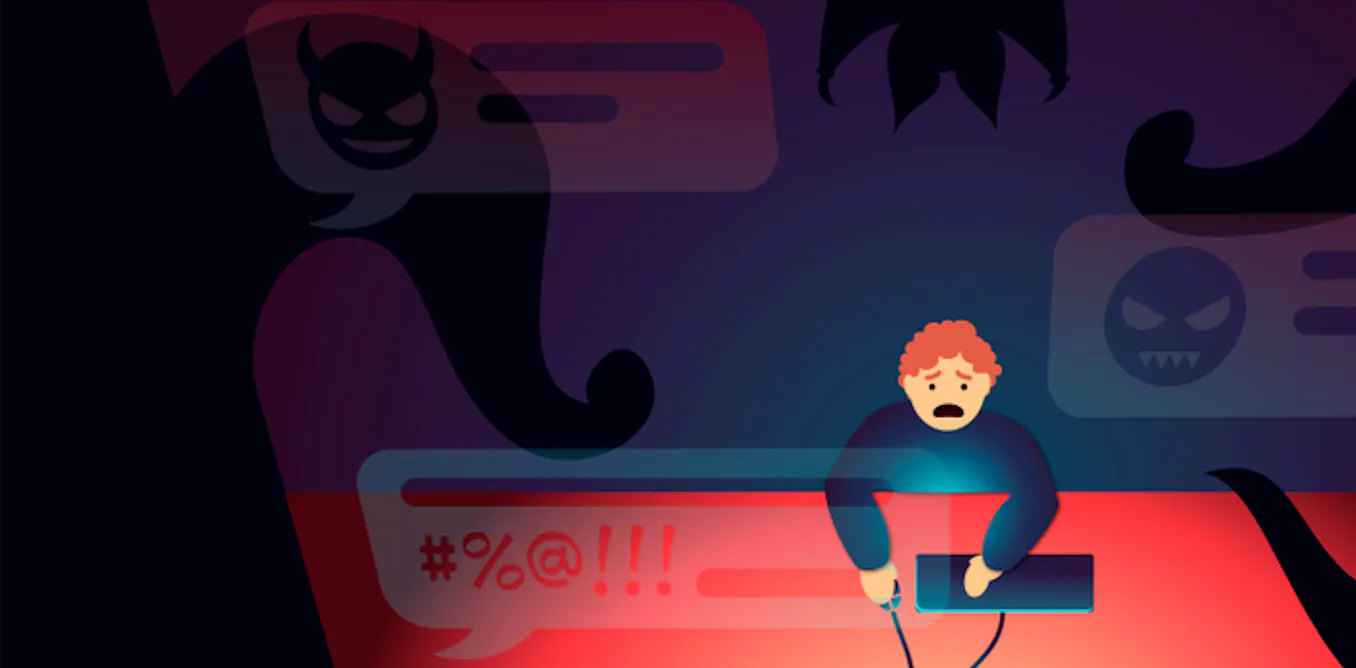
Online anonymity: study found ‘stable pseudonyms’ created a more civil environment than real user names
A higher quality discussion emerged among commenters allowed to use personas instead of their real names.