Spotify has updated its privacy policy, and users should be careful about what they agree to. The music streaming giant now wants phone sensor information to determine if users are moving or standing still, GPS location, photos, contacts and much more.
Safety and Privacy center
At Spotify, we aim to create great and unique experiences for each user. Our goal is to connect everyone with what they love and help them discover something new. No two listeners are the same, so everyone's Spotify experience, and many of our recommendations, are personalized. When asked what they like about Spotify, most listeners cite our personalization as their top feature. You might wonder how we generate these recommendations across the Home feed, playlists, search results or other parts of the service, and we want to help demystify how they work.
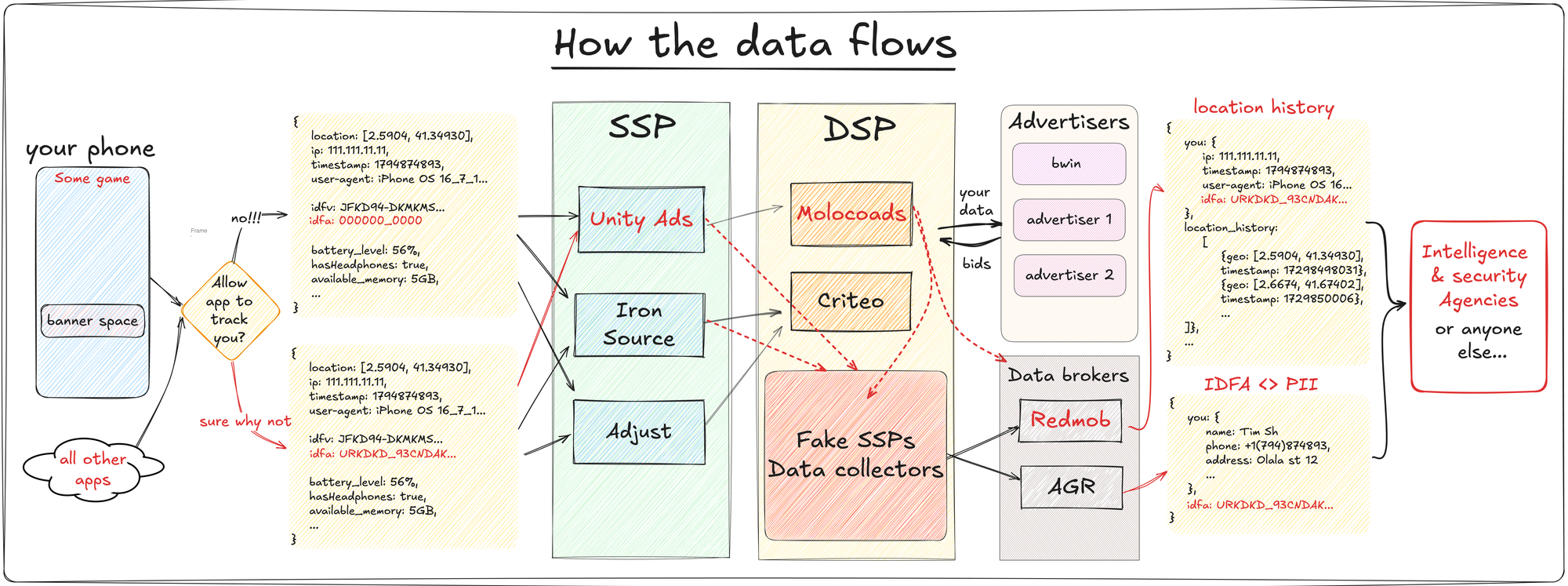
Everyone knows your location
How I tracked myself down using leaked location data in the in-app ads, and what I found along the way.
Introducing Verified by Spotify, a Signal of Authenticity and Trust for the Artists Behind the Music — Spotify
Music is evolving, and so are the ways you discover and connect with artists. In the AI era, it’s more important than ever to be able to trust the authenticity of the music you listen to. At Spotify, our focus is providing you with more context about artists and their music, so you can build...

Your Apps Know Where You Were Last Night, and They’re Not Keeping It Secret (Published 2018)
Dozens of companies use smartphone locations to help advertisers and even hedge funds. They say it’s anonymous, but the data shows how personal it is.

Google collects Android users’ locations even when location services are disabled
Many people realize that smartphones track their locations. But what if you actively turn off location services, haven’t used any apps, and haven’t even inserted a carrier SIM card?

Delete Google Maps? Go ahead, says Google, we'll still track you
Google Play services need constant location info

How to Track the People Tracking YOU
Perspective | It’s the middle of the night. Do you know who your iPhone is talking to?
We ran a privacy experiment to see how many hidden trackers are running from the apps on our iPhone. The tally is astounding.

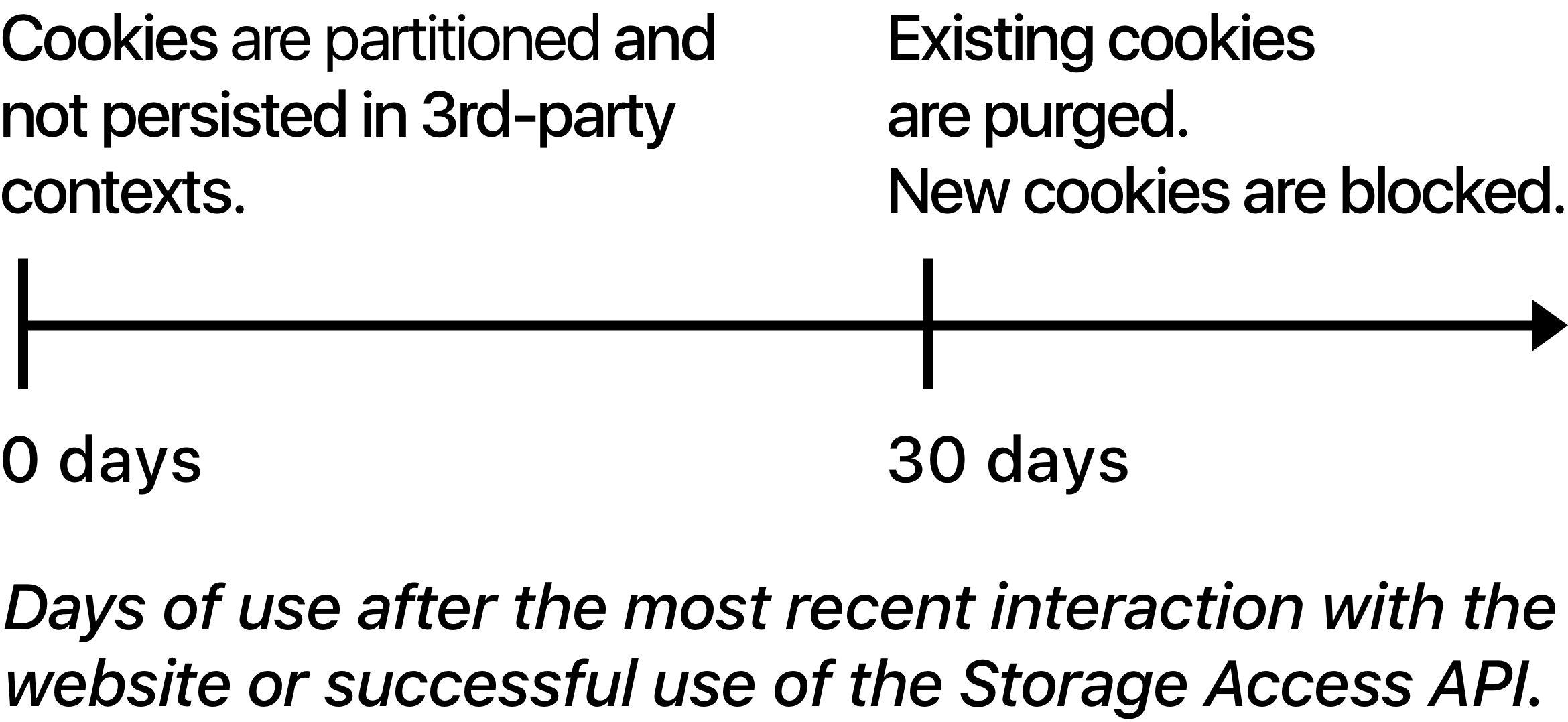
Intelligent Tracking Prevention 2.0
Note: Read about improvements to this technology in recent blog posts about Intelligent Tracking Prevention, and the Storage Access API.
Why you should bet big on privacy | TechCrunch
Ever felt like you were being watched online? You know, like when you read something about New York, and the next site you visit shows you ads for New York hotels? As it turns out, on my computer, there were more than 130 companies tracking my every move. These companies are basically engaging in mass surveillance.

The Gyroscopes in Your Phone Could Let Apps Eavesdrop on Conversations
In the age of surveillance paranoia, most smartphone users know better than to give a random app or website permission to use their device’s microphone. But researchers have found there’s another, little-considered sensor in modern phones that can also listen in on their conversations. And it doesn’t even need to ask. In a presentation at \[…\]

Unique in the Crowd: The privacy bounds of human mobility
We study fifteen months of human mobility data for one and a half million individuals and find that human mobility traces are highly unique. In fact, in a dataset where the location of an individual is specified hourly and with a spatial resolution equal to that given by the carrier's antennas, four spatio-temporal points are enough to uniquely identify 95% of the individuals. We coarsen the data spatially and temporally to find a formula for the uniqueness of human mobility traces given their resolution and the available outside information. This formula shows that the uniqueness of mobility traces decays approximately as the 1/10 power of their resolution. Hence, even coarse datasets provide little anonymity. These findings represent fundamental constraints to an individual's privacy and have important implications for the design of frameworks and institutions dedicated to protect the privacy of individuals.

How Spotify’s Discover Weekly cracked human curation at internet scale
The Verge is about technology and how it makes us feel. Founded in 2011, we offer our audience everything from breaking news to reviews to award-winning features and investigations, on our site, in video, and in podcasts.


Spotify's AI Problem Is So Bad Random People Are Stepping In to Track the Slop
Spotify doesn’t label AI music on its platform, so websites like SoullessMusic.com and SlopTracker.org do it instead.