


All the key barriers to the artificial synthesis of viruses and bacteria have been overcome, spawning a dizzying array of perils and promises. But as the scientific community forges ahead, the biosecurity establishment remains behind the curve.
Strengthening biosecurity in the era of AI
AI is reshaping biology, unlocking breakthroughs while raising new risks. Learn how smarter safeguards can strengthen biosecurity without slowing innovation.

Lab screw-ups with smallpox and anthrax show we must rethink biosecurity
Self-regulation by biologists was successful in the past but may now be too risky.
AI creates first synthetic viruses
Genomic language model has huge potential to redesign organisms such as bacteria

Bacteria farming and Software design. | AntiVJ
This is an article about my creative process behind Paelodictyon, a site specific installation that I developed in collaboration with Yannick Jacquet and Thomas Vaquié. Since this was our first big project integrating Cinder in production from the early stages, and because I used it to create most of the visual content, this post is going to have a big emphasis on creative coding and software development. I’ll try not to get too technical, but still, you’ve been warned, this is a geeky post!
DEF CON 25 - John Sotos - Genetic Diseases to Guide Digital Hacks of the Human Genome
How Extending Patent Protection For Antibiotics Creates Perverse Incentives To Render Them Useless
We take antibiotics and their ability to kill practically all bacteria for granted. But scientists are increasingly warning that we may be about to leave what might come to be seen as a golden age …

Ginkgo Bioworks (NYSE:DNA) Trying to Prevent Future Man-Made Biological Threats
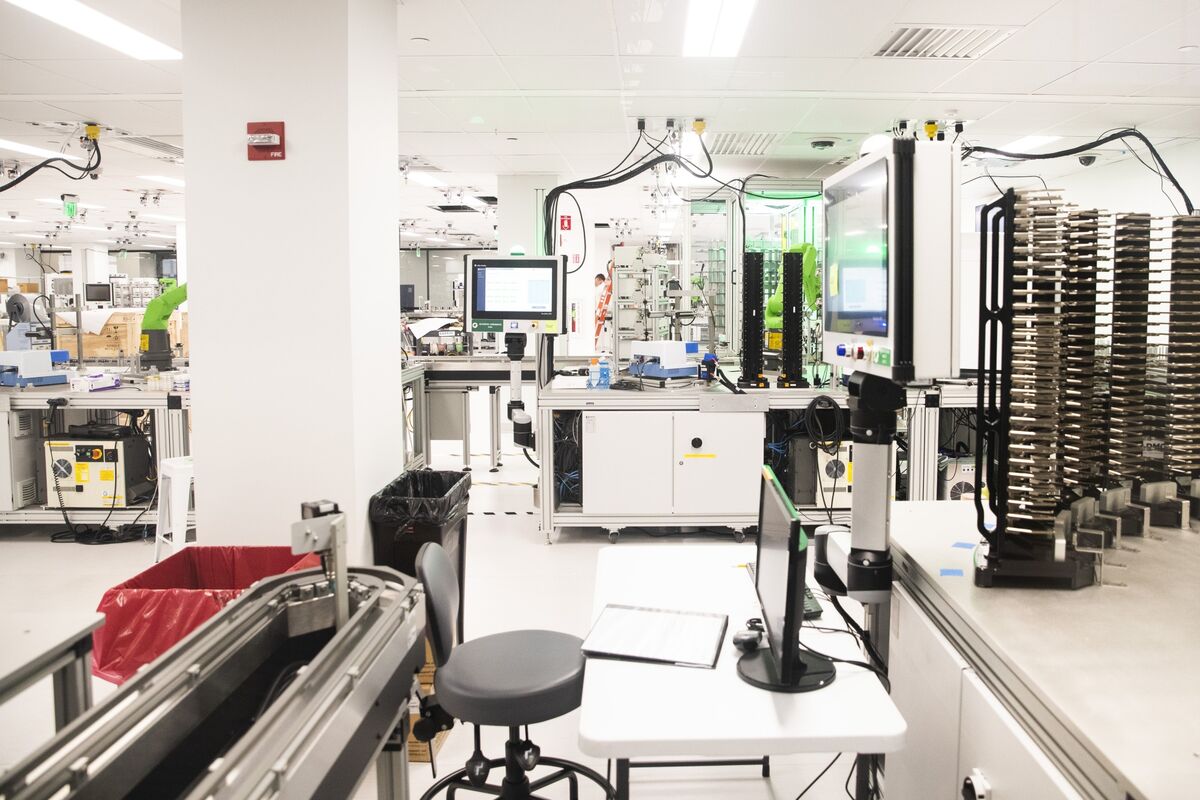
Synthetic biology firm Ginkgo Bioworks has developed tools that US intelligence agencies can use to detect engineered DNA at scale, a milestone that could better protect the nation from human-made biological threats. The new software could be used to provide an early warning of bioweapons, such as a new deadly bacteria, or a modified virus that thwarts existing vaccines.
AI leaders call for tougher protections against AI-aided bioweapons
AI industry rivals rarely agree, but they’re all concerned their technology could be used to develop biological weapons.

David Bellamy on Twitter / X
I must be among an extremely small group of people (n=1?) that have both 1) trained a frontier LLM and 2) designed and synthesized custom viruses in a lab with my own two hands.And I think that the takes on AI killing us all by creating dangerous viruses is total bogus.— David Bellamy (@DavidRBellamy) September 13, 2026
What major scientific breakthroughs have been made in gut microbiome science in 2020?
Although the COVID-19 pandemic has shifted the focus of research for scientists worldwide, major breakthroughs in gut microbiome science have been made in 2020. In this last post of the year, we bring you articles from our blog that cover the major advances in the gut microbiome in 2020, from bench to bedside.

The Story behind the Science: Preprints of pandemic potential—how bioRxiv and medRxiv brought preprints to the life sciences
ABSTRACT The bioRxiv and medRxiv preprint servers brought preprinting to the life sciences and played a critical role in disseminating COVID research during the pandemic. Here, I reflect on the birth of bioRxiv and medRxiv and the crucial role so many members of the community played, our experience during the pandemic, and the launch of the new non-profit organization set up to oversee the servers. The pandemic was a stress test for bioRxiv and medRxiv that demonstrated their value and robustness. Under the umbrella of openRxiv, they are now poised to become long-term infrastructure underpinning a new publishing ecosystem.

How synthetic biology could save bats (and the world)
One of the most terrifying epidemics of the modern era isn't among humans at all. It's a deadly fungus that attacks bats in the Americas, and it has an

Biohackers Encoded Malware in a Strand of DNA
Researchers planted a working hacker exploit in a physical strand of DNA.

I believed we would face an antibiotics apocalypse - until now | Richard James
For decades my research showed the dangers of new strains of resistance, and this week we heard of another threat. But there’s been a breakthrough

Synthetic Biology of Plants and Microbes for Agriculture, Environment, and Future Applications
Agriculture is under pressure to provide food for a growing population and the feedstock required to drive the bioeconomy. Methods to breed and genetically modify plants are inadequate to keep pace. When engineering crops, traits are painstakingly introduced into plants one-at-a-time, combine unpredictably, and are continuously expressed. Synthetic biology is changing these paradigms with new genome construction tools, computer aided design (CAD), and artificial intelligence (AI). “Smart plants” contain circuits that respond to environmental change, alter morphology, or respond to threats. Further, the plant and associated microbes (fungi, bacteria, archaea) are now being viewed by genetic engineers as a holistic system. Historically, plant health has been enhanced by many natural and laboratory-evolved soil microbes marketed to enhance growth or provide nutrients, or pest/stress resistance. Synthetic biology has expanded the number of species that can be engineered, increased the complexity of engineered functions, controlled environmental release, and can assemble stable consortia. New CAD tools will manage genetic engineering projects spanning multiple plant genomes (nucleus, chloroplast, mitochondrion) and the thousands of genomes of associated bacteria/fungi. This review covers advanced genetic engineering techniques to drive the next agricultural revolution, as well as push plant engineering into new realms for manufacturing, infrastructure, sensing, and remediation.

New E. coli strain will accelerate evolution of the genes of your choice
Strain eliminates the trade-offs of a high mutation rate.
