


Riot has used the behaviour of its employees when playing League of Legends to identify potential problems in the workp…
Inside The Culture Of Sexism At Riot Games - Kotaku
Throughout her three years at Riot Games, the company behind League of Legends, Lacy made it her mission to hire a woman into a leadership role. Lacy had

How League of Legends could make the internet a better place
An online game could just be the start of a happier, healthier online community

Play nice! How the internet is trying to design out toxic behaviour
Online abuse can be cruel – but for some tech companies it is an existential threat. Can giants such as Facebook use behavioural psychology and persuasive design to tame the trolls?

Can a video game company tame toxic behaviour?
Scientists are helping to stop antisocial behaviour in the world's most popular online game. The next stop could be a kinder Internet.

Six Months at Riot Games
I’ve been up all night after reading Kotaku’s article on the company culture of Riot, and its effect on women in particular. Cecilia contacted me as a potential source, but I didn’t commit to providing my experience on the record because I was worried about the ramifications of speaking out. The discourse around this conversation and the reticence to believe the women who came forward has stunned me. I’ve been carrying around a heavy weight on my shoulders since 2014, and I feel it is finally time to let it go. I only lasted six months at Riot before resigning.
Government Says Terabytes of Signal Chats are Central to the Case Against Minnesota 15 - UNICORN RIOT
The Minnesota 15 case is about conversations, thousands of pages of it, harvested from encrypted group chats on Signal and loaded into an Everlaw database for prosecutors to build conspiracy charges against Trump's political opponents.

Microsoft Teams Has Become a Haven for Scammers in China
Fraudsters are exploiting enterprise chat apps like Teams and Webex to trick Chinese victims into transferring large sums of money, fueling a wave of complaints.

Anatomy of an internet argument
Social media isn't toxic, most people just haven't figured out the game (yet)
Characterizing Delusional Spirals through Human-LLM Chat Logs
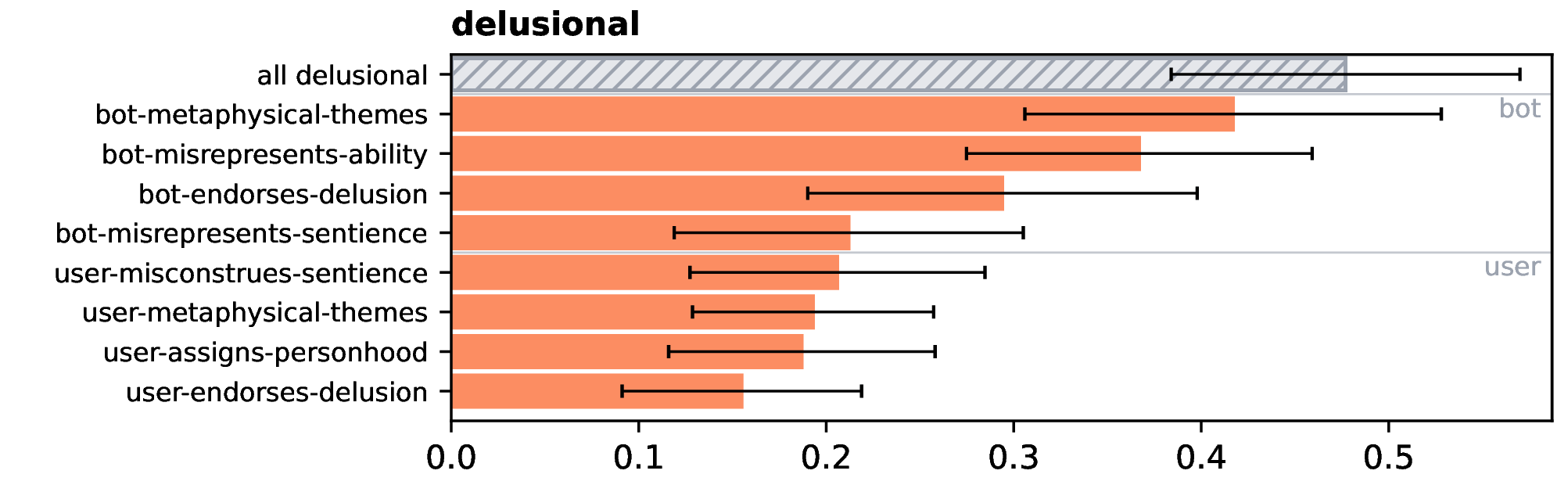
As large language models (LLMs) have proliferated, disturbing anecdotal reports of negative psychological effects, such as delusions, self-harm, and ``AI psychosis,'' have emerged in global media and legal discourse. However, it remains unclear how users and chatbots interact over the course of lengthy delusional ``spirals,'' limiting our ability to understand and mitigate the harm. In our work, we analyze logs of conversations with LLM chatbots from 19 users who report having experienced psychological harms from chatbot use. Many of our participants come from a support group for such chatbot users. We also include chat logs from participants covered by media outlets in widely-distributed stories about chatbot-reinforced delusions. In contrast to prior work that speculates on potential AI harms to mental health, to our knowledge we present the first in-depth study of such high-profile and veridically harmful cases. We develop an inventory of 28 codes and apply it to the 391,562 messages in the logs. Codes include whether a user demonstrates delusional thinking (15.5% of user messages), a user expresses suicidal thoughts (69 validated user messages), or a chatbot misrepresents itself as sentient (21.2% of chatbot messages). We analyze the co-occurrence of message codes. We find, for example, that messages that declare romantic interest and messages where the chatbot describes itself as sentient occur much more often in longer conversations, suggesting that these topics could promote or result from user over-engagement and that safeguards in these areas may degrade in multi-turn settings. We conclude with concrete recommendations for how policymakers, LLM chatbot developers, and users can use our inventory and conversation analysis tool to understand and mitigate harm from LLM chatbots. Warning: This paper discusses self-harm, trauma, and violence.
Characterizing Delusional Spirals through Human-LLM Chat Logs
As large language models (LLMs) have proliferated, disturbing anecdotal reports of negative psychological effects, such as delusions, self-harm, and ``AI psychosis,'' have emerged in global media and legal discourse. However, it remains unclear how users and chatbots interact over the course of lengthy delusional ``spirals,'' limiting our ability to understand and mitigate the harm. In our work, we analyze logs of conversations with LLM chatbots from 19 users who report having experienced psychological harms from chatbot use. Many of our participants come from a support group for such chatbot users. We also include chat logs from participants covered by media outlets in widely-distributed stories about chatbot-reinforced delusions. In contrast to prior work that speculates on potential AI harms to mental health, to our knowledge we present the first in-depth study of such high-profile and veridically harmful cases. We develop an inventory of 28 codes and apply it to the $391,562$ messages in the logs. Codes include whether a user demonstrates delusional thinking (15.5% of user messages), a user expresses suicidal thoughts (69 validated user messages), or a chatbot misrepresents itself as sentient (21.2% of chatbot messages). We analyze the co-occurrence of message codes. We find, for example, that messages that declare romantic interest and messages where the chatbot describes itself as sentient occur much more often in longer conversations, suggesting that these topics could promote or result from user over-engagement and that safeguards in these areas may degrade in multi-turn settings. We conclude with concrete recommendations for how policymakers, LLM chatbot developers, and users can use our inventory and conversation analysis tool to understand and mitigate harm from LLM chatbots. Warning: This paper discusses self-harm, trauma, and violence.

Characterizing Delusional Spirals through Human-LLM Chat Logs
As large language models (LLMs) have proliferated, disturbing anecdotal reports of negative psychological effects, such as delusions, self-harm, and ``AI psychosis,'' have emerged in global media and legal discourse. However, it remains unclear how users and chatbots interact over the course of lengthy delusional ``spirals,'' limiting our ability to understand and mitigate the harm. In our work, we analyze logs of conversations with LLM chatbots from 19 users who report having experienced psychological harms from chatbot use. Many of our participants come from a support group for such chatbot users. We also include chat logs from participants covered by media outlets in widely-distributed stories about chatbot-reinforced delusions. In contrast to prior work that speculates on potential AI harms to mental health, to our knowledge we present the first in-depth study of such high-profile and veridically harmful cases. We develop an inventory of 28 codes and apply it to the $391,562$ messages in the logs. Codes include whether a user demonstrates delusional thinking (15.5% of user messages), a user expresses suicidal thoughts (69 validated user messages), or a chatbot misrepresents itself as sentient (21.2% of chatbot messages). We analyze the co-occurrence of message codes. We find, for example, that messages that declare romantic interest and messages where the chatbot describes itself as sentient occur much more often in longer conversations, suggesting that these topics could promote or result from user over-engagement and that safeguards in these areas may degrade in multi-turn settings. We conclude with concrete recommendations for how policymakers, LLM chatbot developers, and users can use our inventory and conversation analysis tool to understand and mitigate harm from LLM chatbots. Warning: This paper discusses self-harm, trauma, and violence.
LLM-Augmented Agent-Based Simulation of Cyber Social Agents
Social media bots are often portrayed as malicious automations to be detected and removed, but automation on social media platforms encompasses a wide spectrum of roles, behaviors, and rhetorical strategies that can shape online discourse in both constructive and destructive ways. This work conceptualizes these automated actors as \textbf{Cyber Social Agents} through a taxonomy of archetypes characterized by their operational tactics and rhetorical style. We integrate this taxonomy into an LLM-driven social simulation, where agents communicate and coordinate in a network environment. Using empirically grounded CSA personas, we simulate heterogeneous online societies to study how agent diversity shapes information diffusion and social influence. Our approach bridges the gap between rule-based agent models and LLM-powered simulations with generated agents that are parameterized from empirical data.
Hey ChatGPT, write me a fictional paper: these LLMs are willing to commit academic fraud
Mainstream chatbots presented varying levels of resistance to deliberate requests for fabrication, study finds
Meta Contractors Posed as Teens to Prompt Rival Chatbots About Suicide, Sex, and Drugs
Hundreds of contractors working on a project for Meta pretended to be kids in order to see how other chatbots like Gemini and ChatGPT would respond to high-risk subjects, WIRED found.

MoNage: 20 years of Messaging… and why it’s only the beginning
Riot launched two weeks ago while we were attending the MoNage conference in Boston, MA.

Recently, we escaped the AT-Bubble to chat with some of the world's most successful game developers and publishers. The whiplash was sharp... 😅 Beyond this network, The Atmosphere is largely unknown and there's some scary risks keeping others from joining the FUN. Our reality check, in blog form:

Vibe Check: Effort, Risk, and Games in The Atmosphere
rpg.actor