

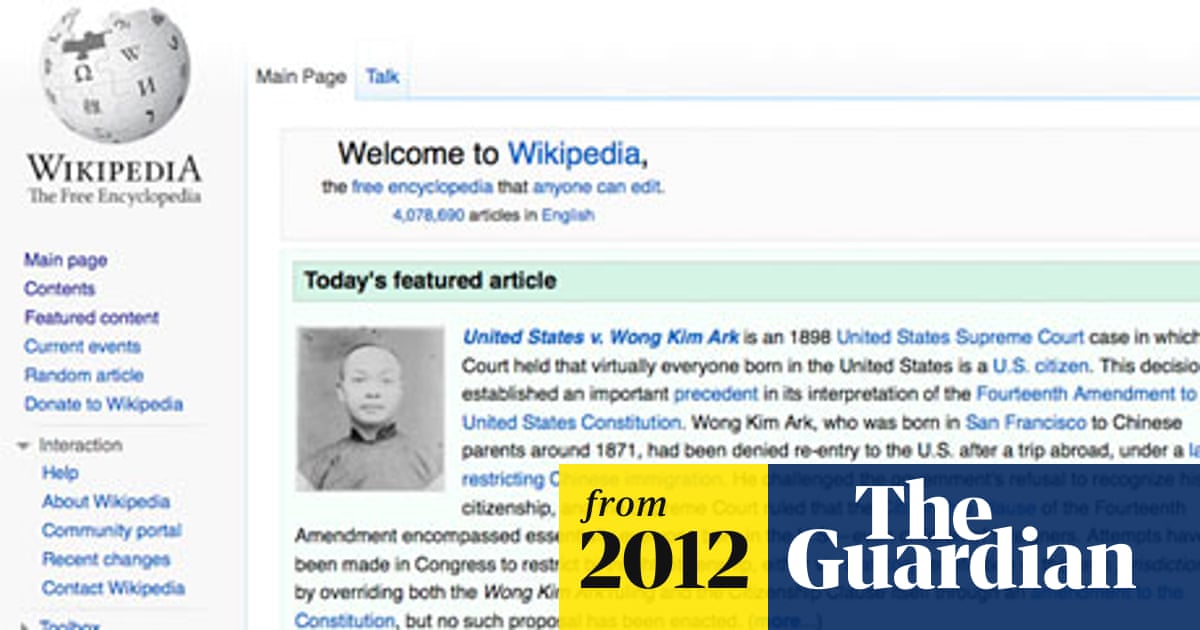
Rebekah Higgitt: An edit-a-thon to correct the lack of entries for female scientists highlights a deeper problem with women and Wikipedia
Women's History | A Few Forgotten Women
A Few Forgotten Women Preserving the stories of marginalised women of the past. Women's History.
Sharing Knowledge Openly: Author Gender, Race/Ethnicity, and Feminist Science
Open science is an increasingly important movement in contemporary social science. Many funders have begun to mandate open practices, newer journals like Socius are open access, and preprint servers have increased readership of paywalled articles. Feminist scholars have written about the values and pitfalls of open research. In this paper, we put those ideas in conversation with each other and empirical data on open-access publishing to develop a feminist framework for thinking about feminist knowledge, data, publishing, and audience. Using a survey of 19,462 social scientists, linked with their entire Web of Science publication history from 2000 to 2023 and all papers posted to SocArXiv, we replicate past work showing that articles by women are less likely to be some types of open access. We extend these findings to scholars of color and feminist scholarship, while also demonstrating a few surprising null results for all three groups.

Women, technology and AI: Five key takeaways for today’s world
To commemorate the International Day of Women and Girls in Science on 11 February, we spoke with Tamuna Kvintradze, Chief of Staff at Women in Tech Global. Ms. Kvintradze offered valuable insights into the barriers that women and girls encounter in STEM, highlighted the critical importance of their participation, and underscored the need to amplify their perspectives within mainstream and social media.

Invisible Women: Exposing Data Bias in a World Designed for Men
Invisible Women: Exposing Data Bias in a World Designed for Men is a 2019 book by British feminist author Caroline Criado Perez. The book describes the adverse effects on women caused by gender bias in big data collection.

Jeffrey Epstein's influence in the science world is a symptom of larger problems | Kate Darling
In a system stacked against women, we must direct our harshest judgment at people and institutions who remain silent

Women portrayed as younger than men online, and AI amplifies the bias - Haas News | UC Berkeley Haas
In a sweeping study published today in Nature, researchers at UC Berkeley Haas, Stanford, and Oxford/Autonomy University documented extensive age and gender distortion across online media—and found that common algorithms are amplifying the bias.

THIS IS GENDERED – The feminist encyclopedia
THIS IS GENDERED is a feminist encyclopedia. We believe everything is gendered. The entries in this encyclopedia demonstrate just this. Use the search bar to read up on the gender dimension of a topic of your interest.
Judith Butler: ‘We need to rethink the category of woman’
The author of the ground-breaking book Gender Trouble says we should not be surprised when the category of women expands to include trans women

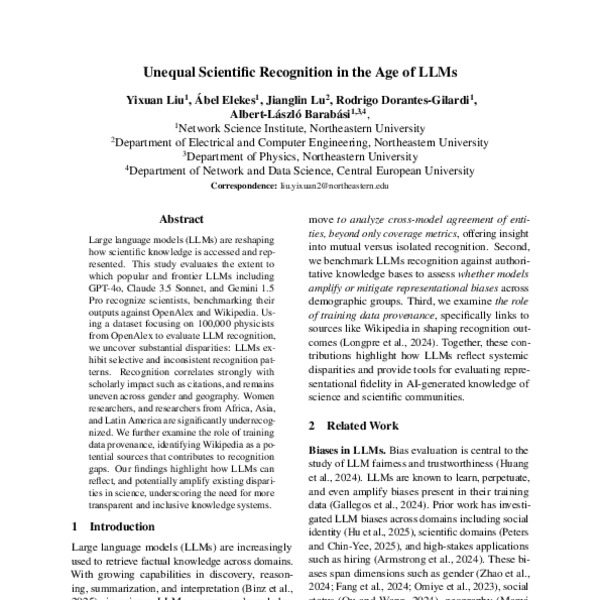
Unequal Scientific Recognition in the Age of LLMs
Large language models (LLMs) are reshaping how scientific knowledge is accessed and represented. This study evaluates the extent to which popular and frontier LLMs including GPT-4o, Claude 3.5 Sonnet, and Gemini 1.5 Pro recognize scientists, benchmarking their outputs against OpenAlex and Wikipedia. Using a dataset focusing on 100,000 physicists from OpenAlex to evaluate LLM recognition, we uncover substantial disparities: LLMs exhibit selective and inconsistent recognition patterns. Recognition correlates strongly with scholarly impact such as citations, and remains uneven across gender and geography. Women researchers, and researchers from Africa, Asia, and Latin America are significantly underrecognized. We further examine the role of training data provenance, identifying Wikipedia as a potential sources that contributes to recognition gaps. Our findings highlight how LLMs can reflect, and potentially amplify existing disparities in science, underscoring the need for more transparent and inclusive knowledge systems.
Wikipedia Mining Algorithm Reveals The Most Influential People In 35 Centuries Of Human History
The top ranked men and women will surprise you

Women in Tech Stats 2026
The Tech industry has long been a male-dominated world but as we entered a new decade it is time to look at the position of women in tech.

Why Have More Women in Tech? Top 4 Reasons Backed By Data
Find out the compelling research-backed reasons why the tech industry needs more women. Learn why it's essential for businesses in tech

Silicon Valley’s weapon of choice against women: shoddy science | Angela Saini
Support for the Google ‘manifesto’ on gender difference recalls the rationale of eugenics, says science writer Angela Saini
Gender Trouble: Feminism and the Subversion of Identity
One of the most talked-about scholarly works of the past fifty years, Judith Butler’s Gender Trouble is as celebrated as it is controversial.Arguing that traditional feminism is wrong to look to a natural, 'essential' notion of the female, or indeed of sex or gender, Butler starts by questioning the category 'woman' and continues in this vein with examinations of 'the masculine' and 'the feminine'. Best known however, but also most often misinterpreted, is Butler's concept of gender as a reiterated social performance rather than the expression of a prior reality.Thrilling and provocative, few other academic works have roused passions to the same extent.

A large gender gap persists in STEM disciplines across the world that is bad for innovation, talent attraction & against fairness principles. On International Day of Women and Girls in Science, @ansolassen.bsky.social @cairosofie.bsky.social @valentinatartari.bsky.social are sharing our findings ⬇️
Oh no it's happening here too! Massive science threads and convos with zero involvement from women 😭 That was one of the weirdest, most alienating things about science twitter (and why perhaps I don't have as fond memories of it as some of my male colleagues do) and I'd hate it to be replicated here

