

Writeup for my first major machine learning project.
Deep learning for assisting the process of music composition (part 1)
This is part 1 of my explorations of using deep learning for assisting the process of music composition. In this part, I look at some almost-winning output of a model trained by deep learning metho…

The Millions of Songs Mashed Into AI-Generated Music
Explore the astonishing amount of music available to AI developers.
Making a Neural Synthesizer Instrument
In a previous post, we described the details of NSynth (Neural Audio Synthesis), a new approach to audio synthesis using neural networks. We hinted at furthe...
HAIM: Human-AI Music Datasets for AI Music Production Tracking Benchmark
As generative platforms such as Suno and Udio reach human-grade audio quality, the scope of AI's utility has expanded across the entire music production workflow. Beyond simple track generation, these advancements have catalyzed the adoption of AI-driven methodologies in diverse forms. These include vocal synthesis, arrangement, and professional mastering. However, current detection research remains largely confined to a binary `AI-or-human' paradigm. It fails to reflect the realities of contemporary music production workflows. In real-world production, AI tools are increasingly used to refine or master human-produced tracks, and human engineers likewise post-process AI-generated material to ensure professional quality. Moreover, users often employ adversarial tactics to bypass AI detectors, such as applying human mastering to AI-generated tracks. This creates a grey area that a simple binary classification fails to capture. In this paper, we define and investigate ``AI Music Tracking'': the challenge of identifying specific AI integration across the multifaceted spectrum of music production. To this end, we introduce HAIM, a dataset with diverse labels for stages of music production. It is designed to isolate stages of AI intervention, including hybrid production and agent-level tracking. Our evaluation of state-of-the-art detectors reveals systemic flaws. By releasing HAIM, we propose a new benchmark that shifts the field beyond binary classification toward a granular, structured evaluation of AI music.

Music theory for programmers
I can't play an instrument, so I worked out music theory in JavaScript instead. Twelve notes, scales and chords, derived from scratch with code you can hear.
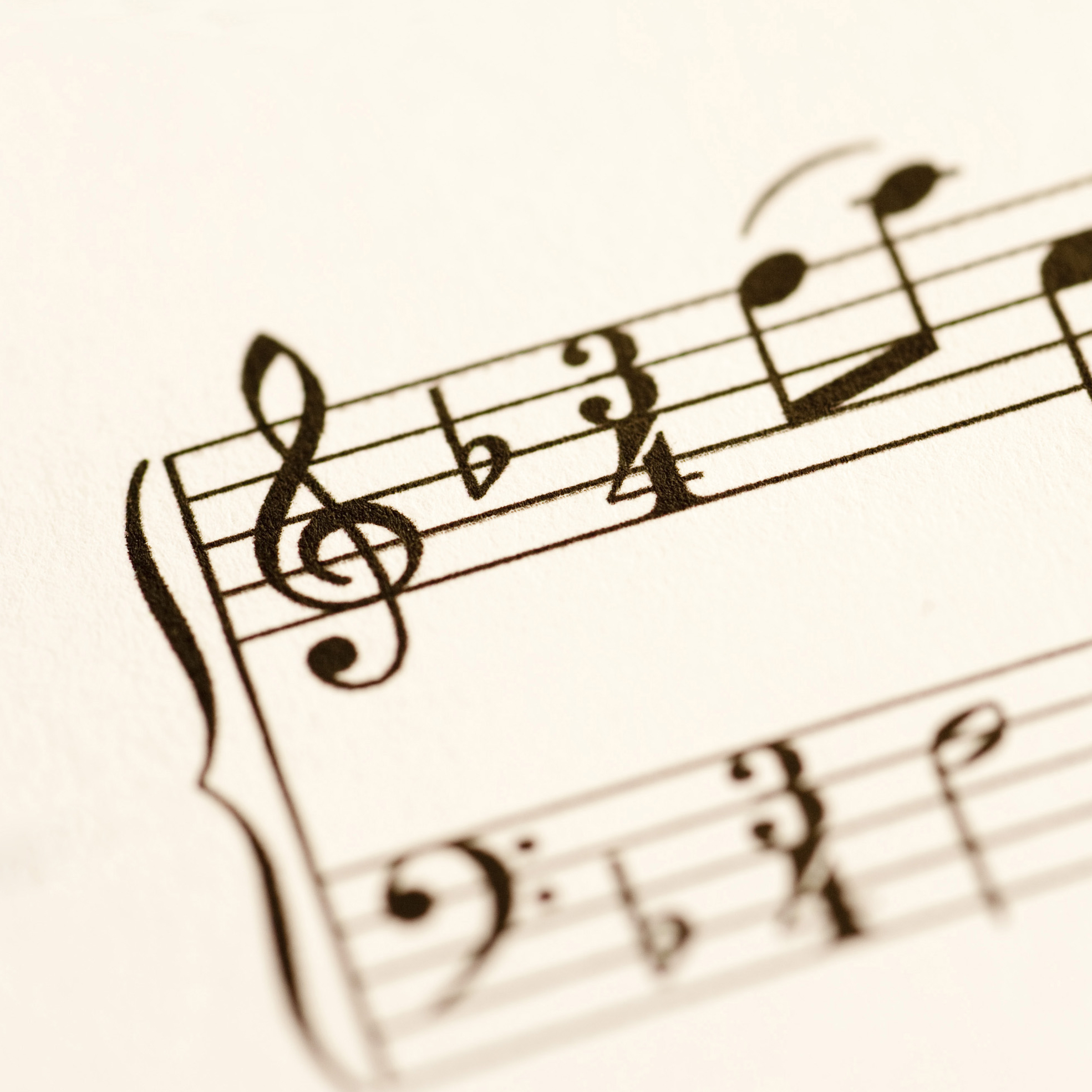
EuterPen: Unleashing Creative Expression in Music Score Writing
AI music tools challenge Bay Area musicians
AI music tools challenge Bay Area musicians: As affordable AI platforms spread, artists debate creativity, copyright and survival.

Machines learn to play Tabla — Gaurav Trivedi
Using Karpathy's char-RNN to train a recurrent neural network on tabla compositions, generating new rhythmic sequences and exploring whether deep learning can capture the grammar of Indian classical percussion.
Creativity through Recomposition in the Music Ensemble
Musical creativity is an essential component of a robust music education. There are many ways to invite and develop the creative capacities of K–12 music students. In this article, we propose the idea that recomposing within and around repertoire can be a creative starting point for student composition in an ensemble music classroom. We share examples of potential recomposition projects, questions to prompt student reflection, and other pedagogical considerations as a springboard for compositional projects with students. We hope that the open-ended nature of this mindset will encourage more creative musical spaces.

Neural Translation of Musical Style
Can we teach a neural network to perform like a human?
Malleable Music Ensembles
A framework using generalized algebraic theories and categorical lenses to enable interoperable, local-first networked music ensembles.
Functional Composition
From Prompting to Describing: A Cross-Cultural Study of Language for AI-Generated Music
Recent text-to-music (TTM) systems such as Suno [22], Udio [23], and Google’s MusicFX [7] allow users to generate music from a natural language prompt, lowering the barrier to music creation for users without specialized musical knowledge [27]. Understanding how users write these prompts is therefore a fundamental question for music information retrieval and human-AI interaction research. Yet, prompting a generative system is not the same cognitive or linguistic act as describing music one has heard [12]. When a user writes a prompt, they encode anticipatory intent to steer the system toward a desired or imagined output, whereas when a listener describes a piece of music, their language is grounded in a perceptual experience. We argue that these two acts produce systematically different language—a distinction that, despite being intuitive, has not been quantitatively examined. This gap has practical consequences: recent TTM models are trained predominantly on metadata-centric corpora (genre labels, BPM, descriptive tags) [6] rather than on the kind of language users naturally produce when listening, leaving the prompt-description gap unexamined. Moreover, this gap limits our ability to evaluate and improve human–AI interaction in music generation, as current systems are optimized for prompt input but commonly assessed through human perception.
Music Theory that isn't boring - Lightnote
Interactive lessons for learning Music Theory.

